01
Turkish and Caucasian Rugs: Origins and Today
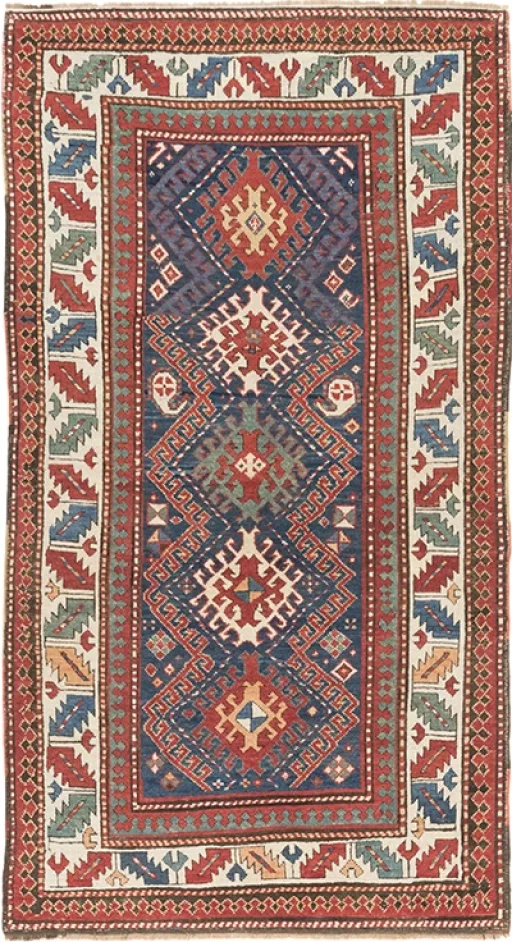
The Caucasus, the mountain region between the Black Sea and the Caspian Sea, produced some of the most distinctive village rugs of the 19th century. Weavers in areas such as Kazak and Shirvan used strong geometric forms, often passed down through generations rather than drawn from pattern books.
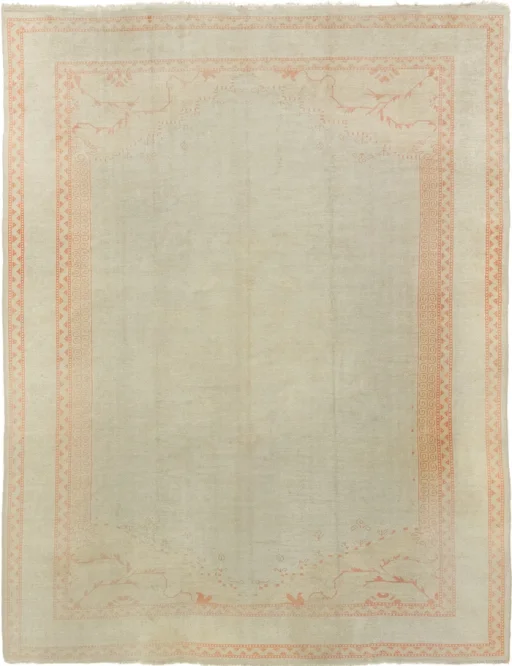
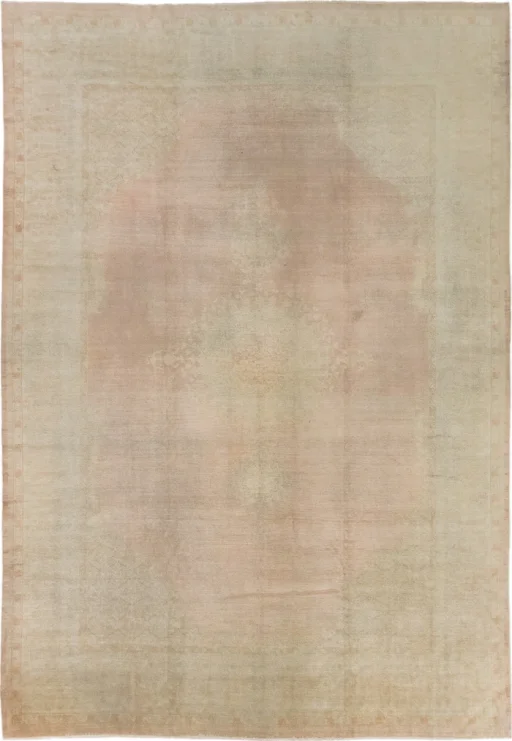
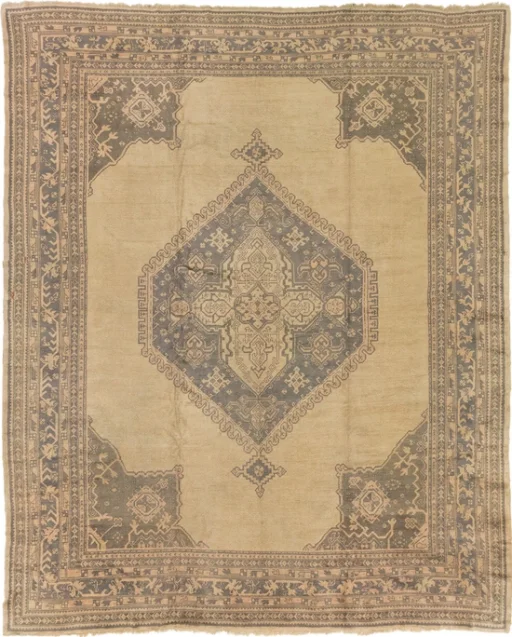
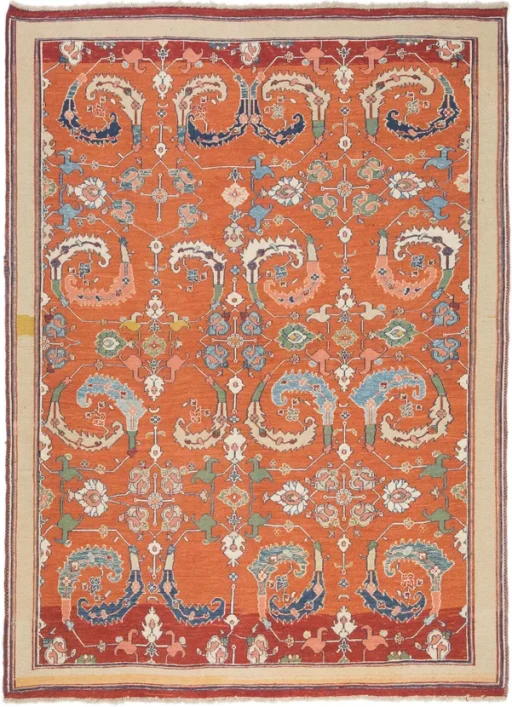
In western Anatolia, the town of Uşak, known in the trade as Oushak, has been a centre of carpet production for centuries. In the late 19th and early 20th centuries, its workshops made large carpets in softer colours, many of them for European homes.
Today, these designs are also knotted outside their regions of origin. Most newer Kazak rugs in our collection come from Pakistan, while our antique pieces come from Armenia, Turkey and Iran. The origin and age of every rug are listed on its product page.
02
Patterns, Colours and Construction
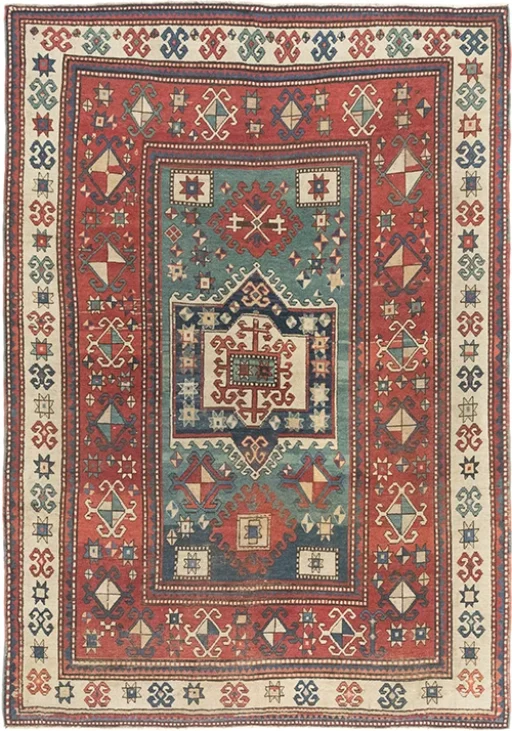
Caucasian rugs are built on geometry: stepped medallions, hooked diamonds, stars and stylised plants, framed by wide borders. Turkish Oushak rugs, by contrast, show larger, more open designs with soft floral forms.
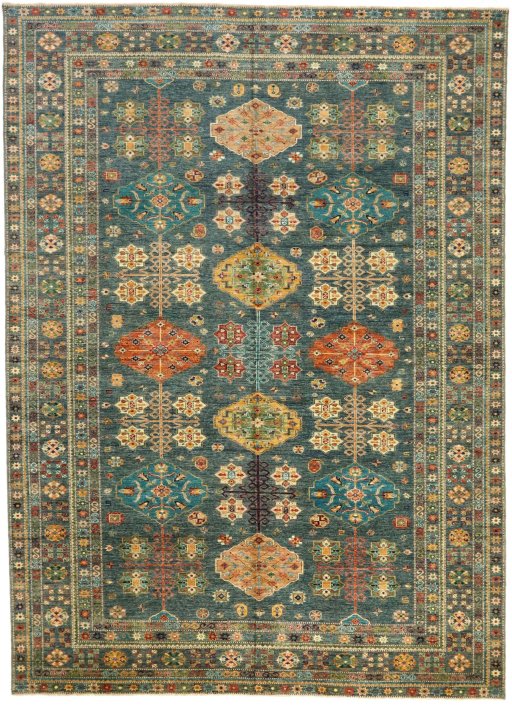
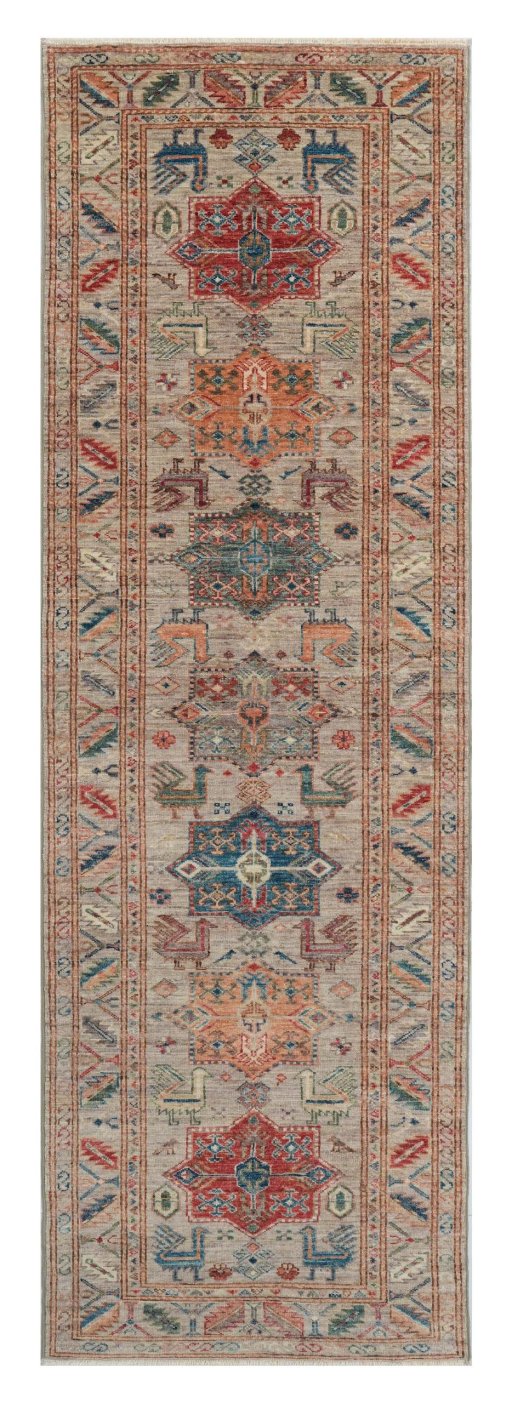
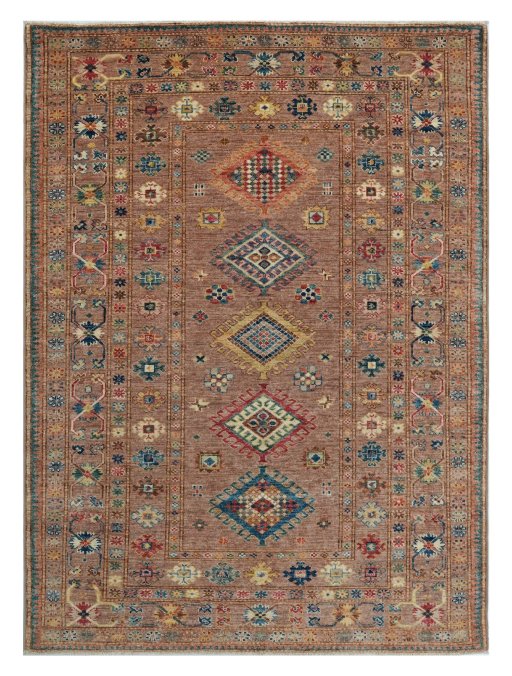
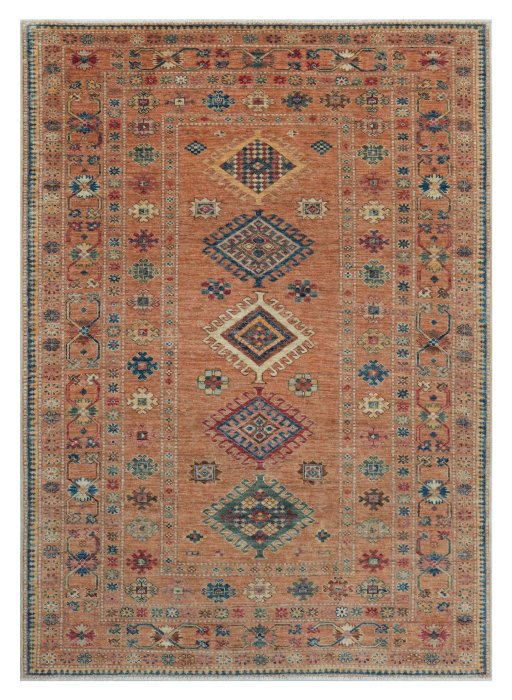
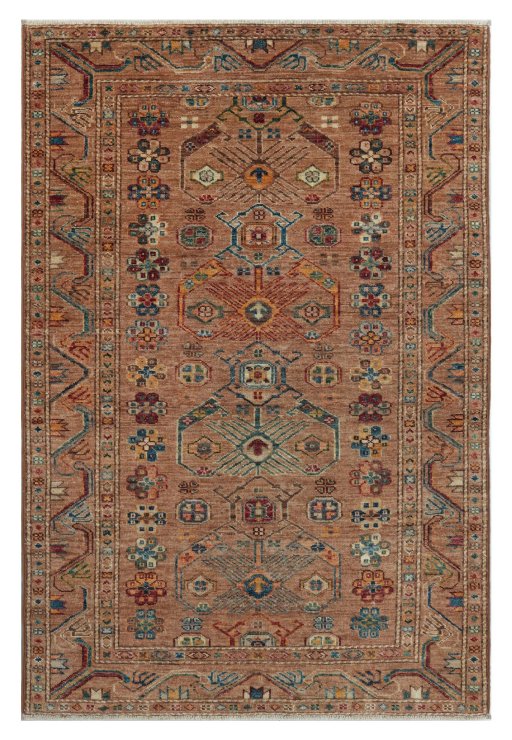
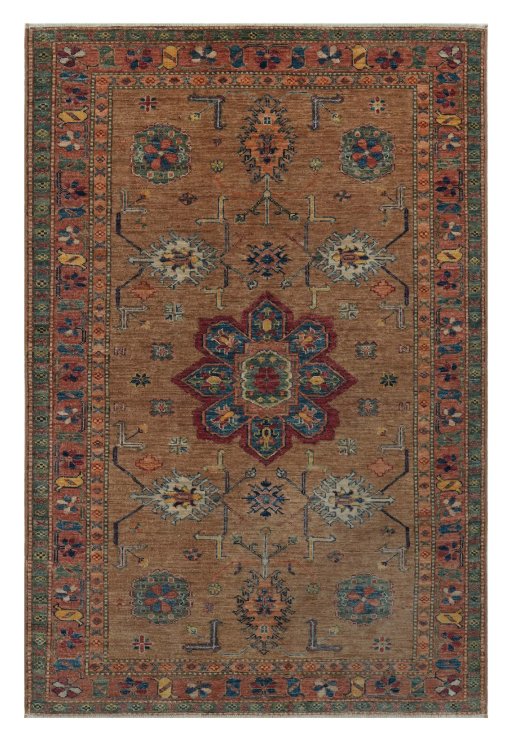
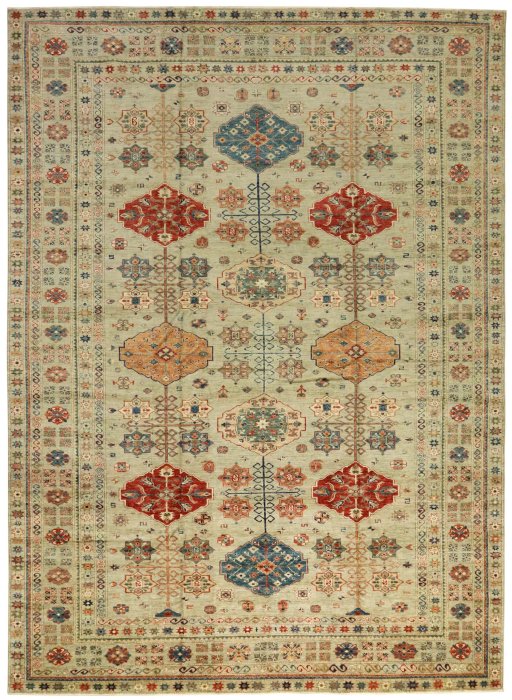
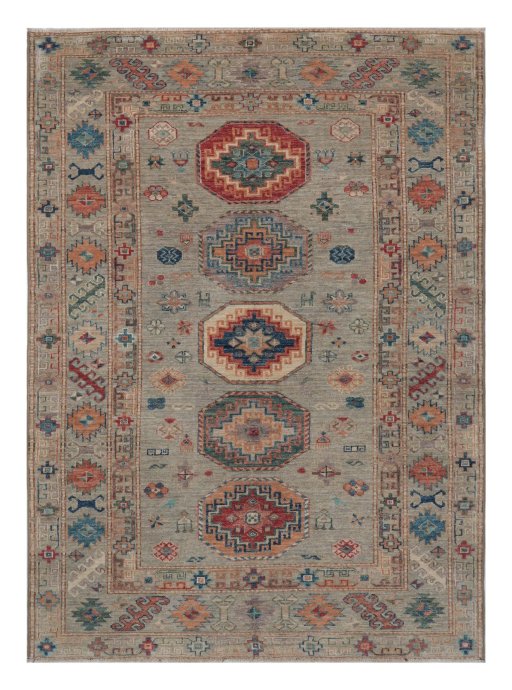
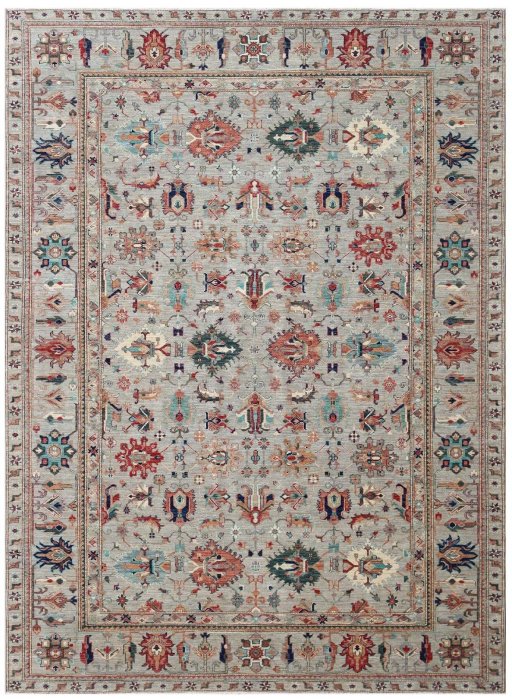
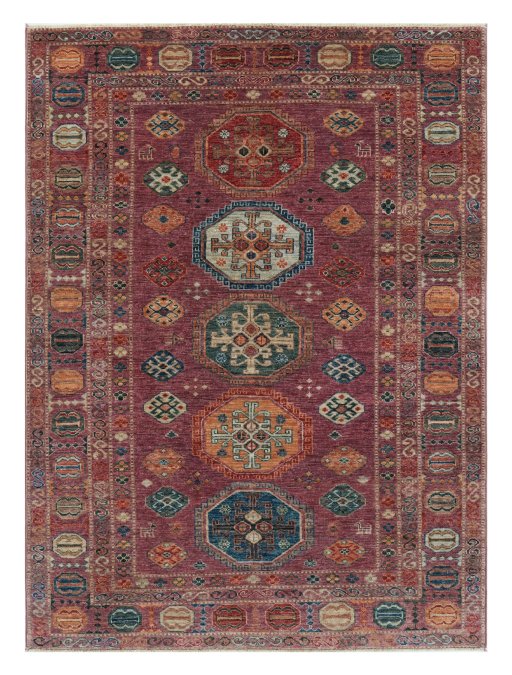
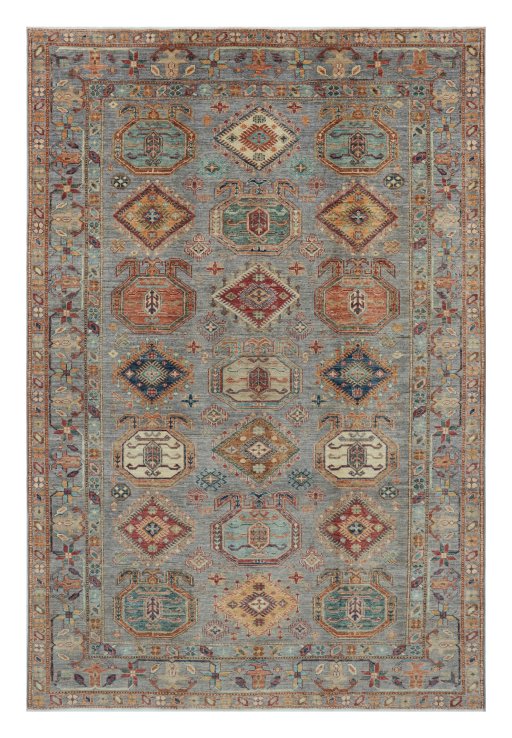
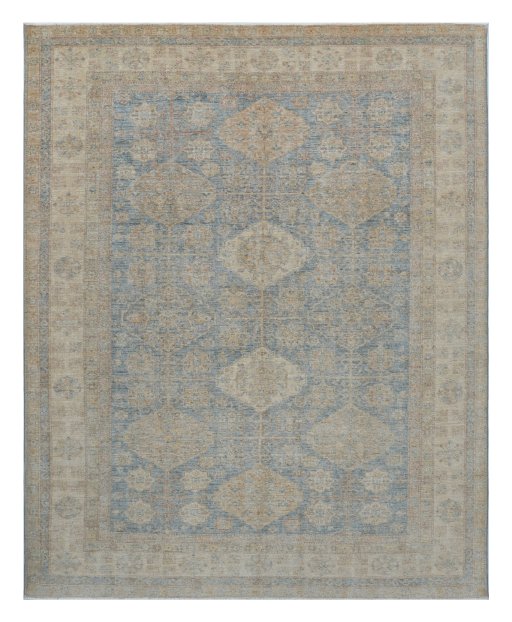
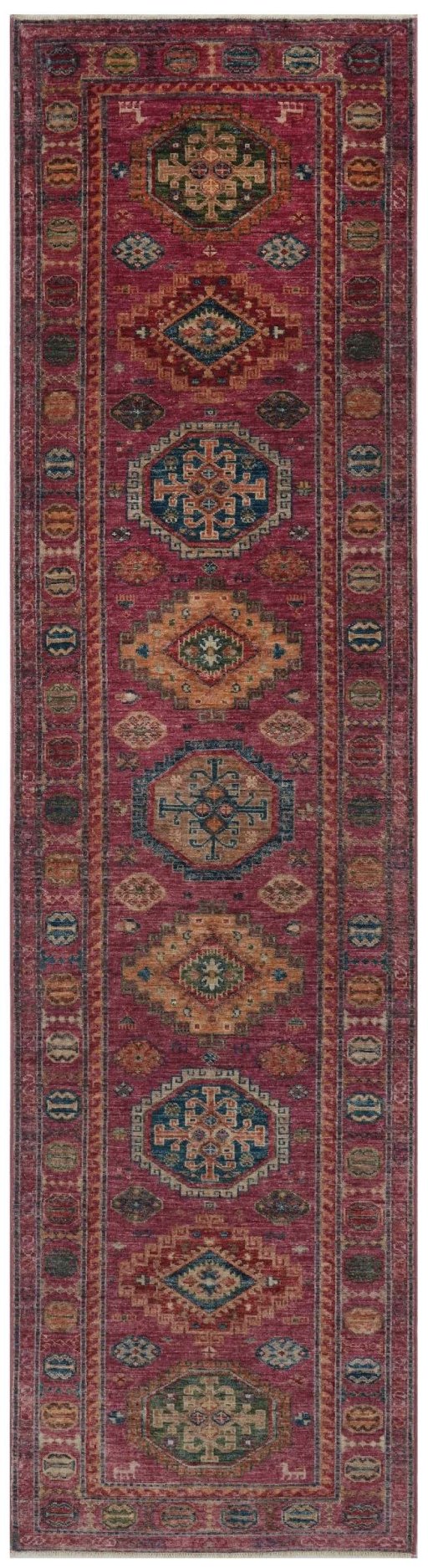
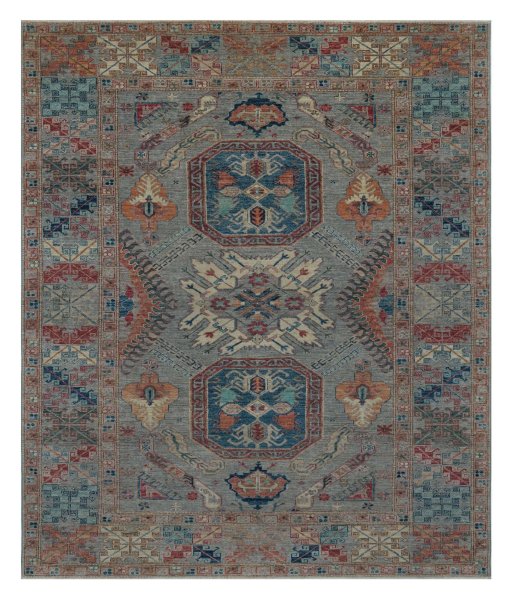
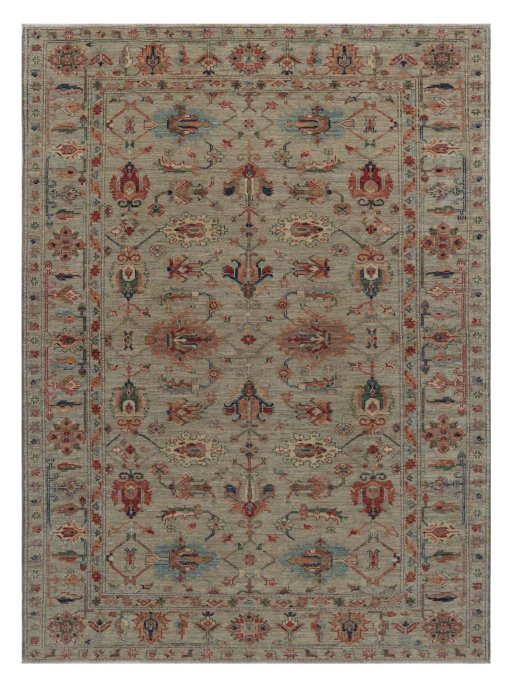
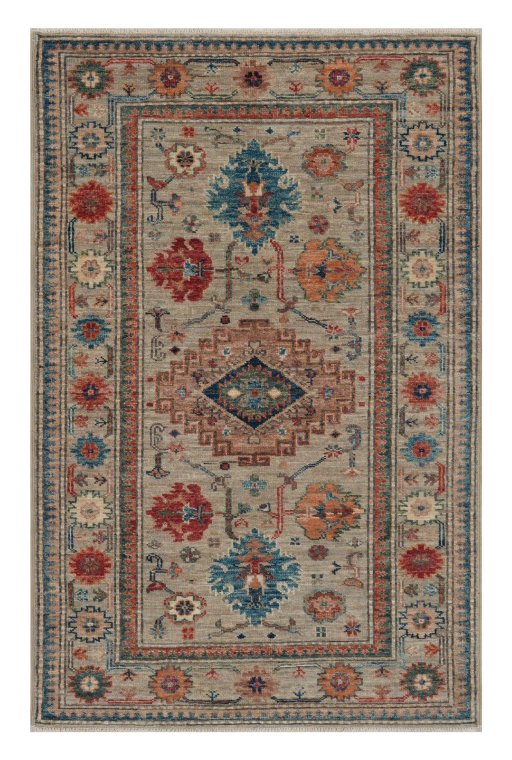
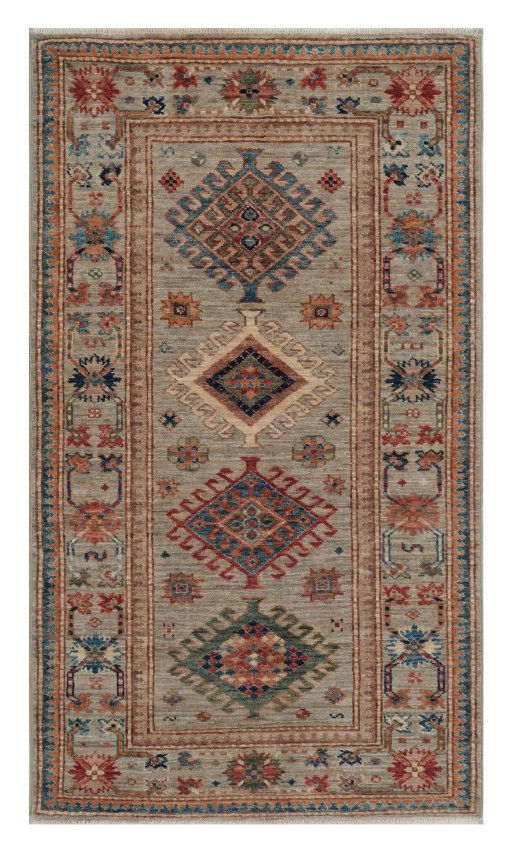
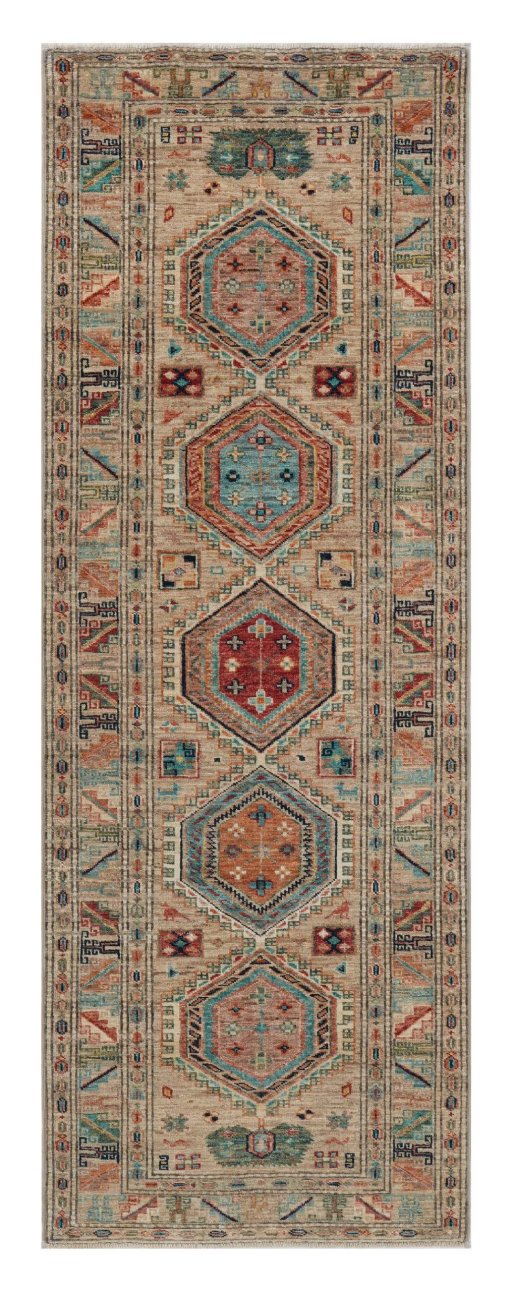
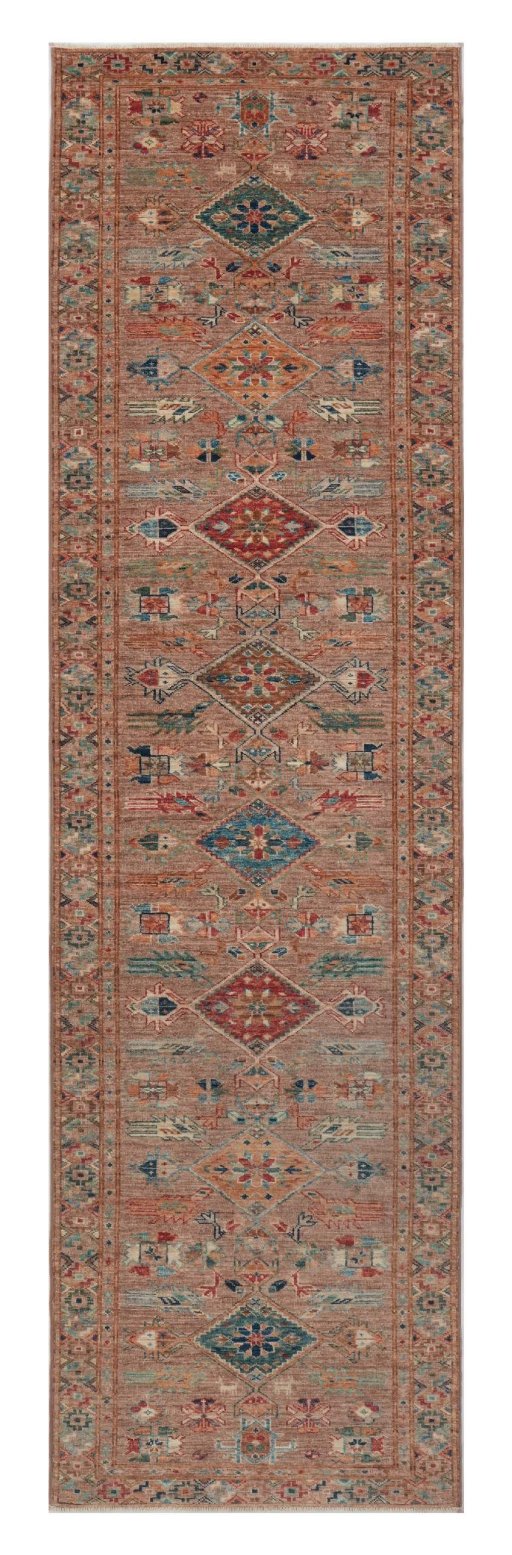
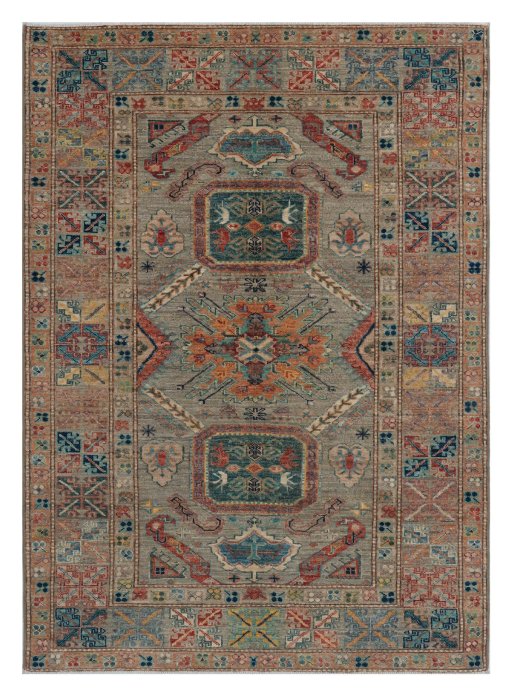
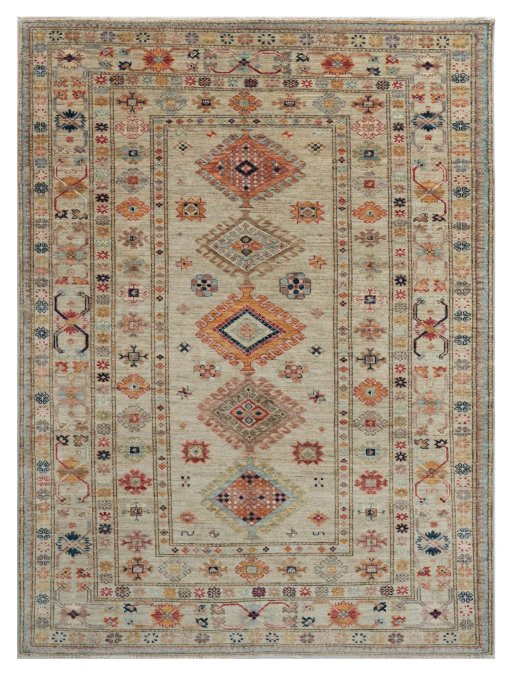
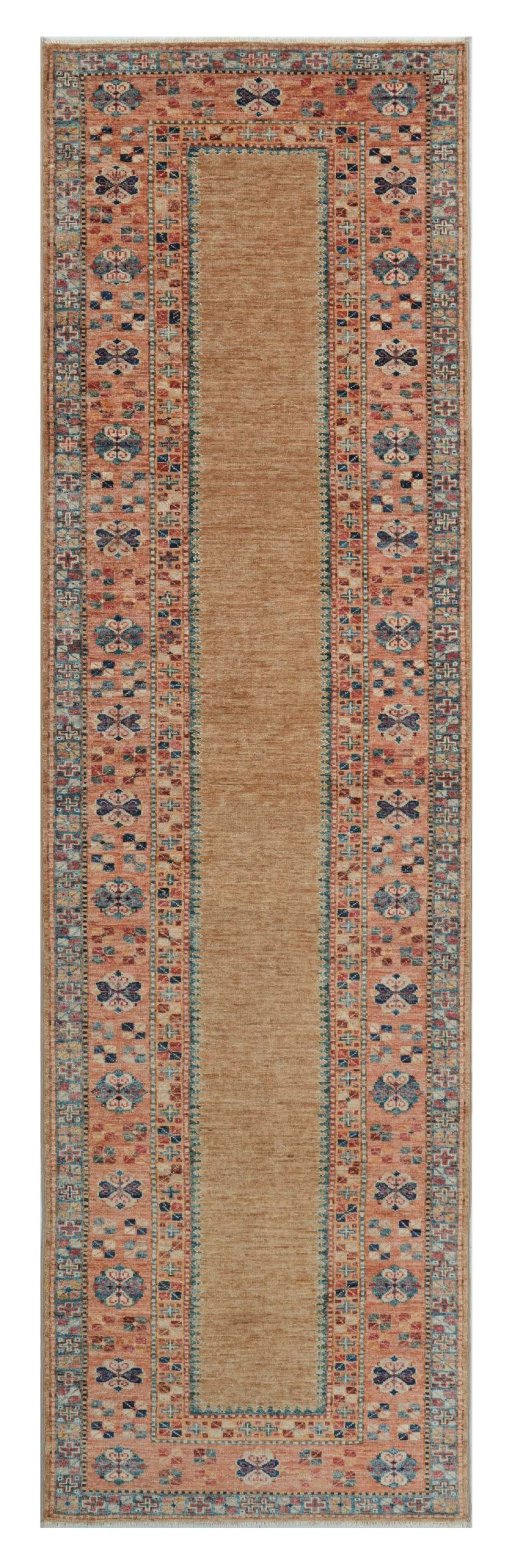
The colours in our collection cover both worlds. Antique Kazak pieces glow in red, blue, dark blue and yellow. Newer Kazak rugs often use a calmer palette of grey, beige, green and brown, which fits easily into modern rooms. Our Oushak rugs come mostly in beige, brown and soft pink.
All pieces are made from wool: Kazak, Oushak and Shirvan are hand-knotted, while Sumakh is flat-woven. Our Oushak and Sumakh pieces have a wool foundation, which makes them sturdy and helps them lie flat. To learn what the geometric motifs mean, read our article on regions, patterns and symbolism.
03
The Styles in Our Collection
Each of the four styles has its own character, origin and price range.
Kazak
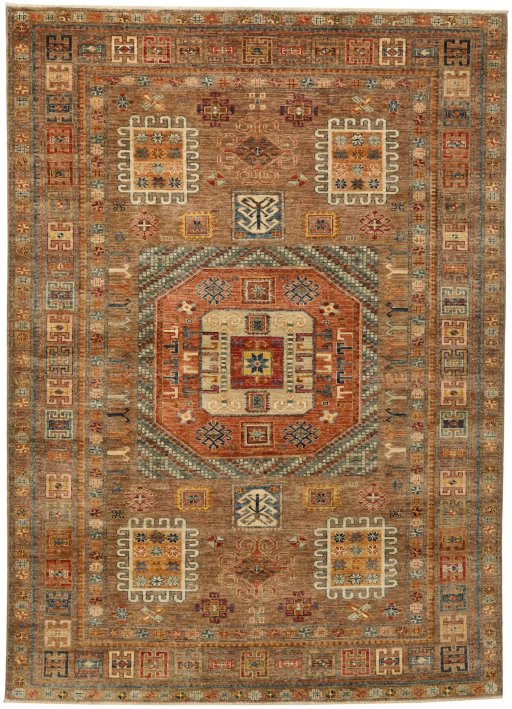
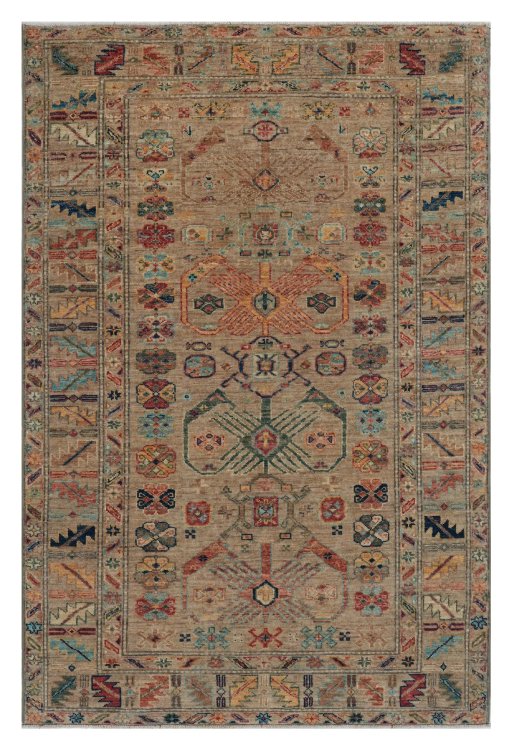
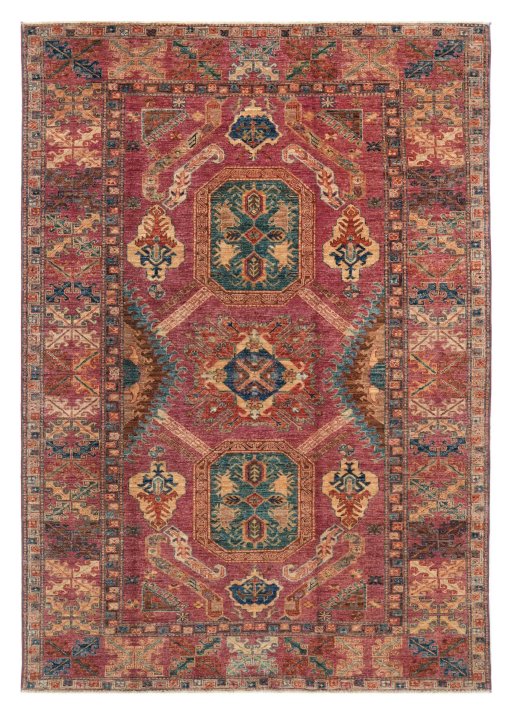
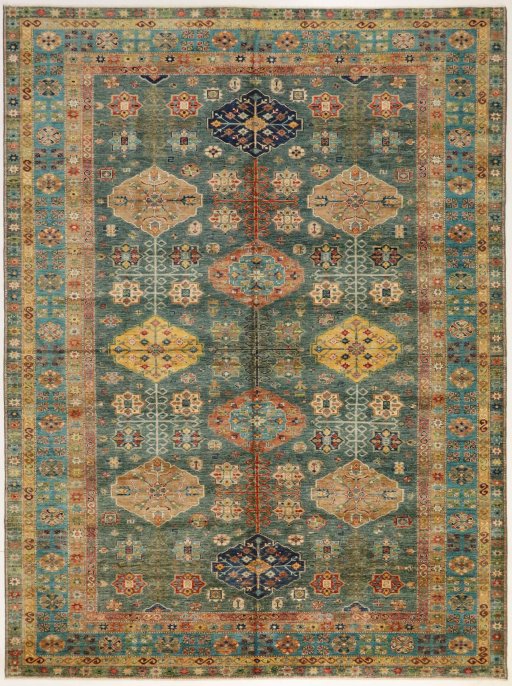
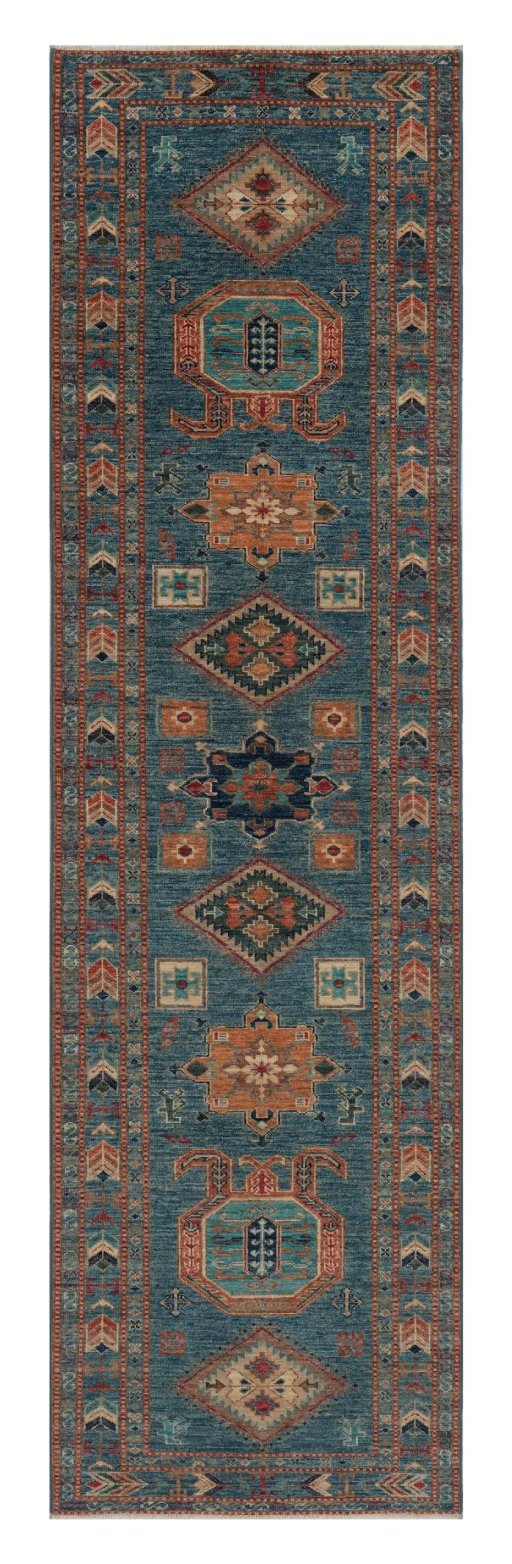
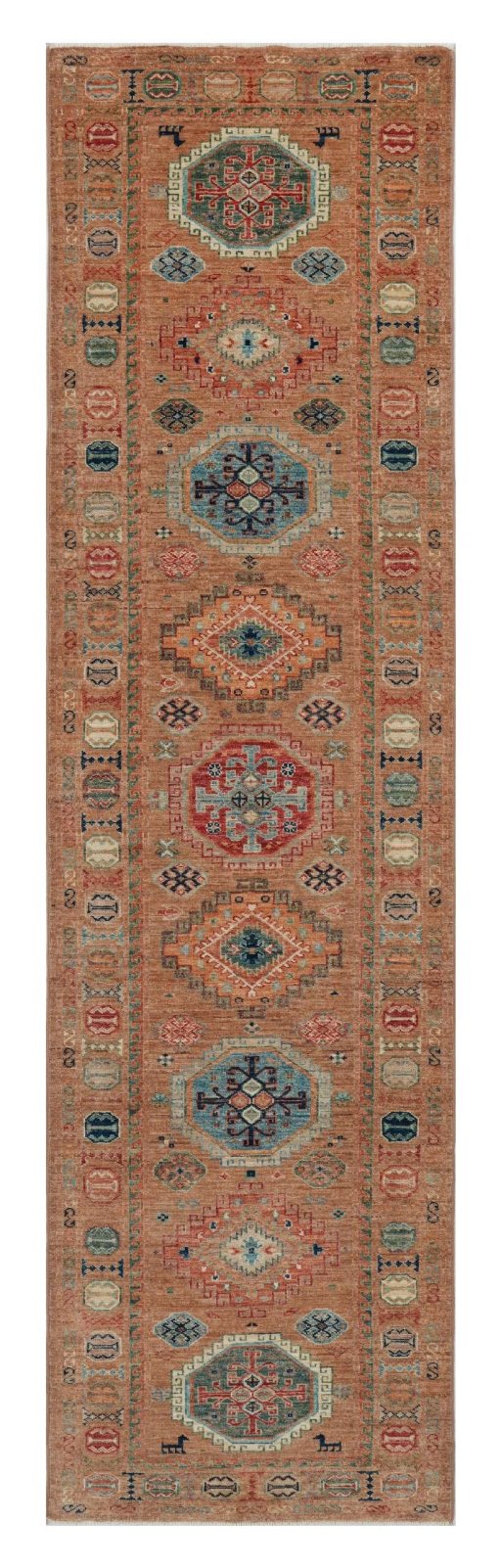
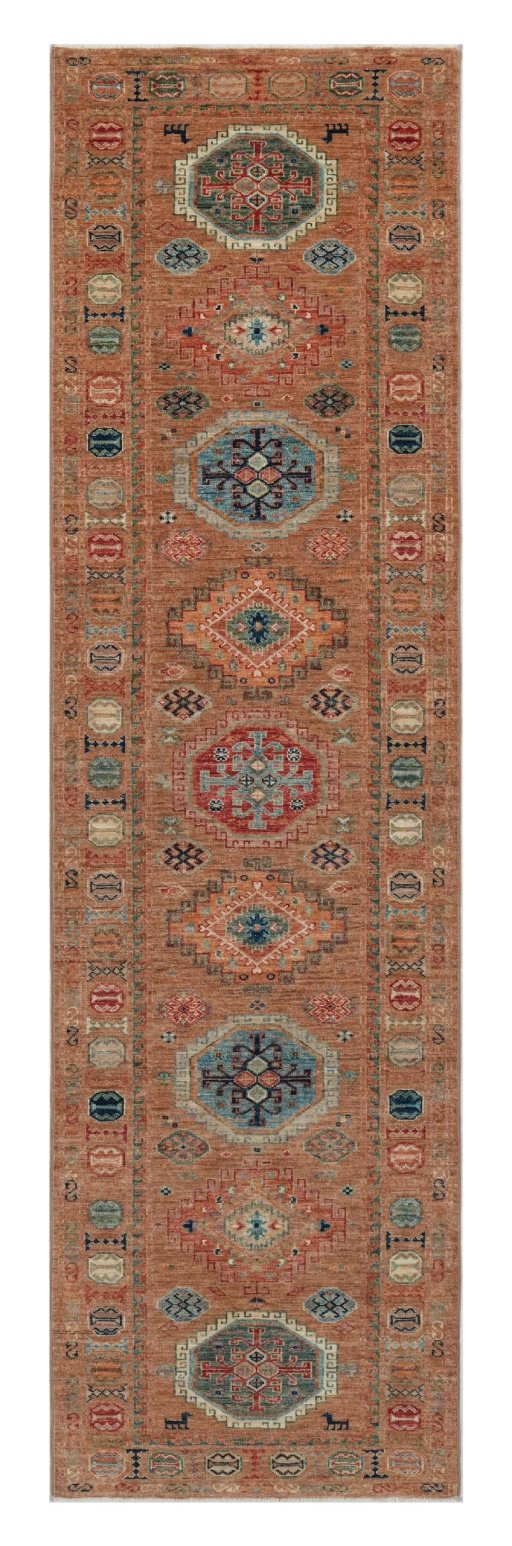
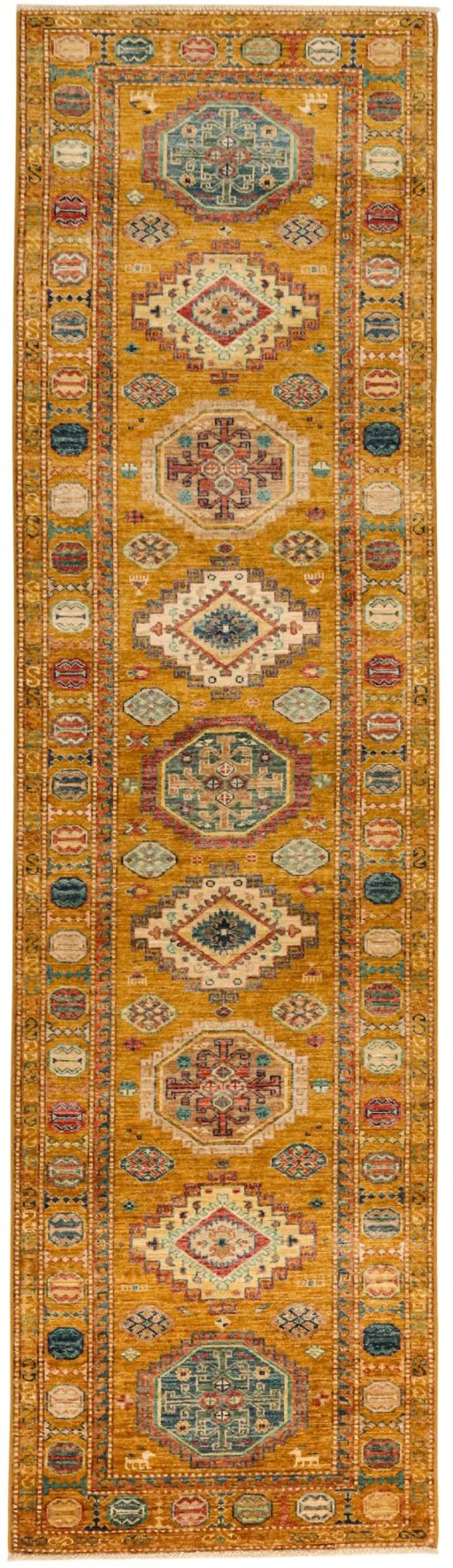
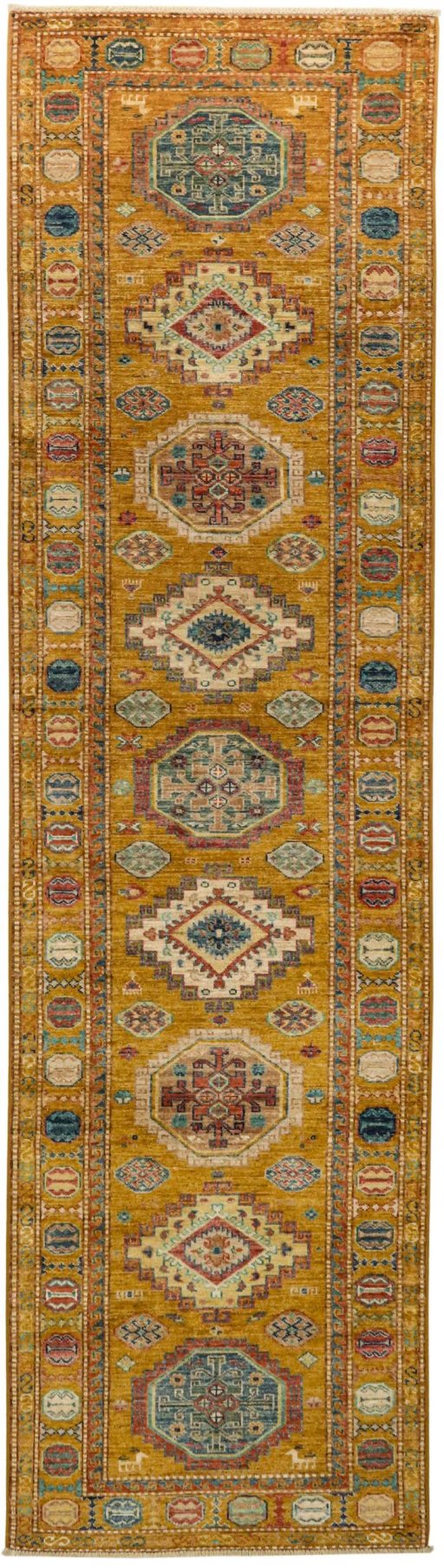
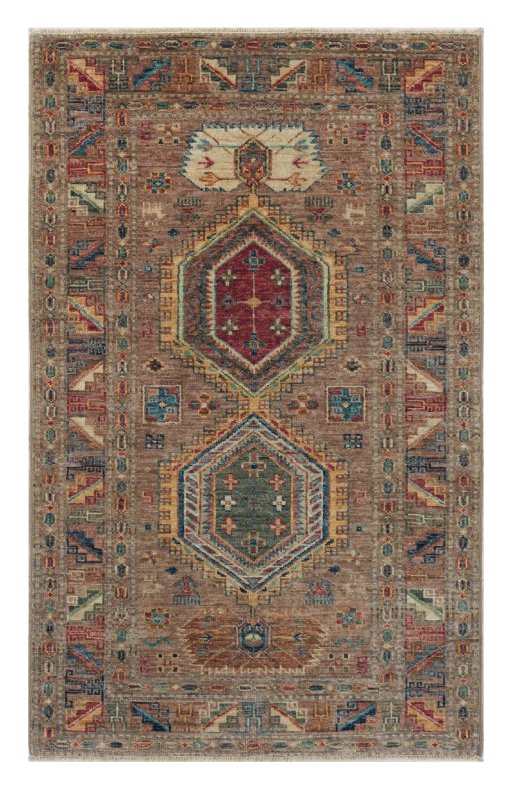
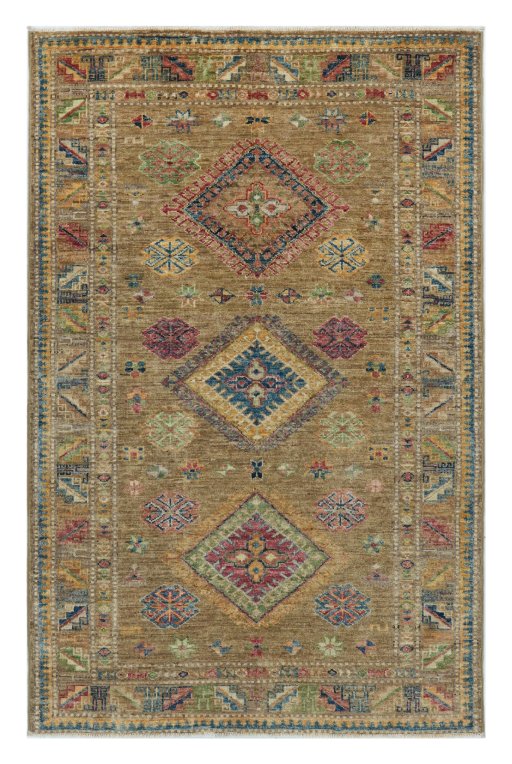
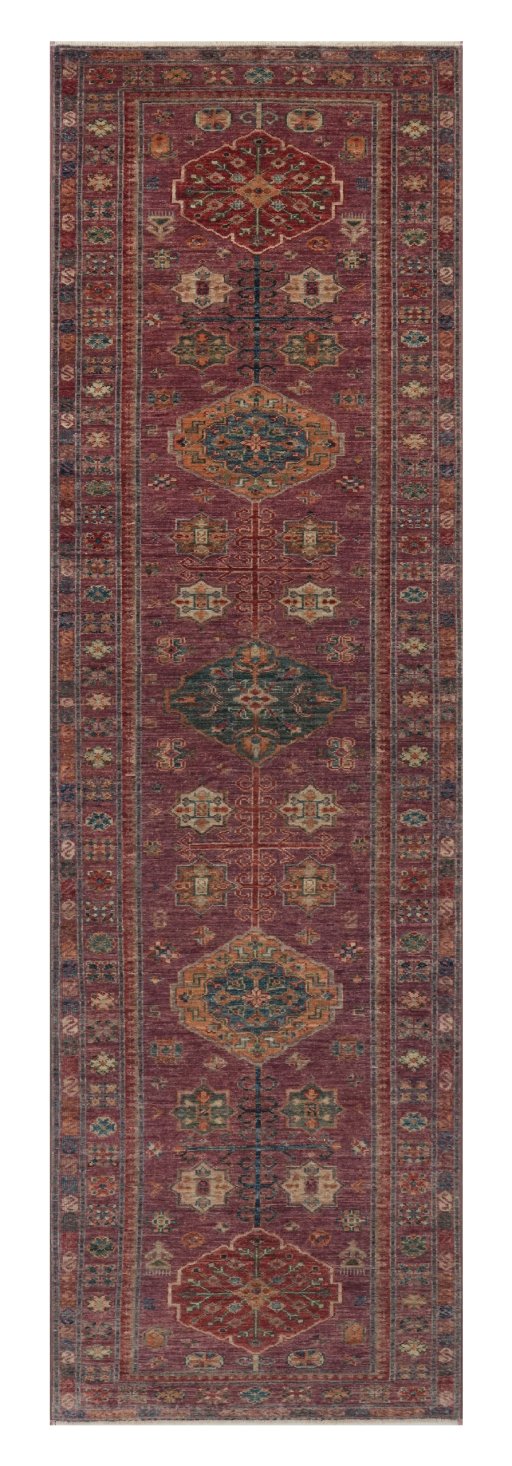
Kazak rugs take their name from a region in the south-western Caucasus. They are known for large, bold medallions, a relatively long pile and strong contrasts. This is the largest selection in the category: newer pieces from Pakistan in calm, modern colours, and a smaller group of antique Kazaks from Armenia dating from the 1880s to the 1900s. Sizes range from about 152 × 101 cm to 381 × 279 cm, which makes Kazaks a good fit for living rooms, bedrooms and entrances.
Oushak
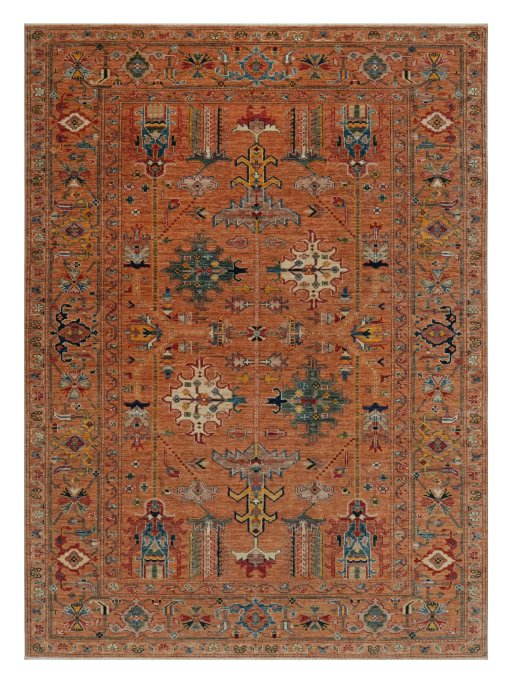
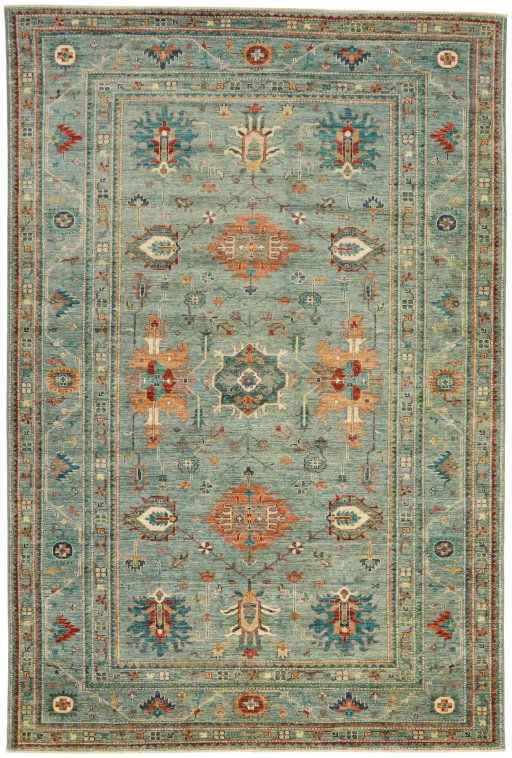
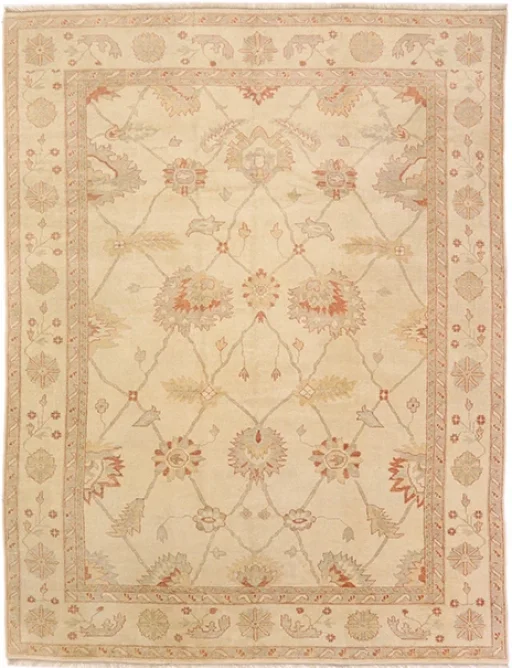
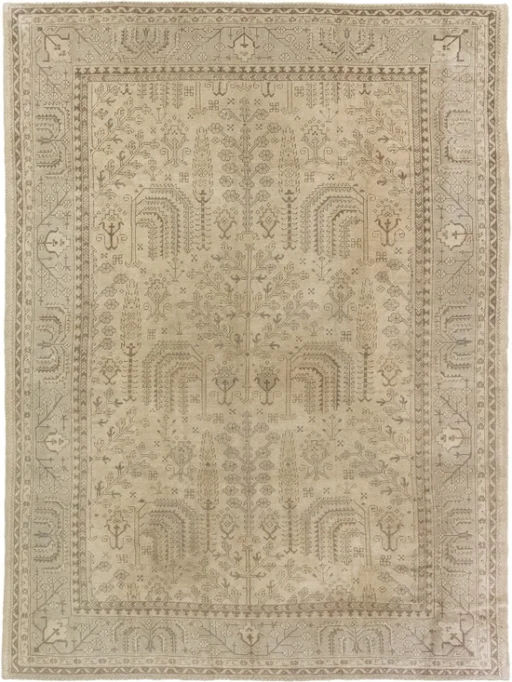
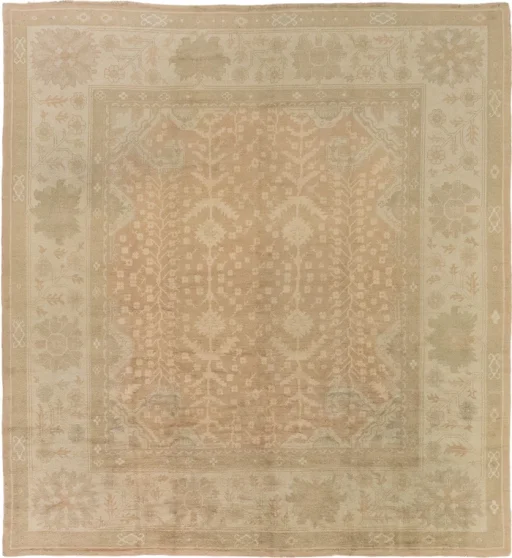
Oushak rugs come from western Anatolia and stand for large formats with soft colours and open designs. Most of our Oushaks are Turkish antiques from the 1920s, several of them over four metres long; a few newer pieces were knotted in India and Spain. With their beige, brown and pink tones, they suit spacious living and dining rooms in a classic or contemporary style.
Sumakh
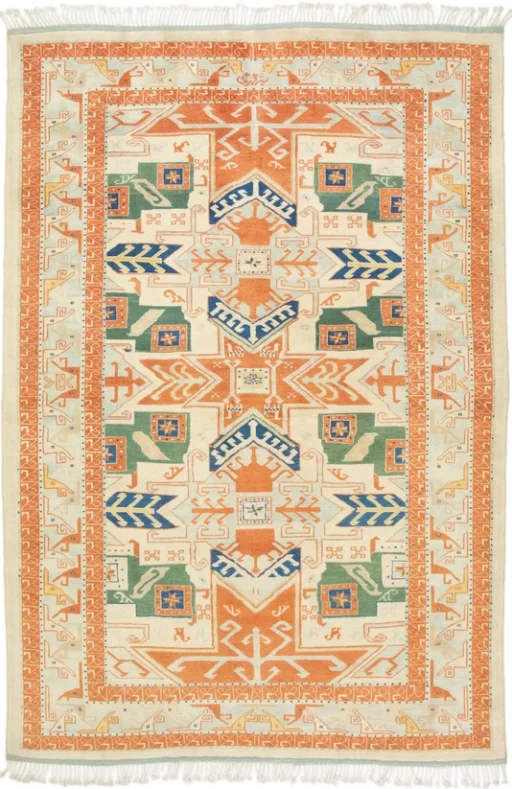
Sumakh rugs are not knotted but flat-woven: the weft is wrapped around the warp threads, creating a fine, slightly raised surface without pile. The technique comes from the Caucasus; our pieces were woven in Iran, most of them recently, a few in the 1920s and 1980s. Thin and light, they work well under a dining table or where a door has to open over the rug. If you like flat-woven rugs, also take a look at our kilims.
Shirvan
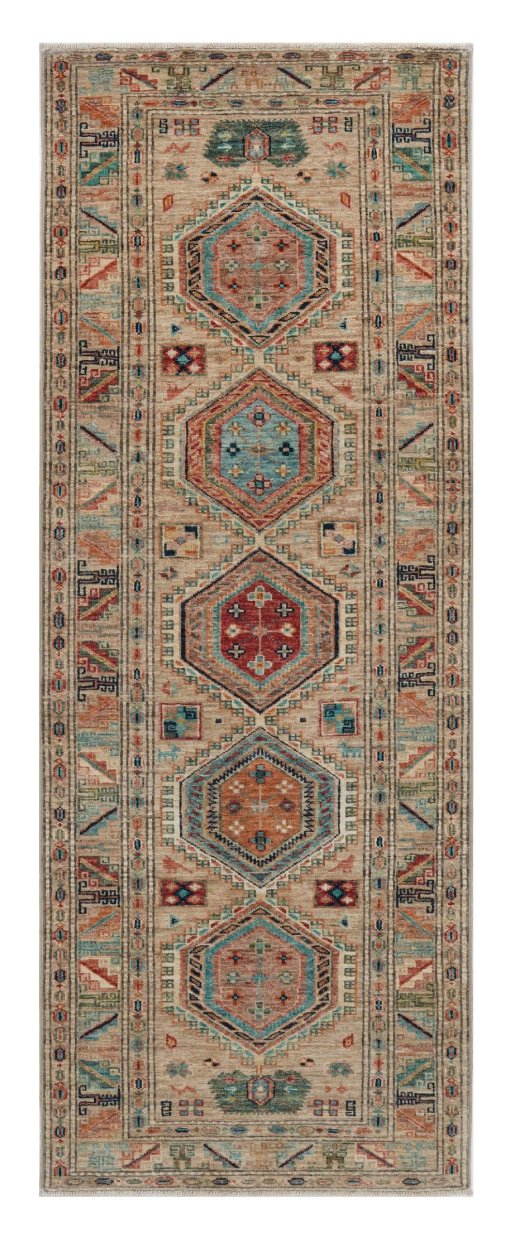
Shirvan rugs come from the eastern Caucasus and are known for a short pile and small, finely drawn geometric patterns. Our selection currently includes a single antique piece from the 1920s, a compact rug of 142 × 104 cm.
04
Antique Pieces
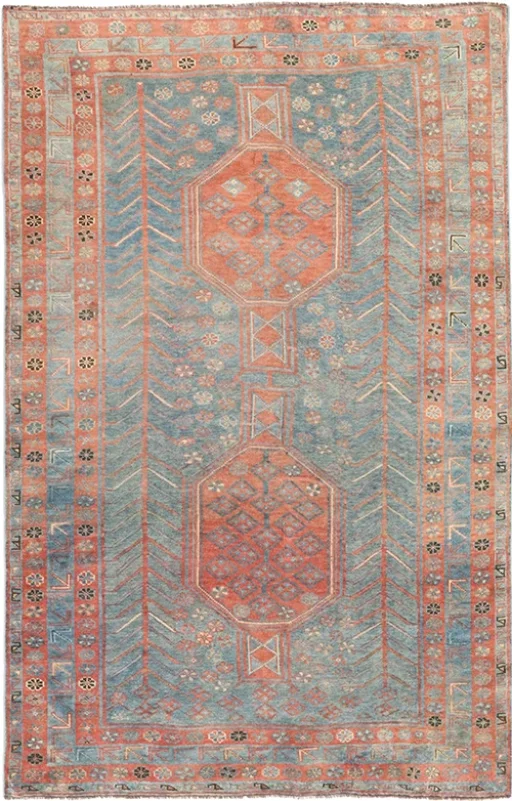
Our antique Kazak, Oushak and Shirvan rugs are between about 100 and 140 years old. Age shows: a lower pile in places, gentle colour changes or earlier repairs are part of their history. We describe the condition of every piece openly on its product page. You will find more antiques from other regions in our antique rug collection.
05
Turkish and Caucasian Rugs in Your Home
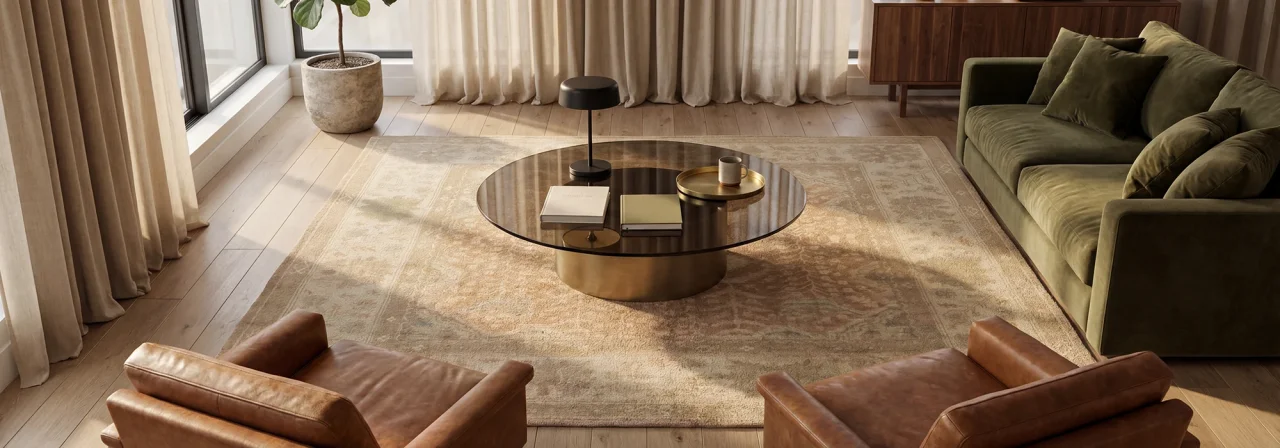
The graphic patterns of these rugs work as a counterpoint to plain furniture and natural materials. A Kazak brings colour and structure to a Scandinavian or boho interior; a soft Oushak calms a large, classic room. Our article on the boho style shows how to combine geometric rugs with other textiles.
In the living room, choose a size that allows at least the front legs of the sofa to rest on the rug. Under a dining table, plan for about 60–70 cm beyond the table on each side.
06
Personal Advice and Our Showroom
07
Frequently Asked Questions About Turkish and Caucasian Rugs
Short answers to the questions we hear most often.
What is a Kazak rug?
A Kazak rug is a hand-knotted wool rug in the style of the south-western Caucasus, with large geometric medallions, a relatively long pile and strong contrasts. Today, the style is also knotted in other countries, such as Pakistan.
What is the difference between Turkish and Caucasian rugs?
Caucasian rugs such as Kazak and Shirvan rely on strict geometry and strong colours. Turkish Oushak rugs tend to have larger, softer designs and lighter colours.
What is a Sumakh rug?
A Sumakh is a flat-woven rug without pile. The weft is wrapped around the warp threads, which creates a fine, durable surface.
Are Kazak rugs suitable for everyday use?
Yes. Their dense wool pile and sturdy construction make them hard-wearing, which is why they work well in living rooms and entrances.
Where are your Turkish and Caucasian rugs made?
Our antique pieces come from Armenia, Turkey and Iran; most newer Kazak rugs come from Pakistan. The exact origin is listed on every product page. If you have questions, our team will advise you personally.