
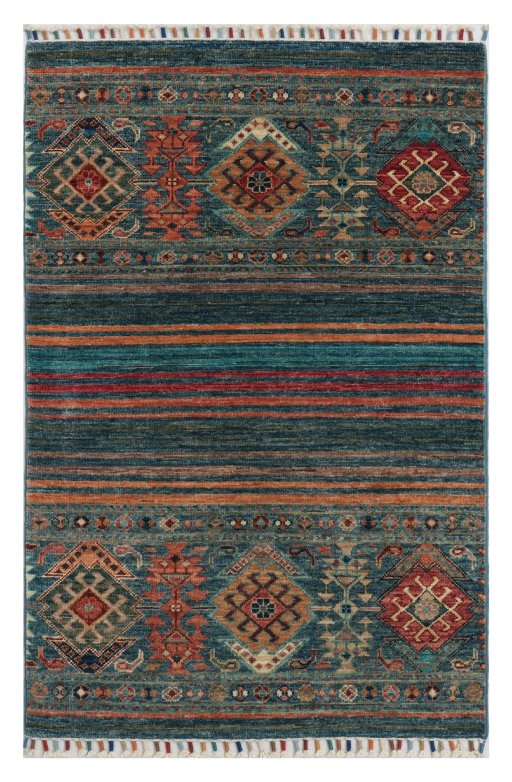
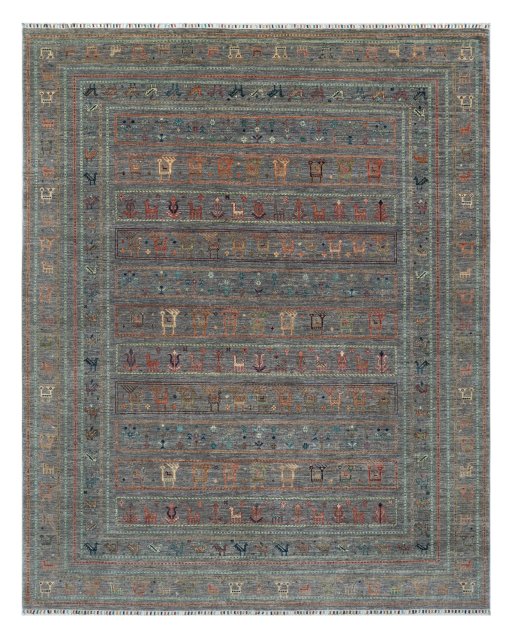
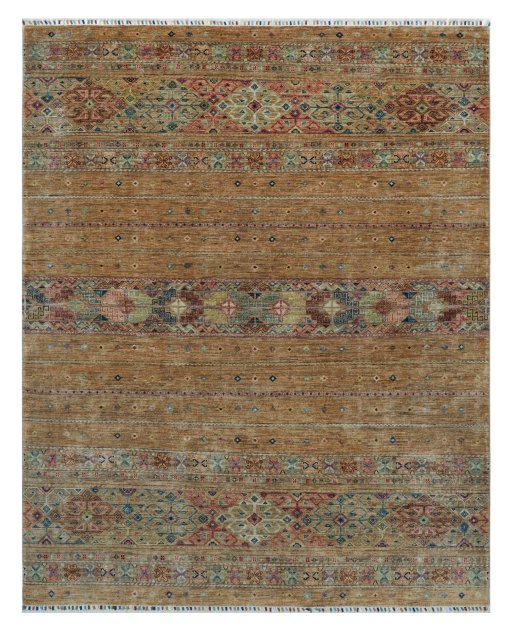
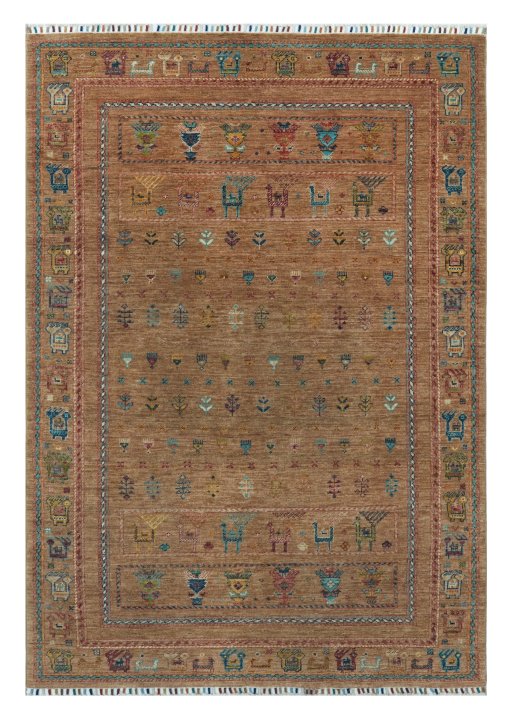
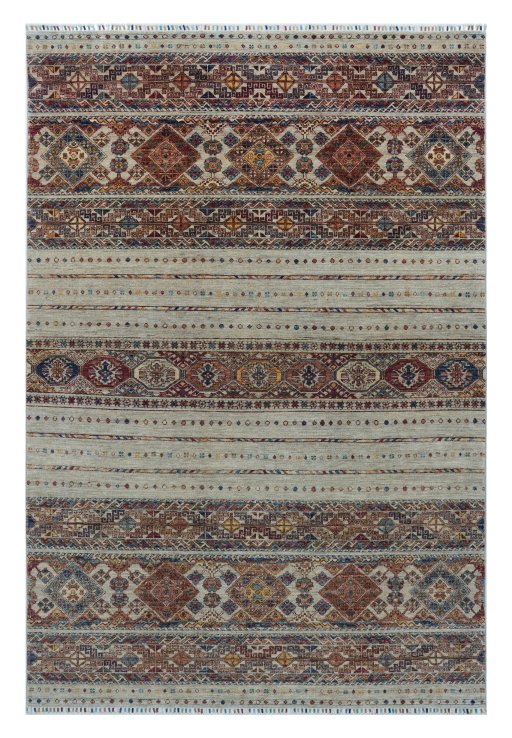
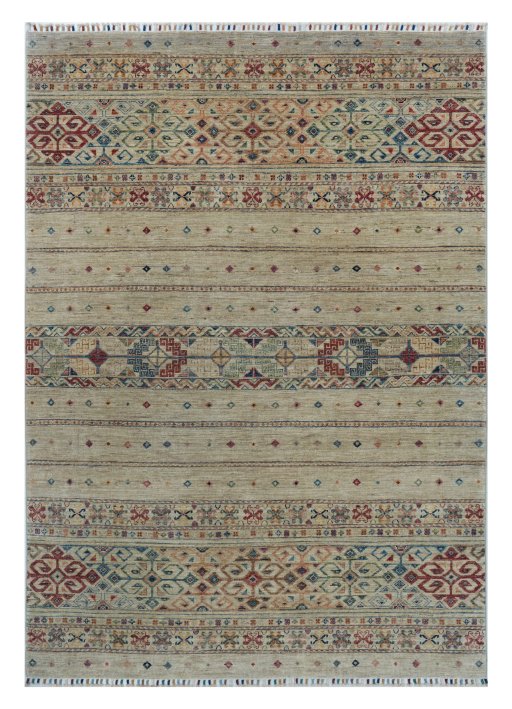
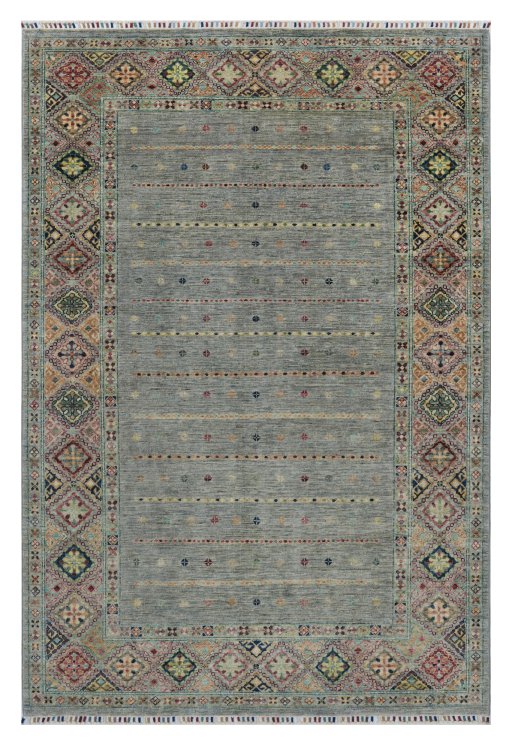
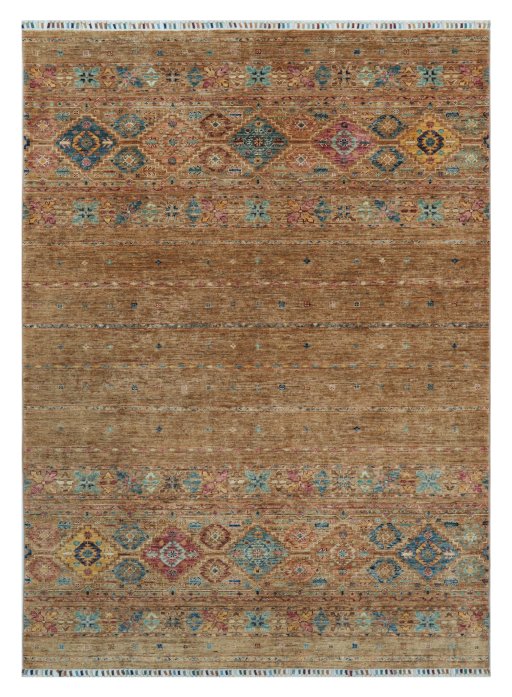
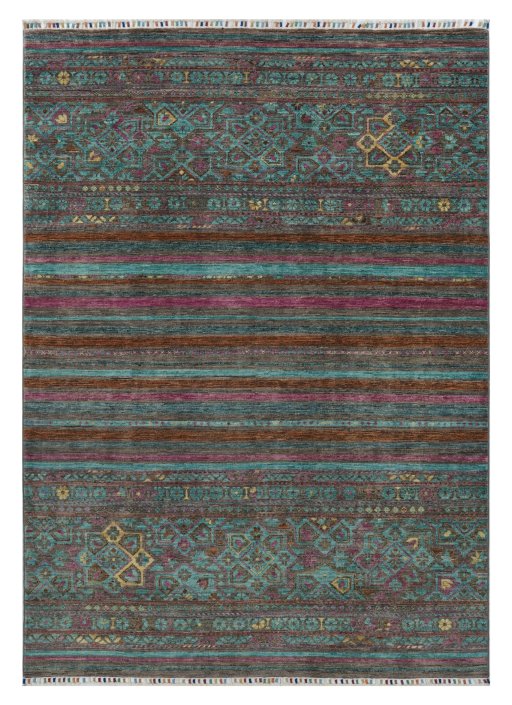
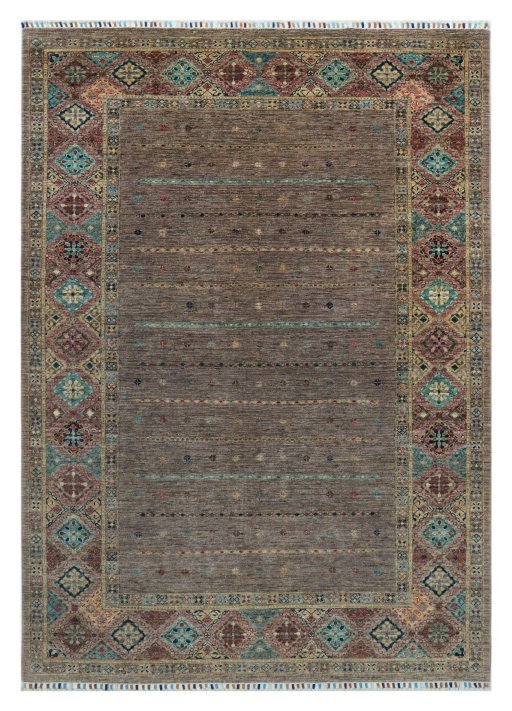
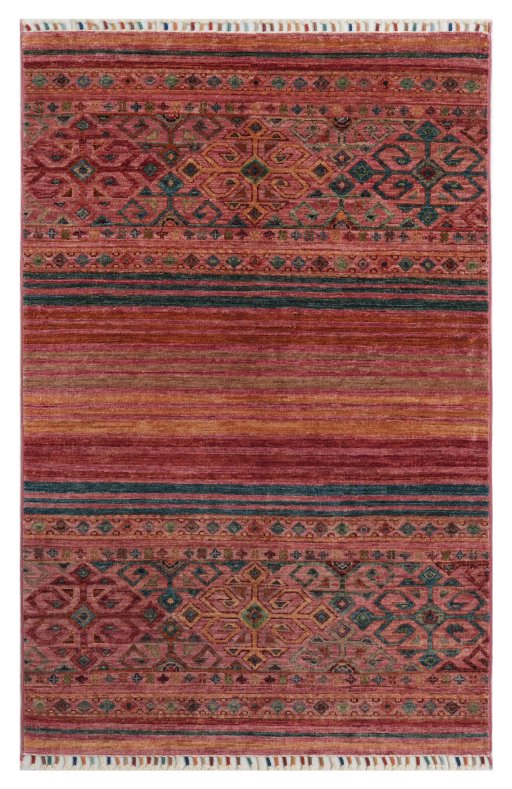
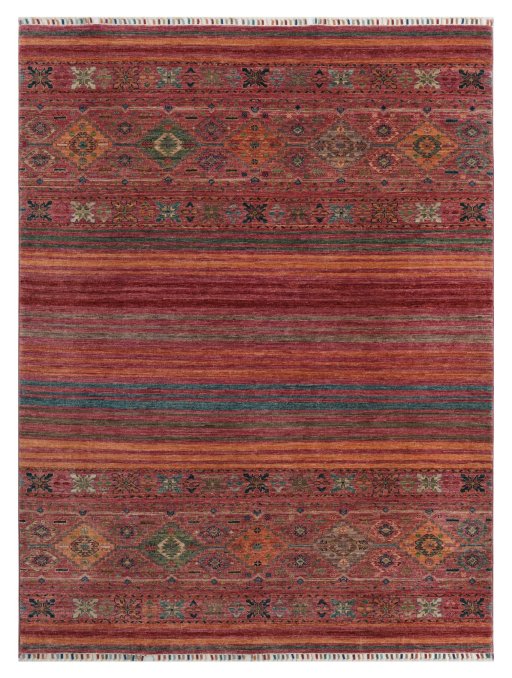
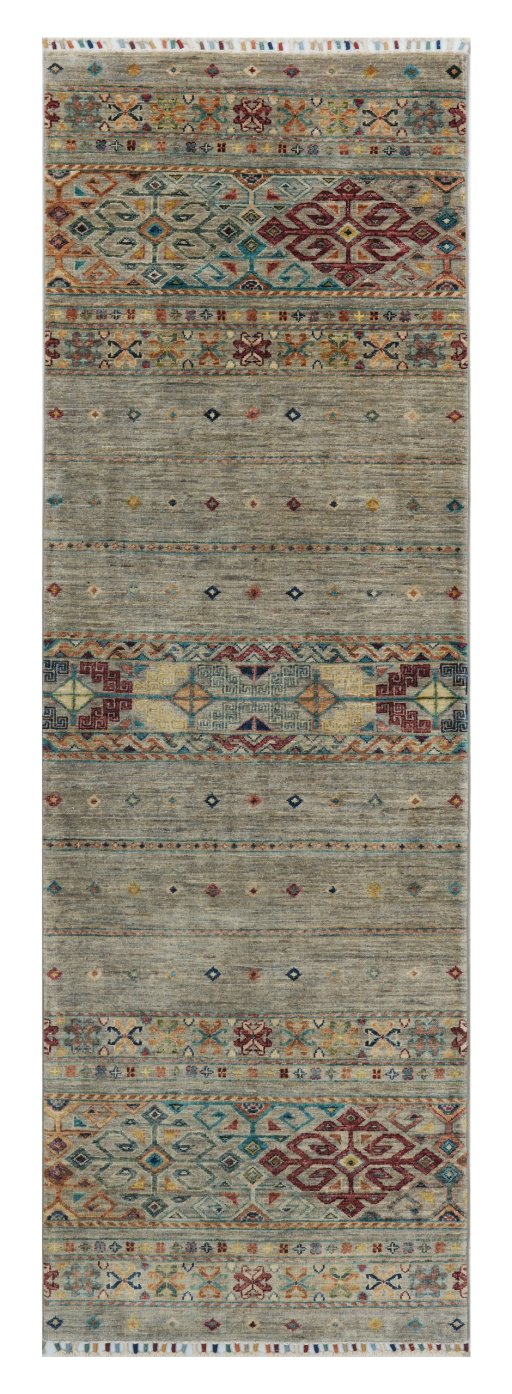
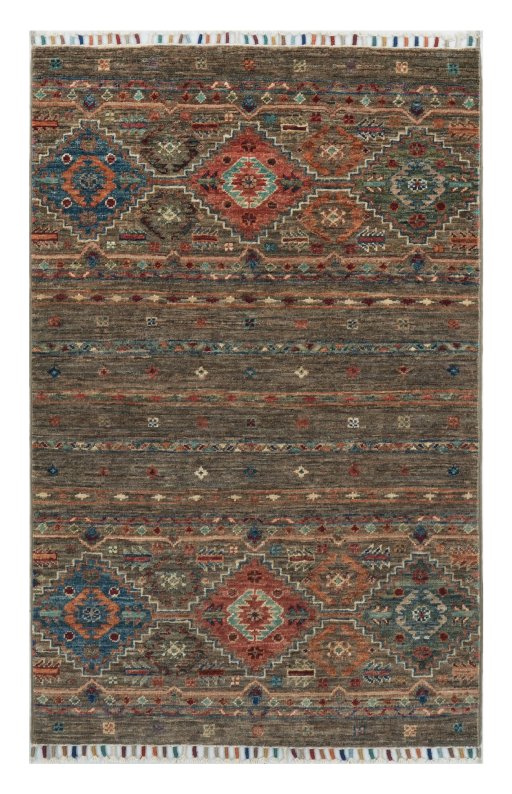
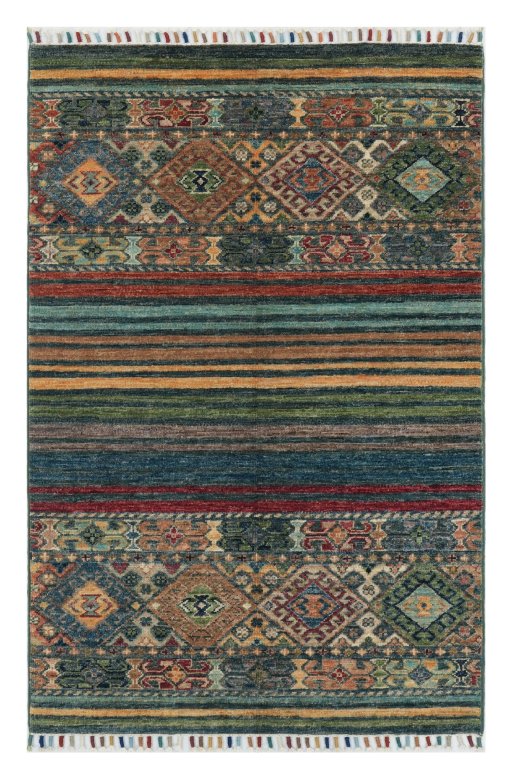
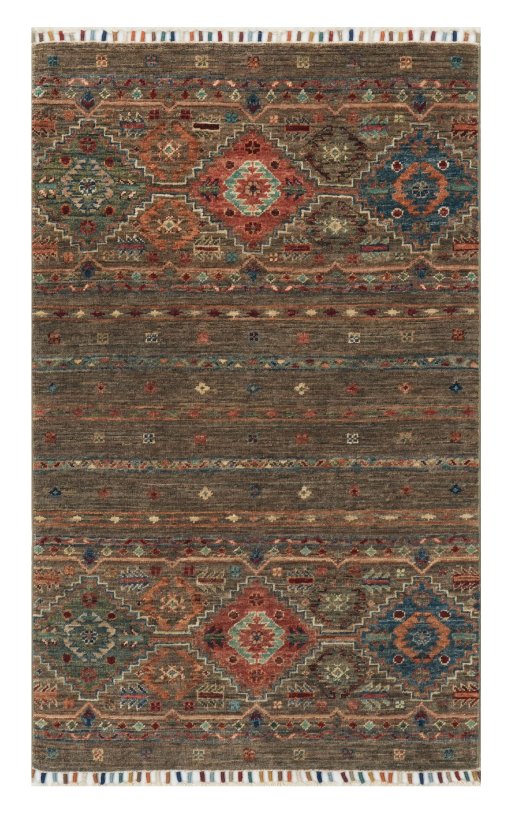
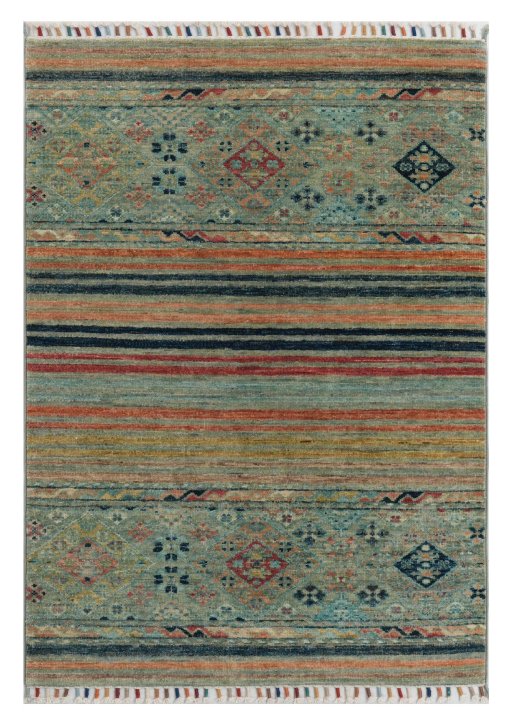
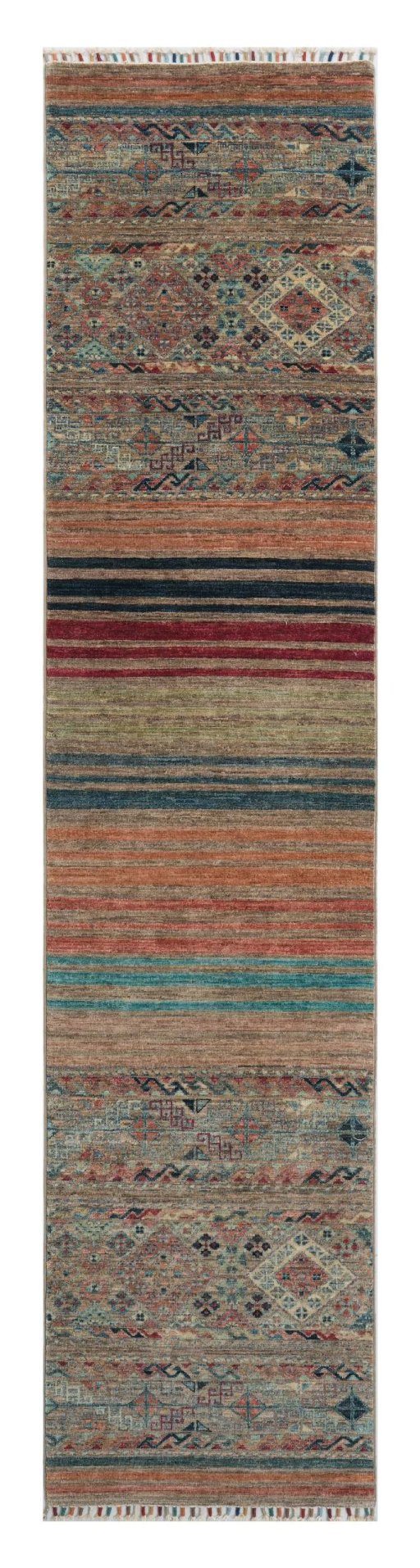
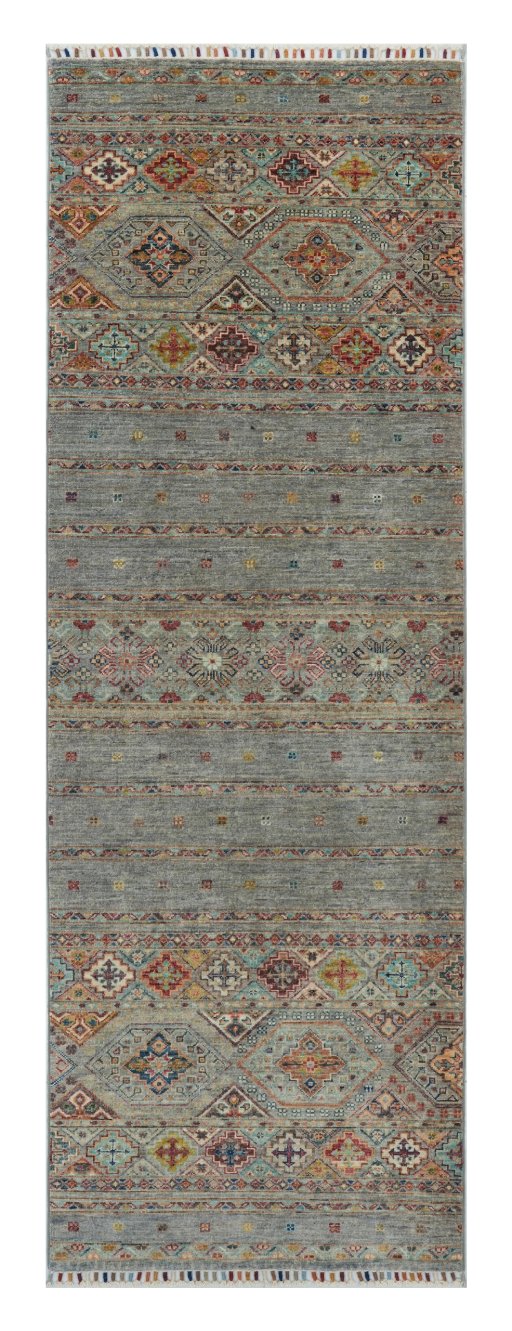
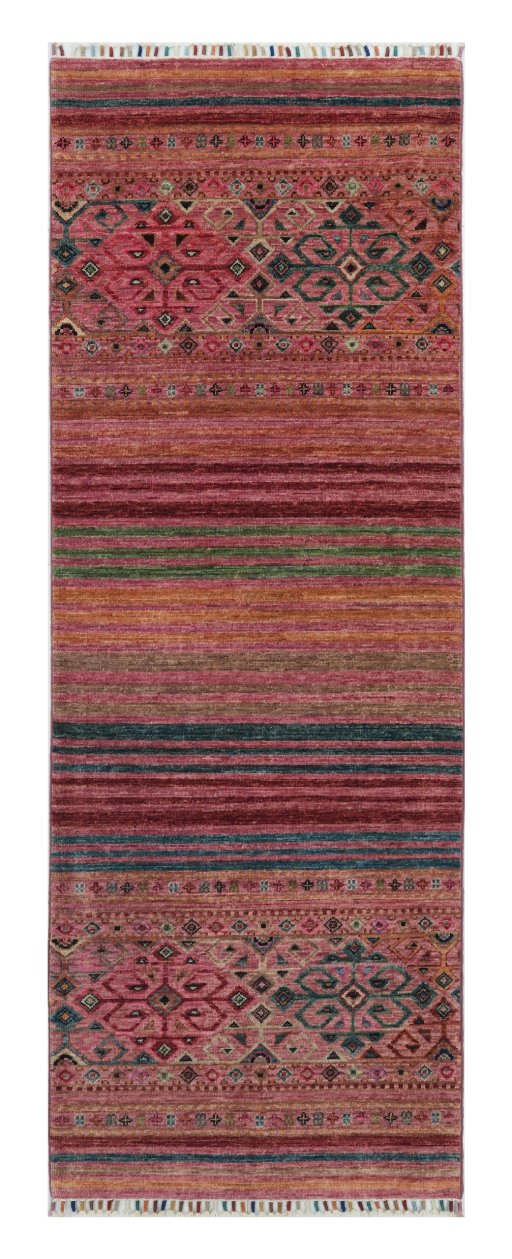
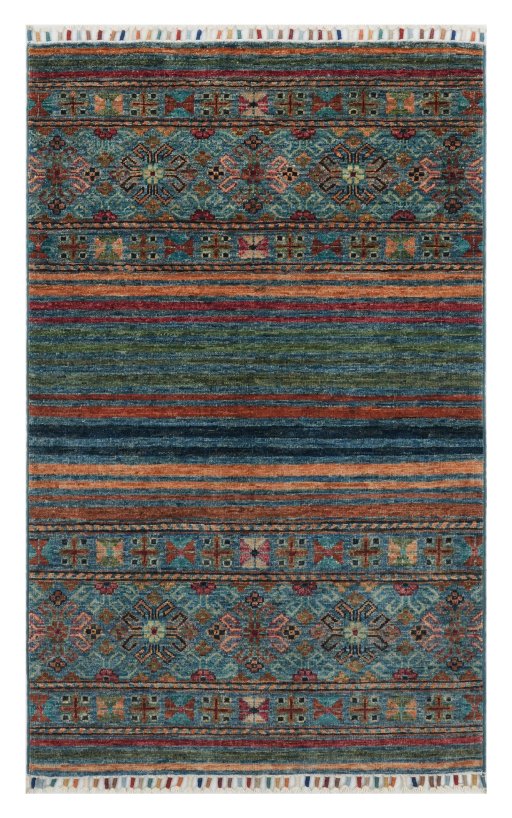
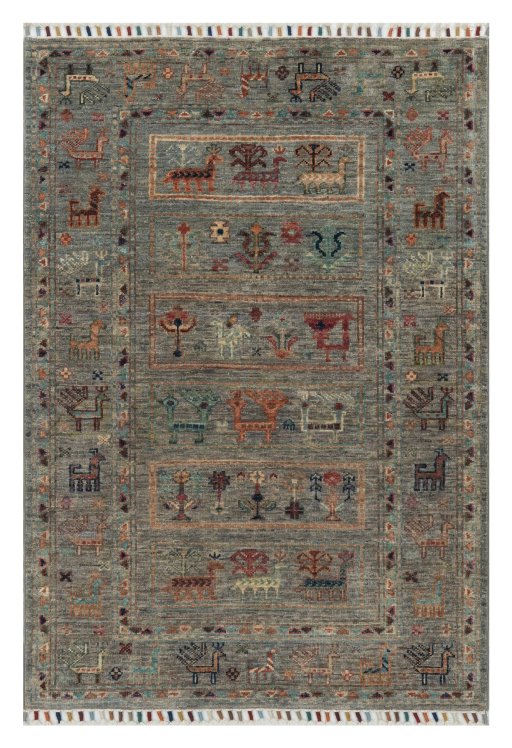
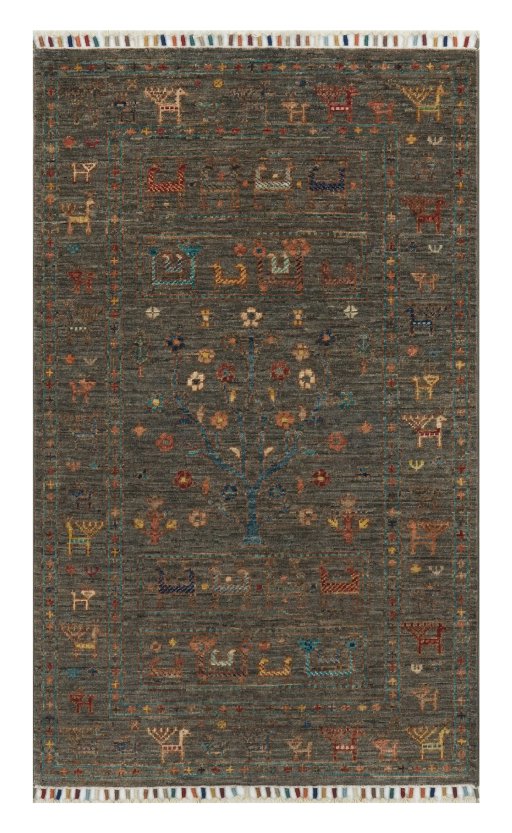
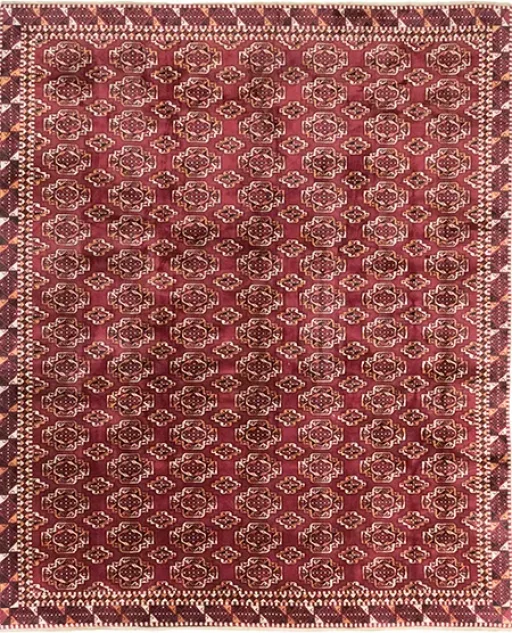
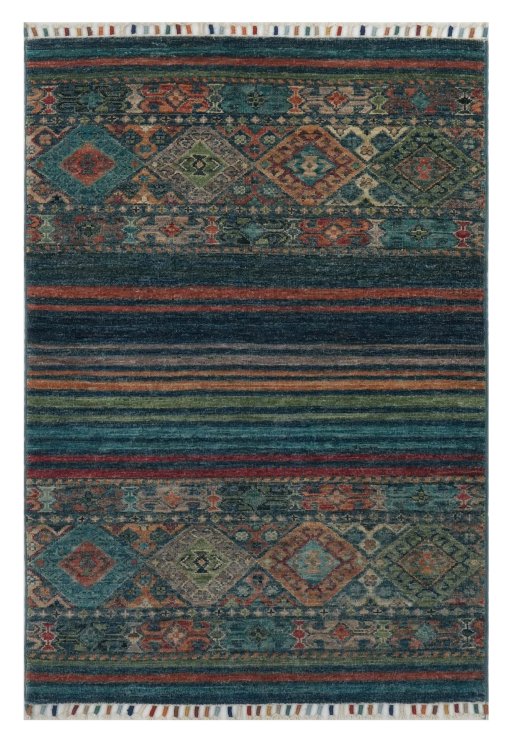
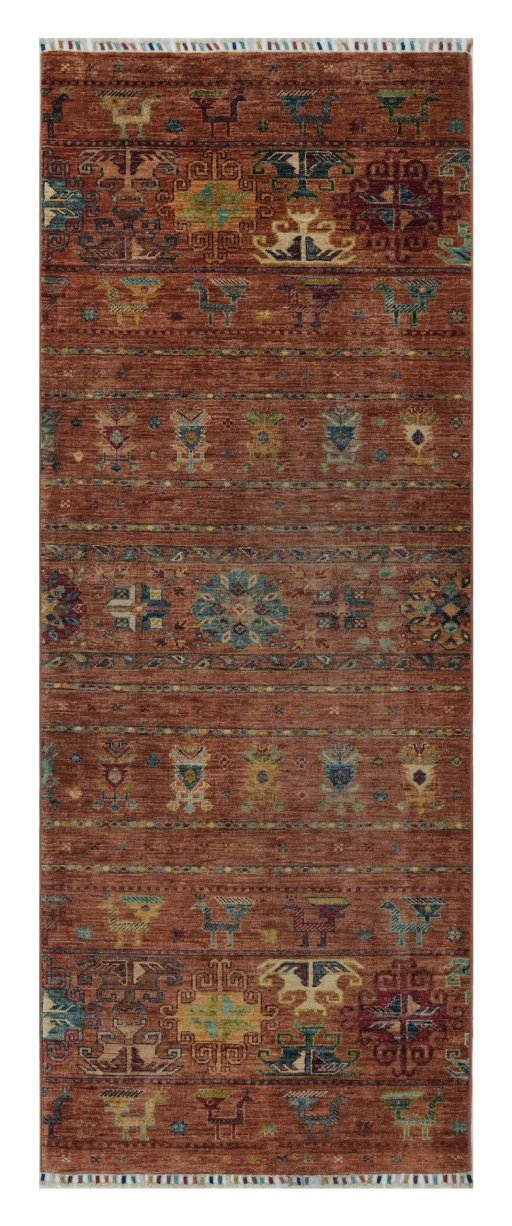
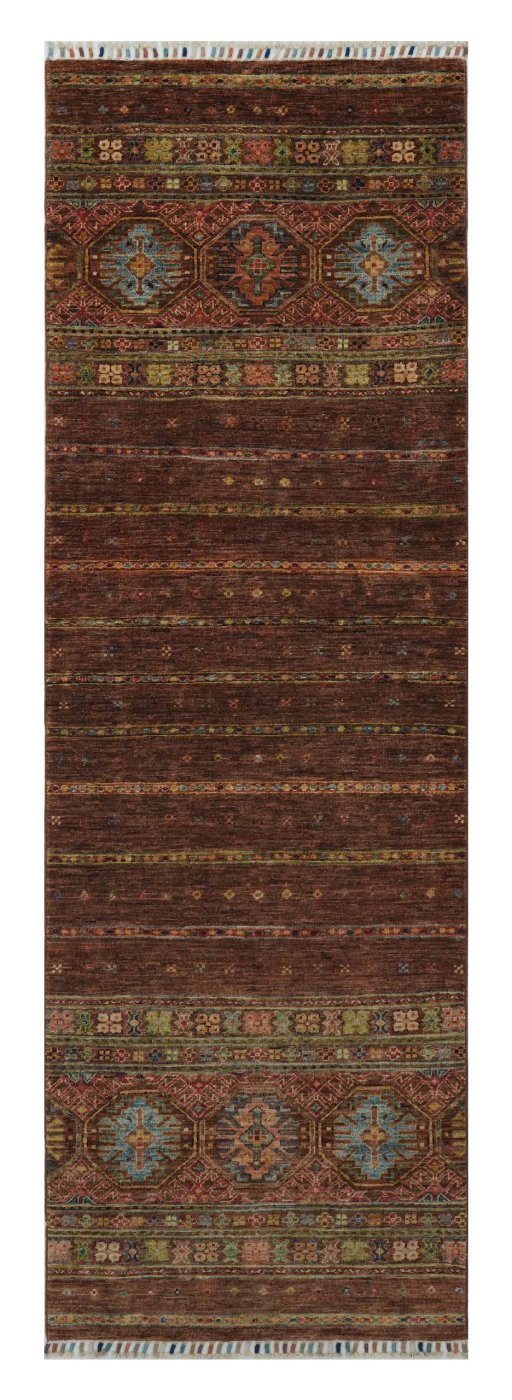
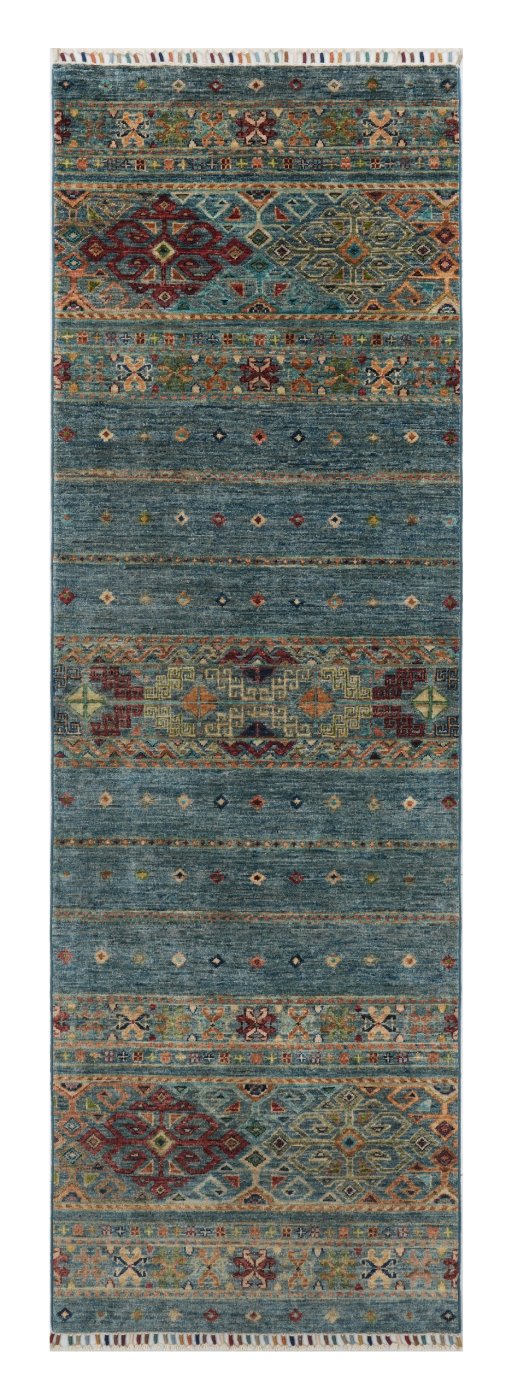
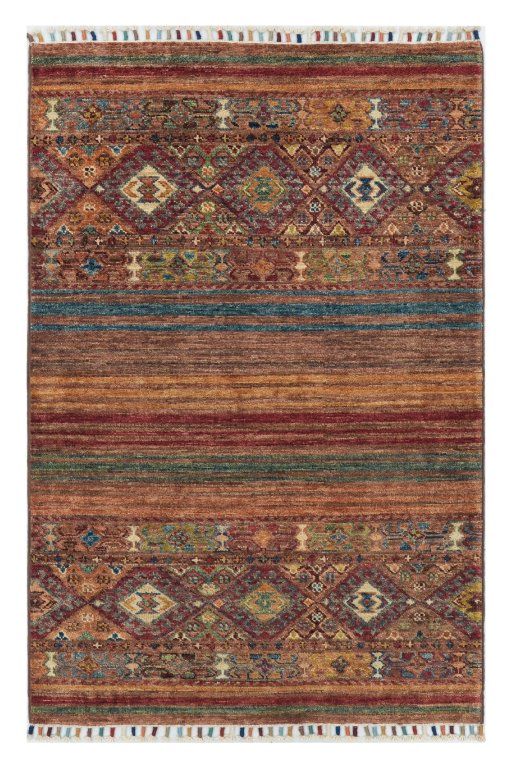
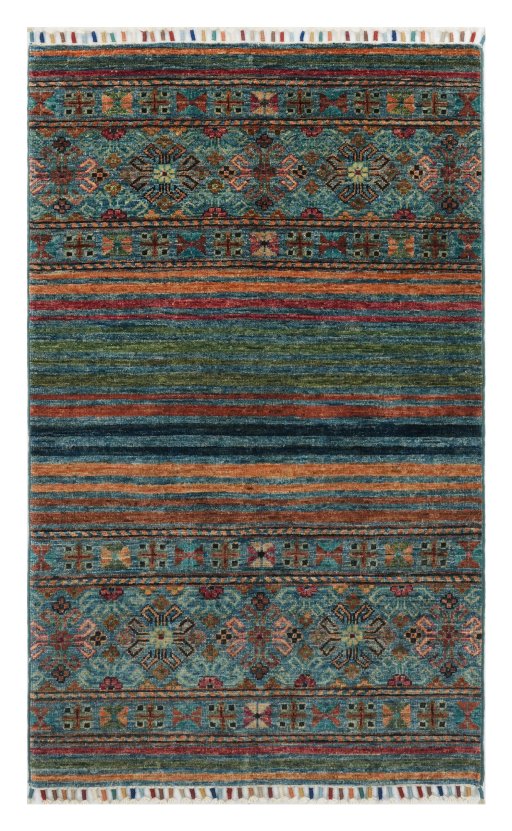
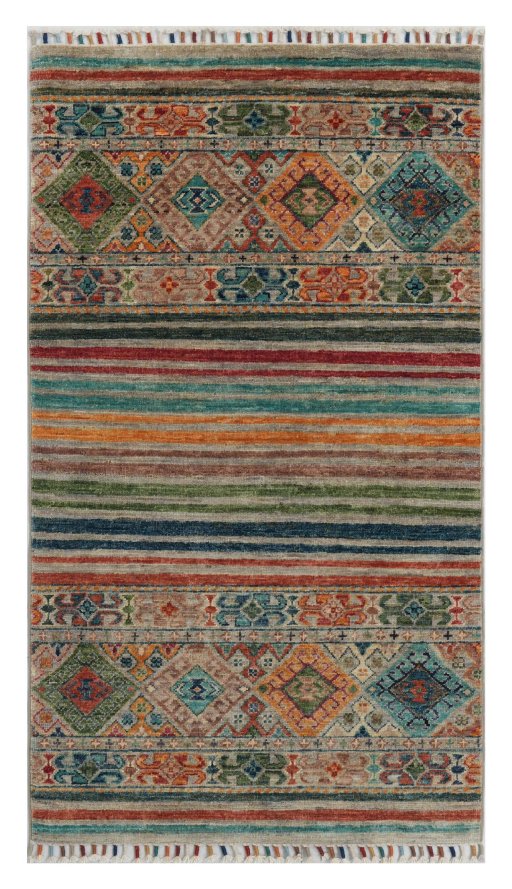
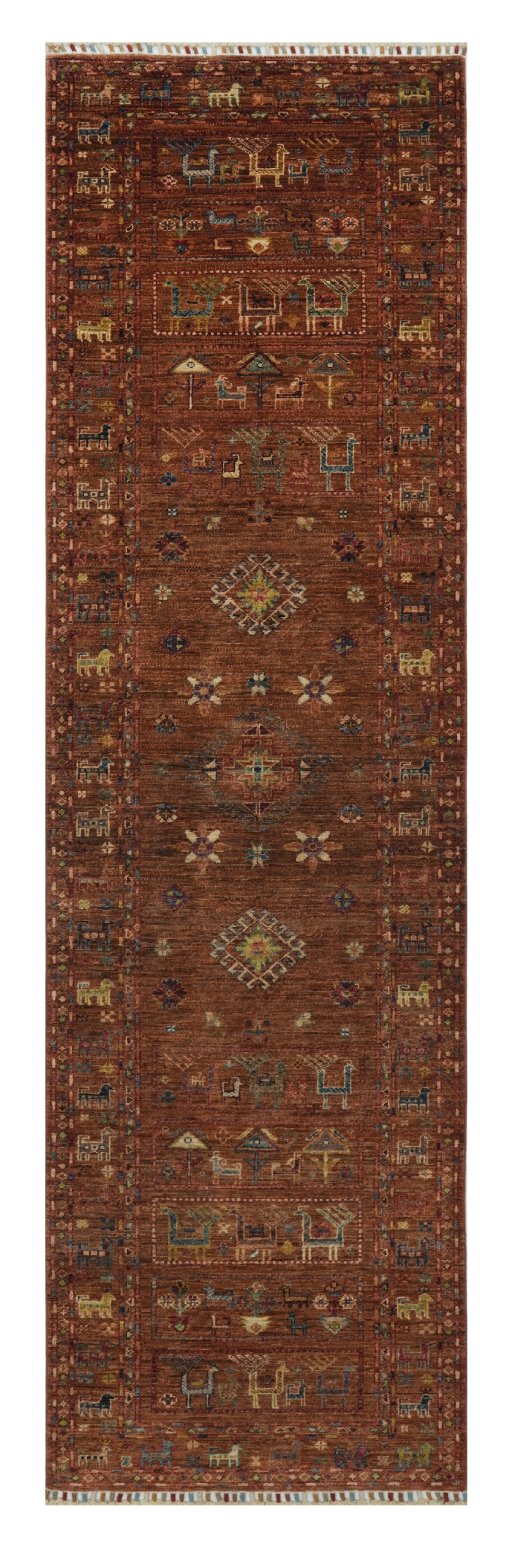
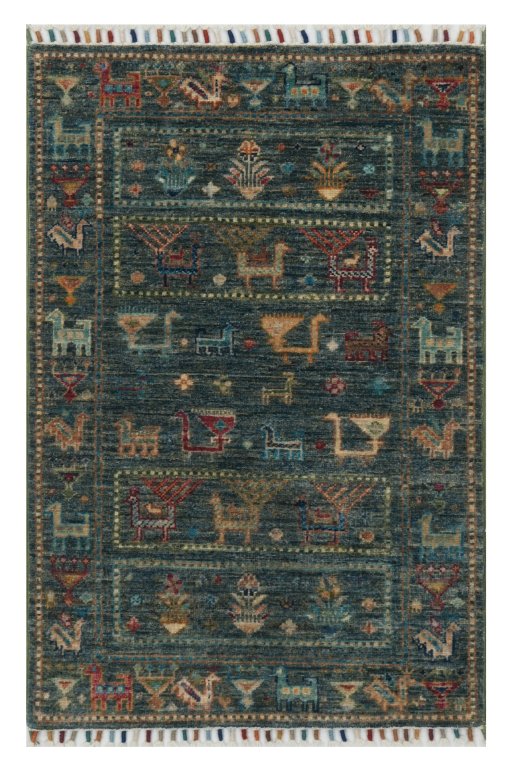
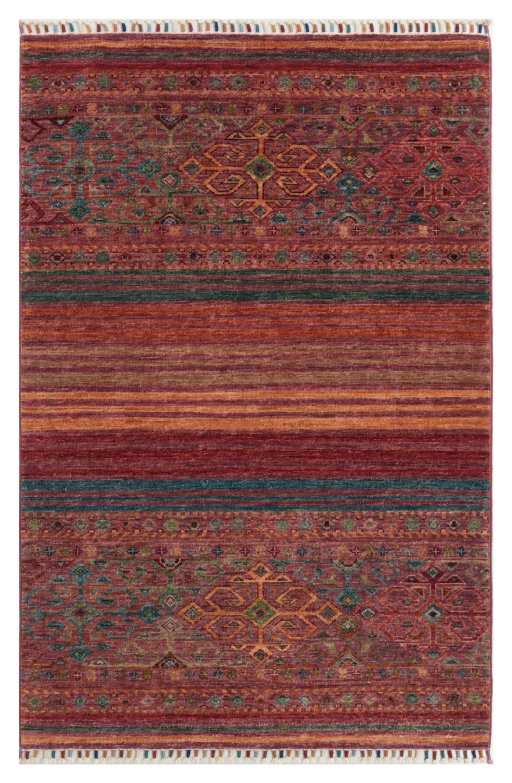
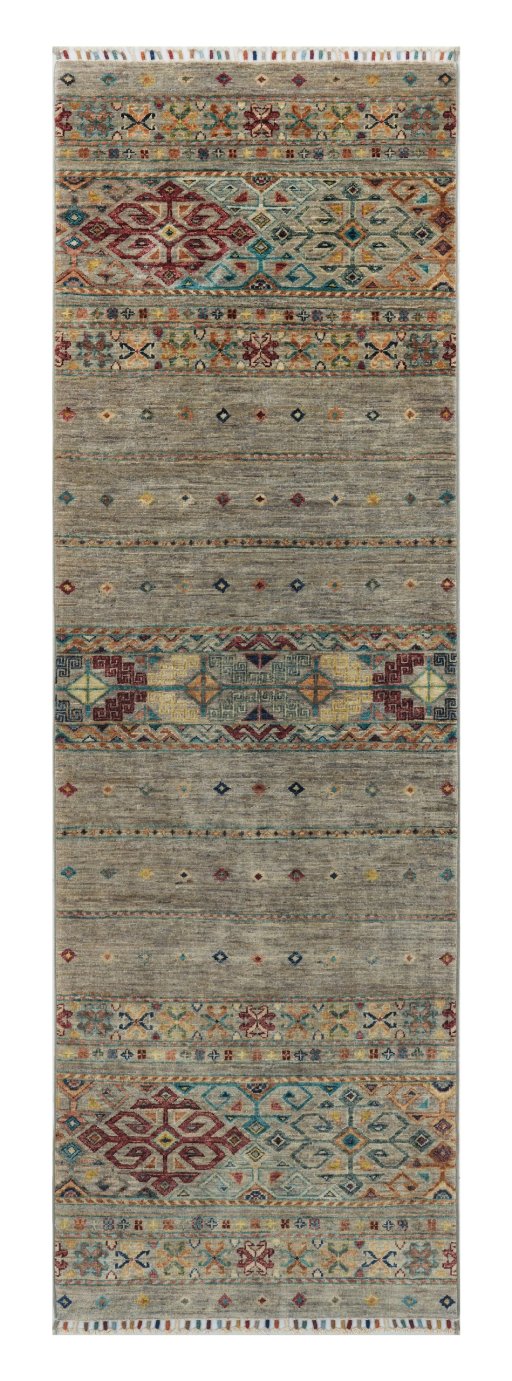
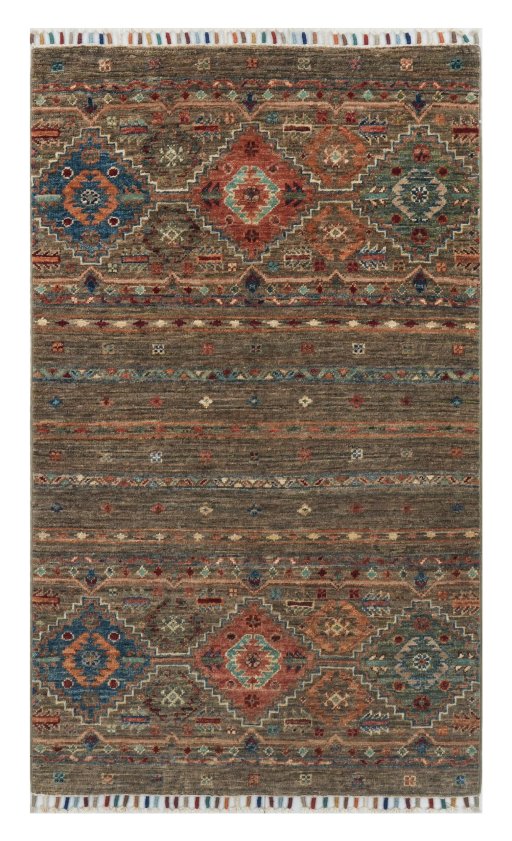
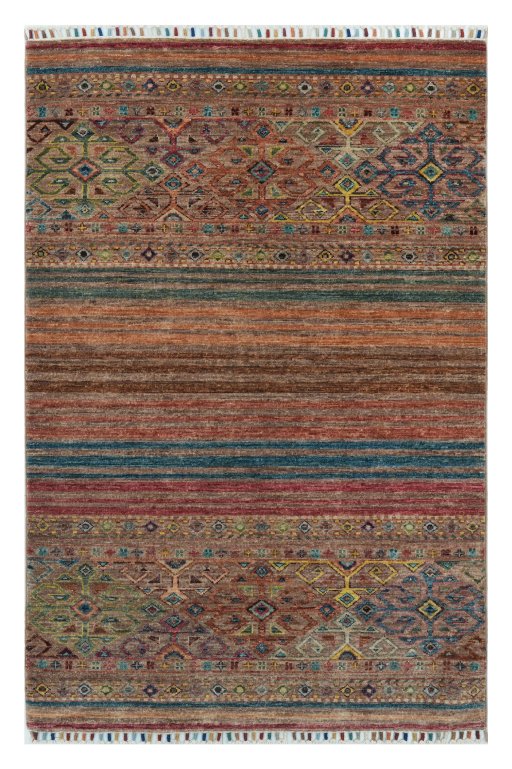
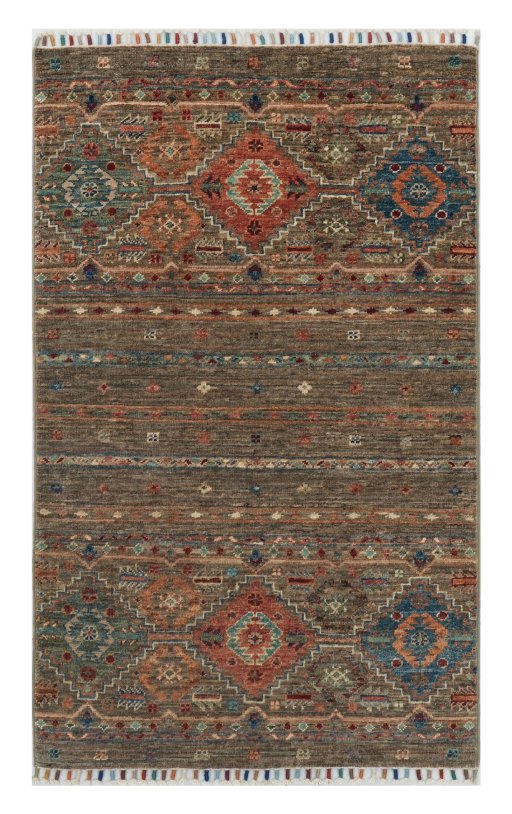
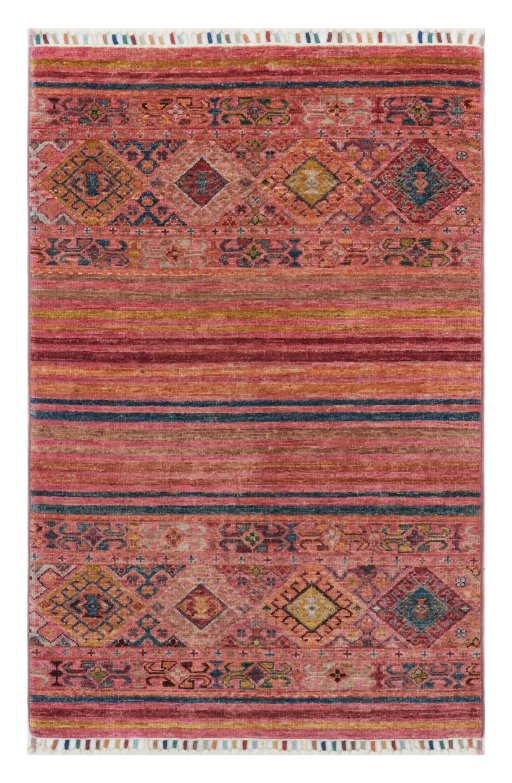
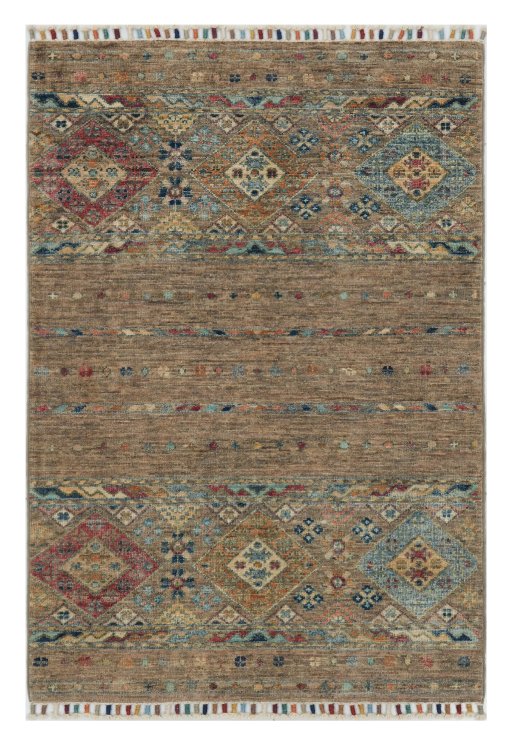
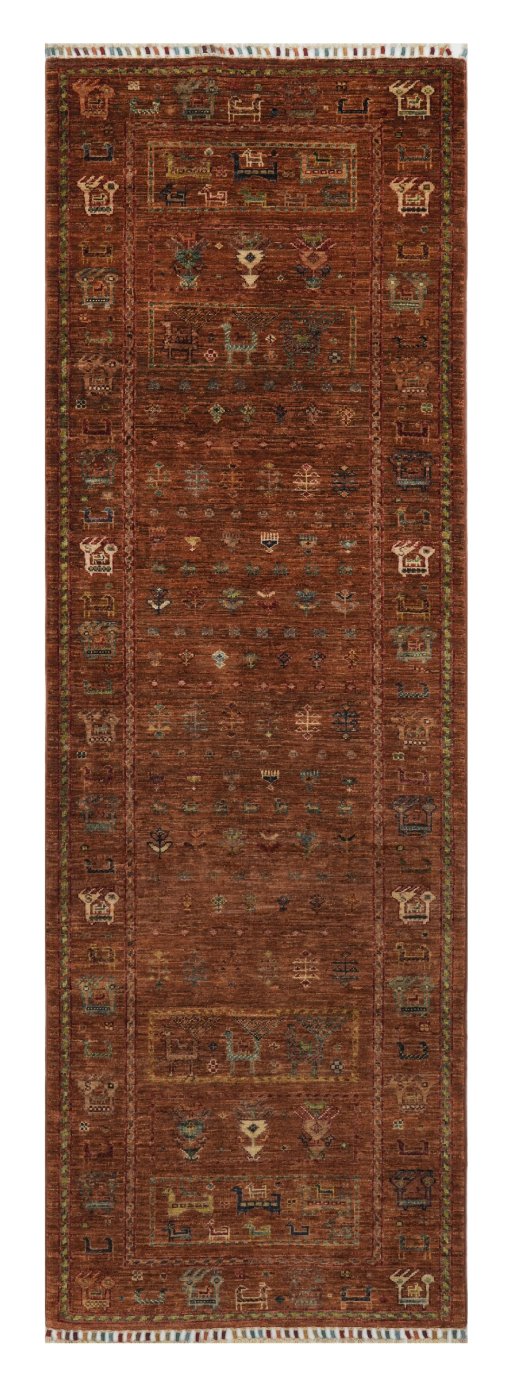
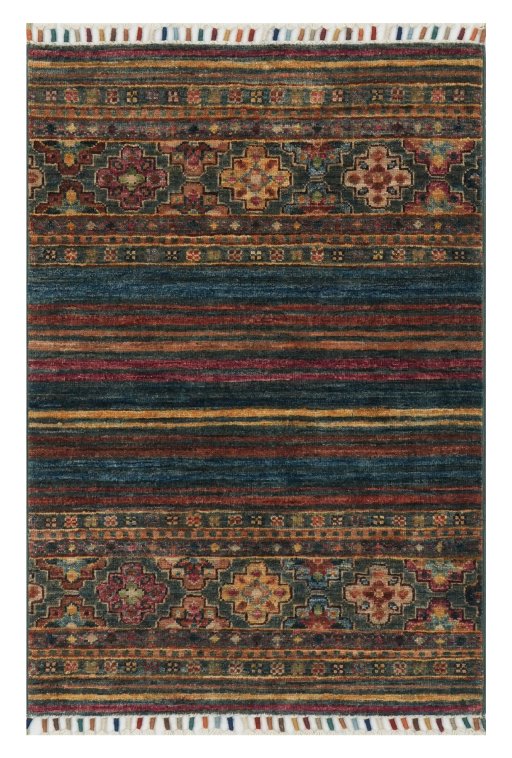
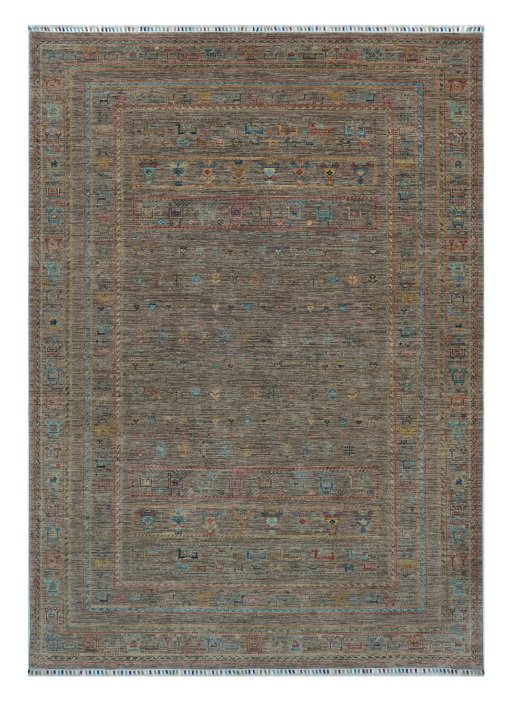
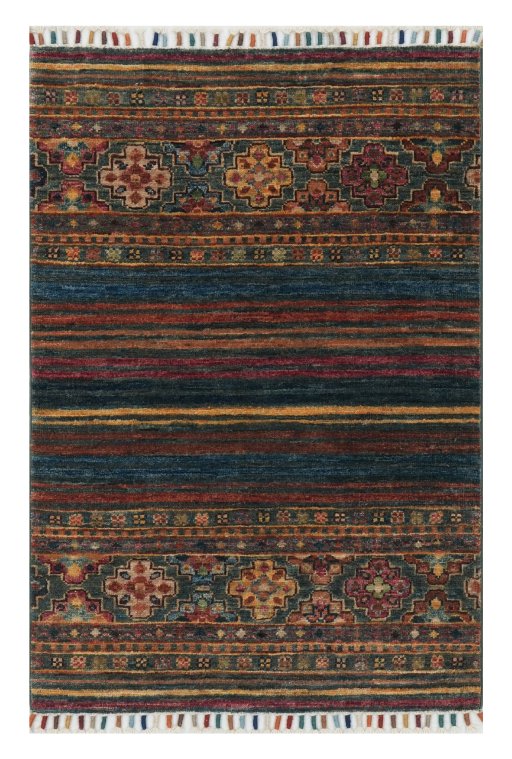
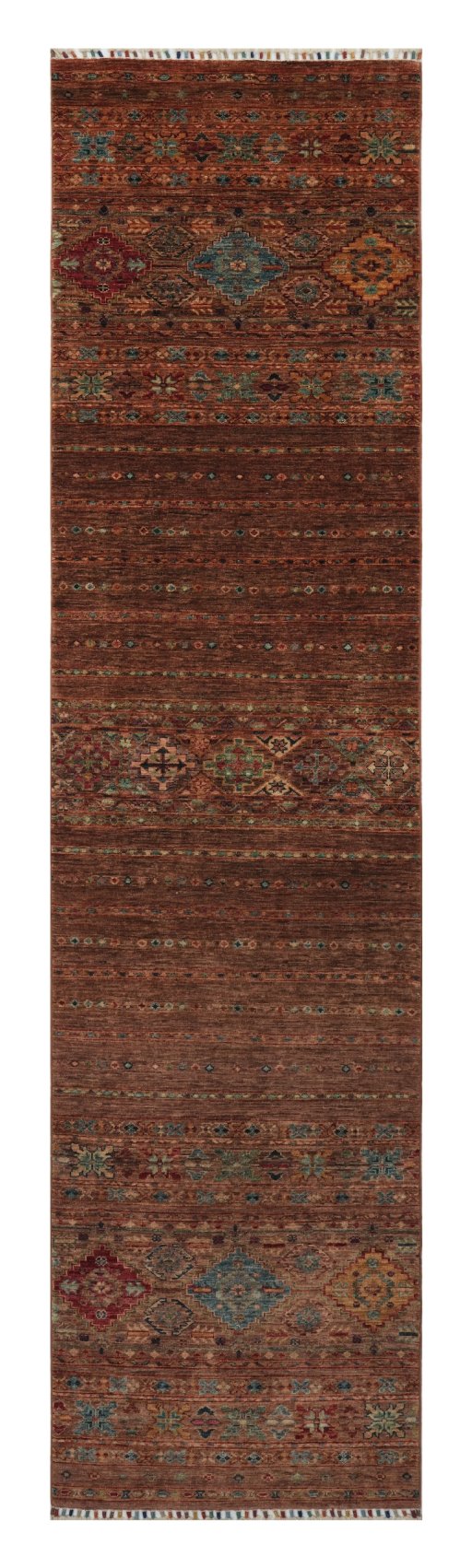
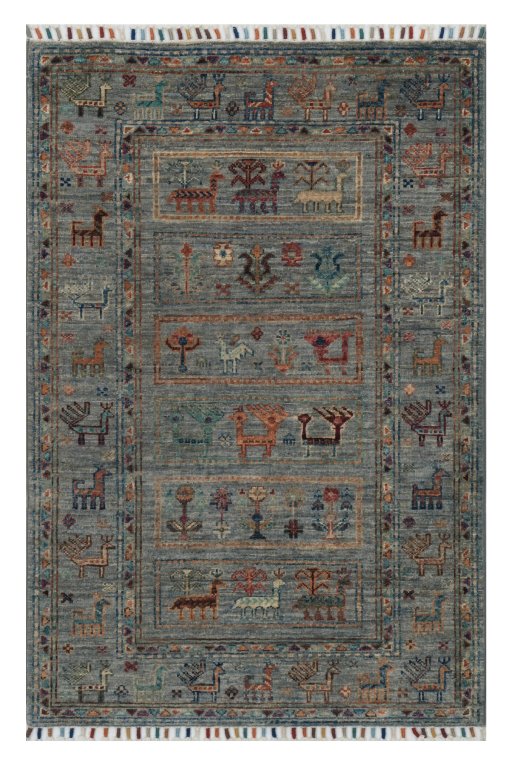
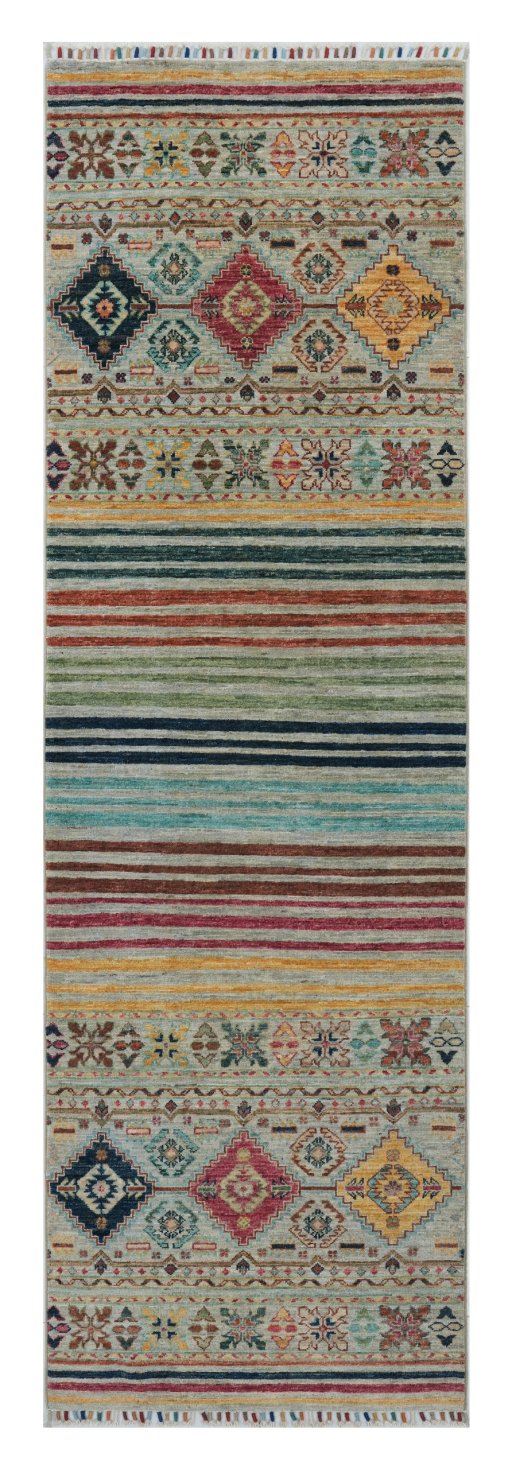
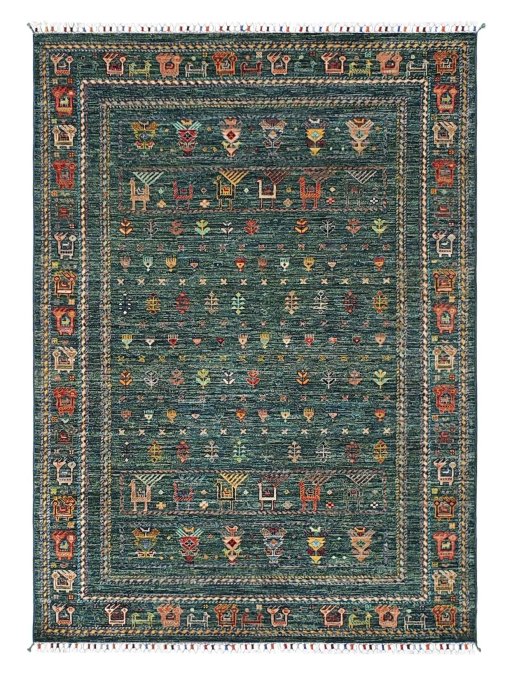
This cultural exchange is reflected in Samarkand carpet designs. Many rugs combine Chinese symbolic motifs, Persian floral ornamentation, and Central Asian geometric elements. The result is a distinctive style that differs noticeably from classic Persian or Anatolian carpets.
Samarcanda
Las alfombras de Samarcanda toman su nombre de la ciudad de Samarcanda, ubicada en la actual Uzbekistán. El estilo se desarrolló a lo largo de la histórica Ruta de la Seda y es conocido por sus patrones geométricos y combinaciones de colores distintivas, que a menudo incluyen rojos, azules y tonos terrosos. Hoy en día, algunas alfombras que siguen la tradición de diseño de Samarcanda son tejidas a mano en Pakistán. Aunque el lugar de producción difiere, los patrones y la disposición se basan estrechamente en el estilo original de Asia Central. Estas alfombras están hechas de lana y teñidas con tintes naturales, preservando la apariencia característica asociada con las alfombras de Samarcanda.
Samarcanda

SAMARKAND

SAMARKAND

SAMARKAND

SAMARKAND

SAMARKAND

SAMARKAND

SAMARKAND

SAMARKAND

SAMARKAND

SAMARKAND

SAMARKAND

SAMARKAND

SAMARKAND

SAMARKAND

SAMARKAND

SAMARKAND

SAMARKAND

SAMARKAND

SAMARKAND

SAMARKAND

SAMARKAND

SAMARKAND

SAMARKAND

Samarkand Semi Antique

SAMARKAND

SAMARKAND

SAMARKAND

SAMARKAND

SAMARKAND

SAMARKAND

SAMARKAND

SAMARKAND

SAMARKAND

SAMARKAND

SAMARKAND

SAMARKAND

SAMARKAND

SAMARKAND

SAMARKAND

SAMARKAND

SAMARKAND

SAMARKAND

SAMARKAND

SAMARKAND

SAMARKAND

SAMARKAND

SAMARKAND

SAMARKAND
Samarkand Rugs
Oriental Carpets with Central Asian Heritage
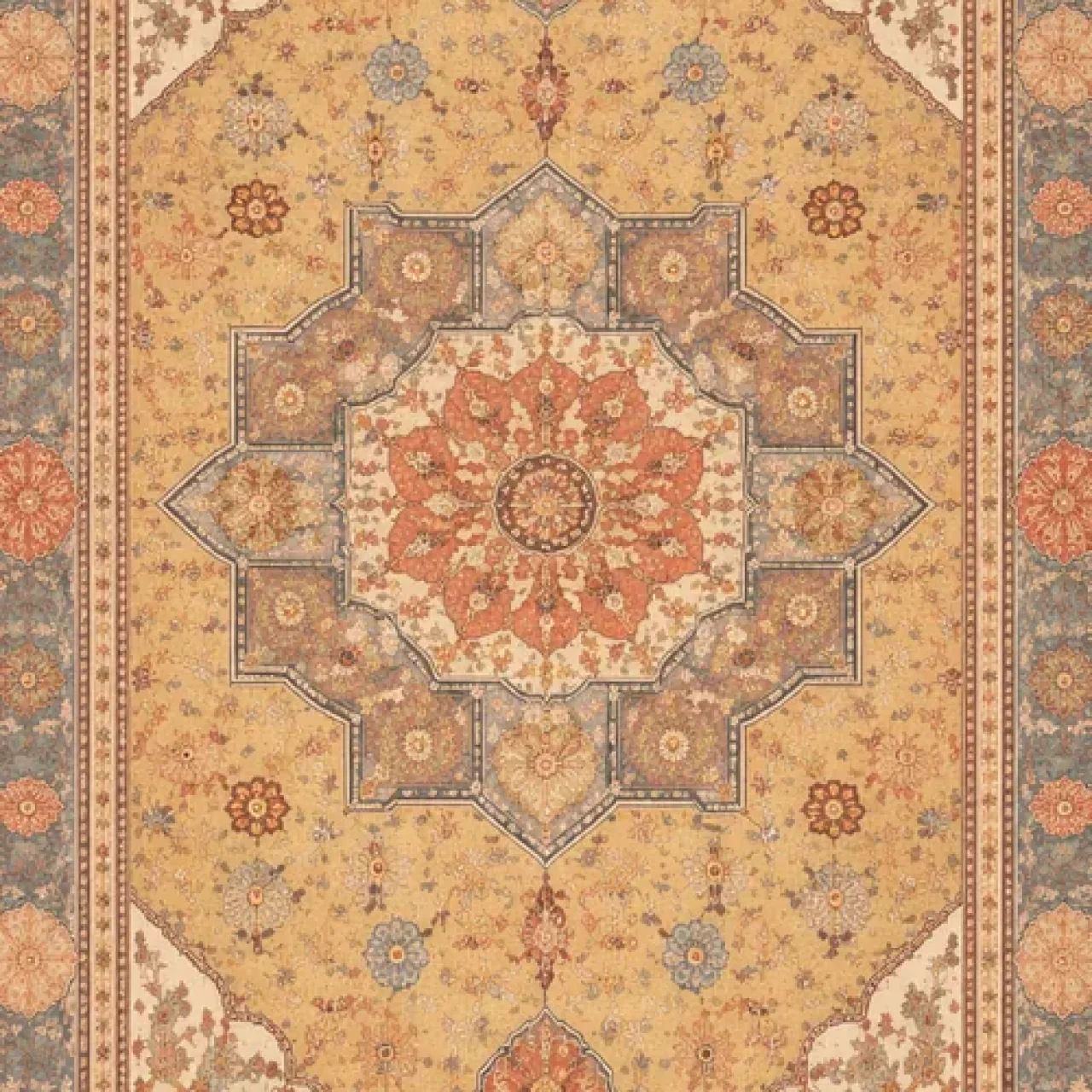
Typical Samarkand rugs feature geometric patterns, floral ornaments, and balanced color compositions. Through this combination of cultural influences, Samarkand rugs unite traditional craftsmanship with an exceptional aesthetic diversity.
This cultural exchange is reflected in Samarkand carpet designs. Many rugs combine Chinese symbolic motifs, Persian floral ornamentation, and Central Asian geometric elements. The result is a distinctive style that differs noticeably from classic Persian or Anatolian carpets.
Some rugs follow a clearly structured symmetrical layout, while others feature decorative fields arranged in a freer composition. This diversity makes Samarkand rugs especially attractive to collectors and enthusiasts of oriental carpet art.
These lively color combinations give Samarkand rugs a strong visual presence and allow them to serve as a decorative focal point within a room.
The knot density is usually in the medium range, resulting in a stable and long-lasting surface. This makes Samarkand rugs suitable for both everyday living spaces and decorative interiors.
In classic settings they emphasize the exotic elegance of oriental carpet craftsmanship. Living rooms, open spaces, and decorative interior areas are particularly well suited for Samarkand rugs.
Rugbloom curates Samarkand rugs according to clearly defined quality standards. Authentic origin, balanced color composition, high-quality wool, and precise craftsmanship are key selection criteria.
A Samarkand rug from Rugbloom combines traditional Central Asian craftsmanship with durable materials and timeless interior aesthetics. Customers also benefit from free shipping and returns as well as a 30-day return policy.
Discover hand-knotted Samarkand rugs that connect cultural heritage, traditional craftsmanship, and modern living spaces.


