



Ardabil rugs
Caucasian patterns in northwest Iran, with Meshkin and Mianeh
- Region
- Ardabil province, northwest Iran
- Knot
- Turkish
- Material
- Wool on cotton
- Knots per m²
- etwa 150.000 bis 250.000
- Pattern
- geometric medallions, Herati
- Surroundings
- Meshkin, Mianeh
Contents
Patterns with a Caucasian touch
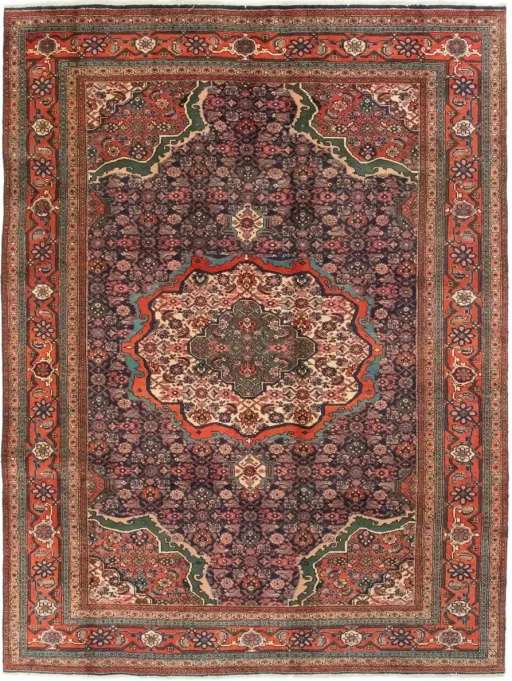
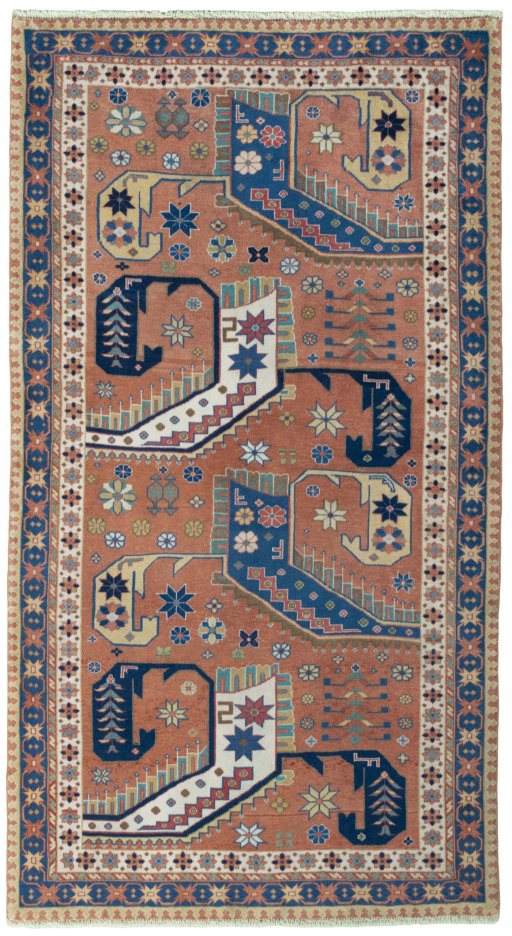
The proximity to the Caucasus can be seen in many of today's Ardabil rugs: large geometric medallions, stylised animals and flowers, above all in gold and light pastel colours. Alongside these, many rugs are made with the Herati pattern in warm rust tones. Besides village rugs there are also workshop rugs. Warp and weft are cotton, and the Turkish knot is used. Ardabil rugs offer a lot of rug for the money.
Verneh from Ardabil
In and around Ardabil, flatwoven rugs in the soumak technique are also made, called Ardabil soumak or verneh. They are mostly woven from wool and silk on cotton, are very durable and show geometric patterns on the Caucasian model.
The famous namesake
The famous Ardabil Carpet in the Victoria and Albert Museum has nothing to do with the city's rugs today. It bears its name because it once lay in the shrine at Ardabil. Find out more on our page History of the oriental rug.
Meshkin
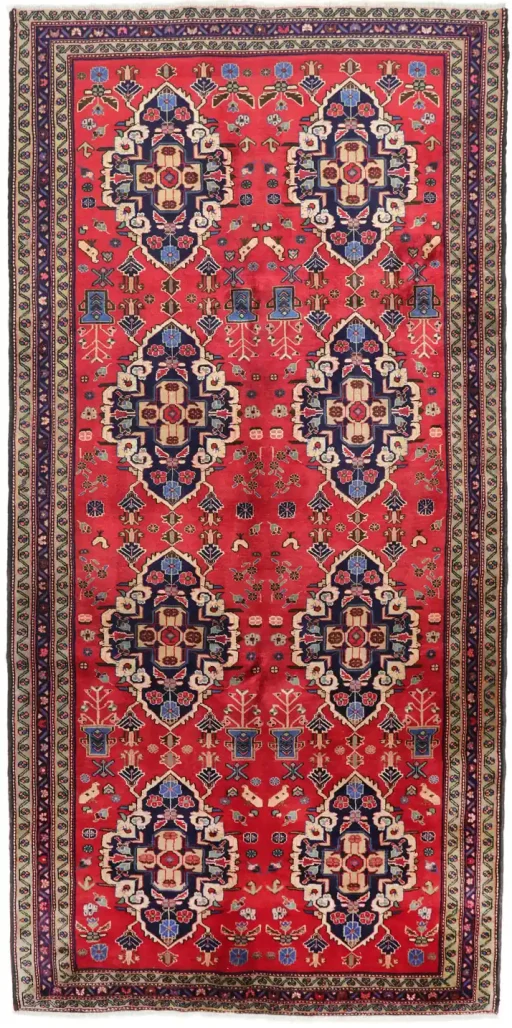
Meshkin lies northeast of Ardabil. Above all, runners are made here with stylised, slightly elongated medallions in camel brown, blue, beige and a little red. Meshkin rugs are charming and offer very good value for money. Warp and weft are cotton, and the Turkish knot is used, with around 80,000 to 250,000 knots per square metre.
Mianeh
Mianeh lies south of Ardabil. The rugs from here are good, sturdy and hard-wearing, mostly long runners with geometric medallions and stylised flowers. They have around 80,000 to 200,000 knots per square metre.
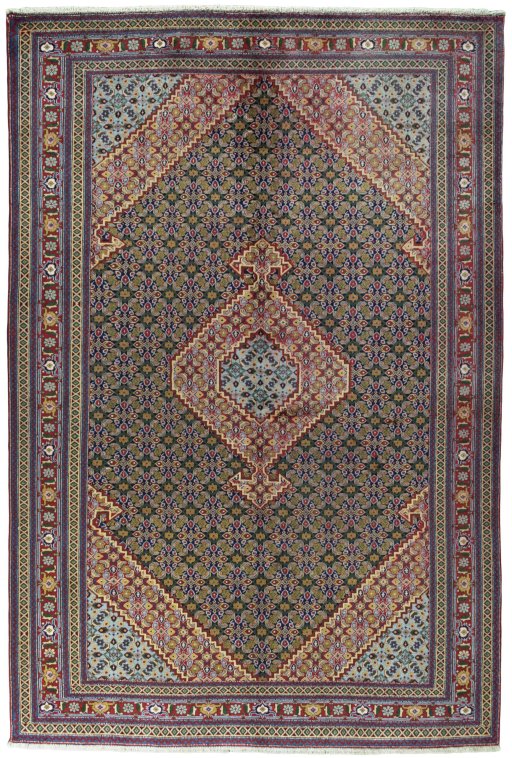
Ardabil and Meshkin rugs from our shop
Frequently asked questions
Why do Ardabil rugs look Caucasian?
Ardabil lies close to the Caucasus, and many patterns have travelled between the two regions over the centuries. That is why many Ardabil rugs show large geometric medallions and stylised animals.
Does the famous Ardabil Carpet come from Ardabil?
Only in name. It lay in the Safavid shrine at Ardabil and has nothing to do with the city's rug production today.
← Back to overview: Persian rugs from Iran
Sources
- Martin Munkholm: Oriental Carpets. Woven with passion. muusmann forlag, S. 104–105.
- Own experience from the Akhavan Farshchi family's rug trade.
Co-Owner of Rugbloom. His family has traded Persian rugs for four generations. He recognises regions, eras and techniques and reads Persian inscriptions.