



Bakhtiari rugs
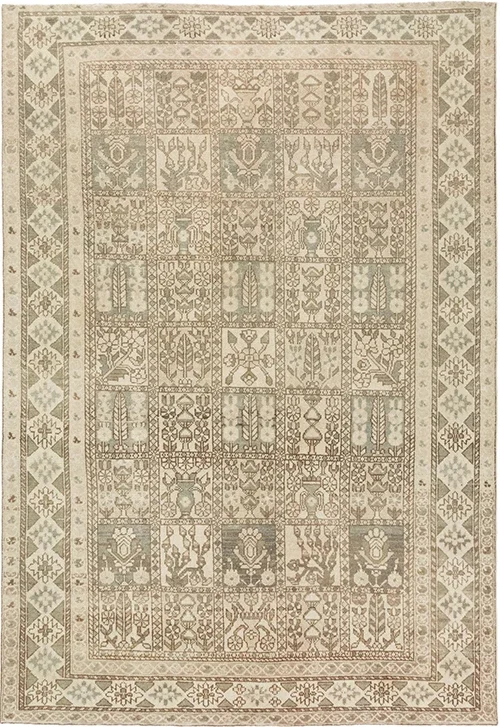
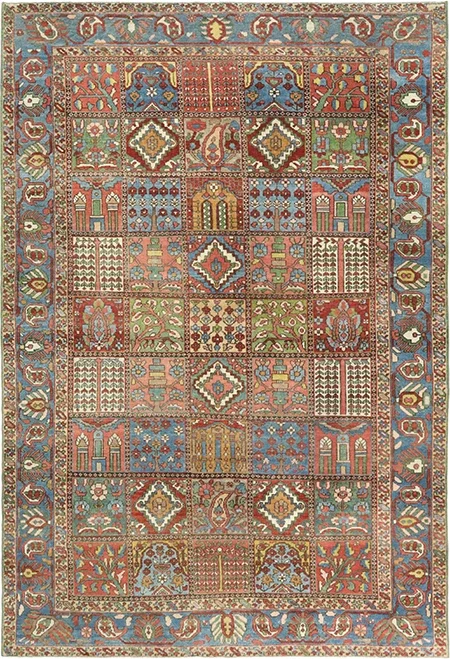
Garden carpets from Chaharmahal and Bakhtiari, with Yalameh
- Region
- Chaharmahal and Bakhtiari, Zagros
- Knot
- mostly Turkish
- Material
- good, lustrous wool on cotton
- Knots per m²
- etwa 100.000 bis 500.000
- Pattern
- Kheshti garden pattern, medallions, rows of small medallions
- Colours
- Rust red, green, cream, yellow, orange, soft blue
Contents
Land of the Bakhtiari
The nomads weave on horizontal looms, the villagers on vertical ones. Each family and each place had its own characteristics. In the past each area was ruled by a khan; the khans were rich and powerful until they lost their influence in the first half of the 20th century. Their old residences can still be seen today. The landscape is shaped by mountain villages, the Kuhrang river and the peaks of the Zagros.
How to recognise a Bakhtiari
Bakhtiari rugs are easy to recognise on the market. Typical are warm colours such as rust red, green, cream, yellow, orange and a soft blue, mostly natural dyes. Best known is the Kheshti garden pattern with many panels, alongside medallions with floral tendrils and a pattern without a main medallion but with rows of small medallions full of weeping willows, cypresses, flowers and birds. The wool is often good, springy and lustrous. Our page Symbols and patterns explains what the patterns mean.
The classic Bakhtiari types
- Bibibaft, “woven for Bibi”: Bibi was the khan's wife, and this was the name for rugs made for the khans' wives or of that quality. They are among the finest Bakhtiari, rare and precious.
- Chalshotor: often in the Kheshti pattern with four panels. There used to be pieces here with a silk warp and almost 1,000,000 knots per m², but today they are very rare.
- Armanibaft, “woven by Armenians”: Shah Abbas the Great settled Armenian families from the northwest in the area. Their rugs preserved Caucasian-influenced patterns. They are no longer woven and are rare and coveted.
- Zamann: today the most common Bakhtiari on the market. Durable rugs with natural dyes in the mid price range that offer a lot of quality for the money.
- Shahrekord: woven by former nomads who settled, with the Persian knot and patterns that recall the medallions and tendrils of Isfahan.
Feridan, Babaheydar and Naisrabad
Feridan, south of Golpayegan, is sometimes confused with Ferahan because of the similar name, but it belongs to the Bakhtiari. The rugs are densely beaten with a somewhat higher pile, made from the finest wool and dyes, and very durable. Babaheydar weaves more geometric Bakhtiari from excellent wool, almost always with natural dyes, charming and hard-wearing. In Naisrabad, south of Isfahan, densely knotted rugs are made with a large plain ground in red, blue or beige, stylised animals and an anchor medallion, from good, naturally dyed wool.
Yalameh
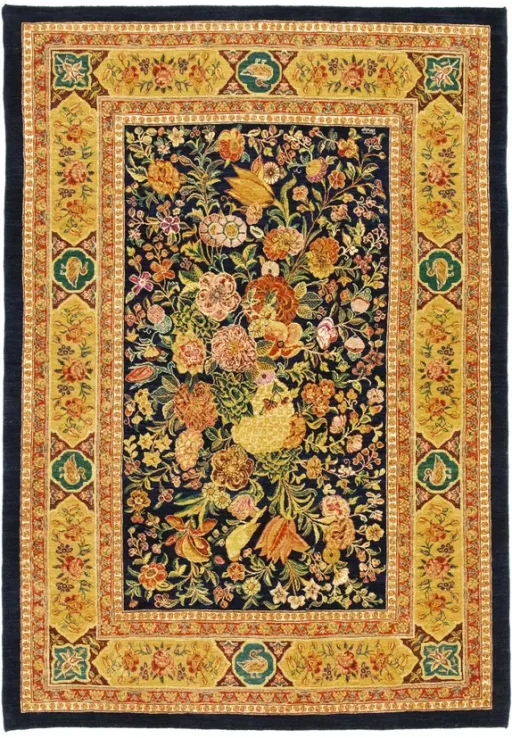
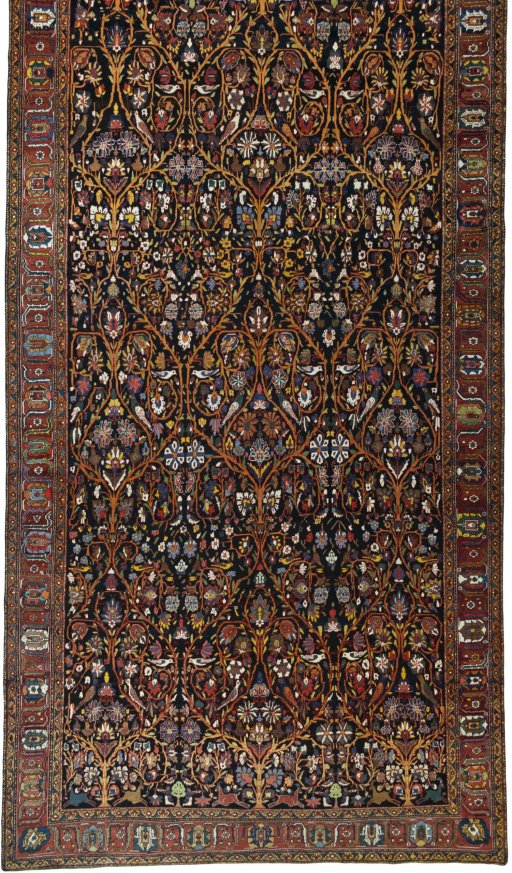
Further east, south and southeast of Isfahan, former nomads weave the beautiful Yalameh rugs. They traditionally work on horizontal looms, with a wool warp, natural dyes and patterns that resemble the stylised medallions, animals and plants of the Lurs and Qashqai. The colours, however, are distinctive: light, golden and cream, with contrasts in indigo, black and light blue or green. Yalameh rugs are more durable than many people think. Because they are knotted on a wool warp, they feel somewhat softer. The best come from Talekhooncheh and Aliabad and are called Yalameh Aliabad in the trade.
Bakhtiari and Yalameh rugs from our shop
Frequently asked questions
What is a Bibibaft?
A particularly fine Bakhtiari rug. The name means “woven for Bibi”, after the khan's wife. Such pieces are rare and precious.
What is typical of Bakhtiari rugs?
Warm natural colours such as rust red, green, cream and yellow, good lustrous wool and above all the Kheshti garden pattern with many panels.
What is a Yalameh?
A rug made by former nomads south of Isfahan, knotted on a wool warp, in light gold and cream tones with indigo and black.
← Back to overview: Persian rugs from Iran
Sources
- Martin Munkholm: Oriental Carpets. Woven with passion. muusmann forlag, S. 142–146.
- Own experience from the Akhavan Farshchi family's rug trade.
Co-Owner of Rugbloom. His family has traded Persian rugs for four generations. He recognises regions, eras and techniques and reads Persian inscriptions.