



Bijar rugs
The sturdiest rugs of Persia, with Tekab, Goltug and Bidgeneh
- Region
- Kurdistan, western Iran
- Knot
- Turkish and Persian
- Material
- Wool on cotton
- Knots per m²
- 200.000 bis 1.000.000, meist 250.000 bis 500.000
- Pattern
- Herati, diamond-shaped medallions, rose Bijar
- Colours
- Rust and plum red, clear red for Afshar Bijar
Contents
What makes a Bijar
Bijar rugs are particularly densely knotted and very firmly beaten. This is done with the special Bijar construction, which we explain in our guide Weaving technique. A good Bijar is practically indestructible: dealers hardly ever see a genuine Bijar wear out in normal use. The most beautiful pieces are found among makers who have stayed true to the old tradition, and among older rugs.
Warp and weft are mostly cotton, and both types of knot are used.
Pattern
The Herati pattern is typical, often in a large, diamond-shaped medallion. Once common was the rose Bijar with a round medallion and floral tendrils in the bold Bijar style, today a rare treasure. The ground colours mostly tend towards rust or plum red.
Afshar Bijar from Tekab
Around 50 kilometres northwest of Bijar lies Tekab. Here Afshar tribes weave rugs in the Bijar style, which is why they are called Afshar Bijar. Their patterns are somewhat rounder and more floral, the weave somewhat softer, and the ground is usually a clear red.
Transporting a Bijar correctly
Because a Bijar is so tightly knotted, it is quite stiff. For transport it is best rolled, with the pile facing outwards. If it does have to be folded, then also with the pile facing outwards, as this protects the foundation.
Bijar Taghavi
Among the finest Bijars of recent decades are the signed rugs of the Taghavi family. They were knotted in 50, 70 and 90 raj, that is with around 500,000 to 1,200,000 knots per square metre, from the finest wool, often with silk and natural dyes. Today almost only 50 raj pieces are made, and only in small numbers, which is why they are much sought after. Even after more than twenty years under a dining table in a sunny room, they show hardly any signs of use.
Goltug, Bidgeneh and Zanjan
Northeast of Bijar lies Goltug, where Kurdish families weave rustic, sturdy rugs in the mid price range that offer a lot of quality for the money. Hexagons, the Herati pattern and small stylised animals and flowers are typical, with 150,000 to 300,000 knots per square metre. The Bidgeneh come from the same area; they are knotted even more finely and are rarer. Further east, Kurdish villages around Zanjan weave sturdy rugs from good wool.
Bijar rugs from our shop
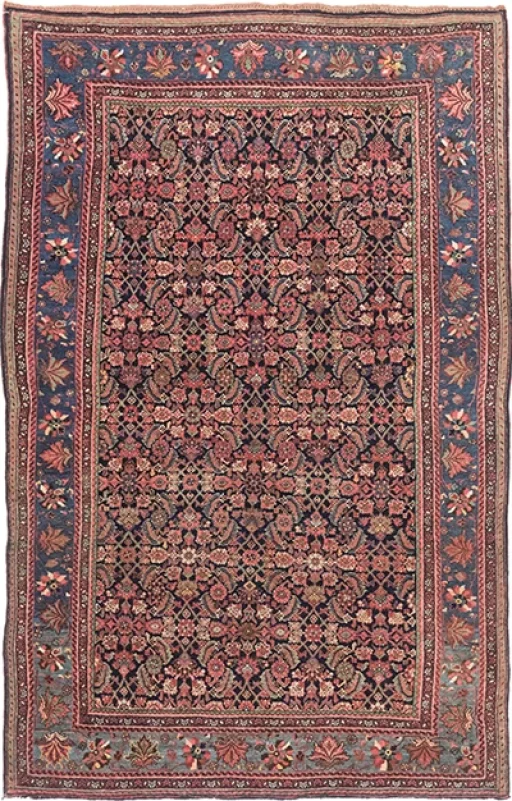
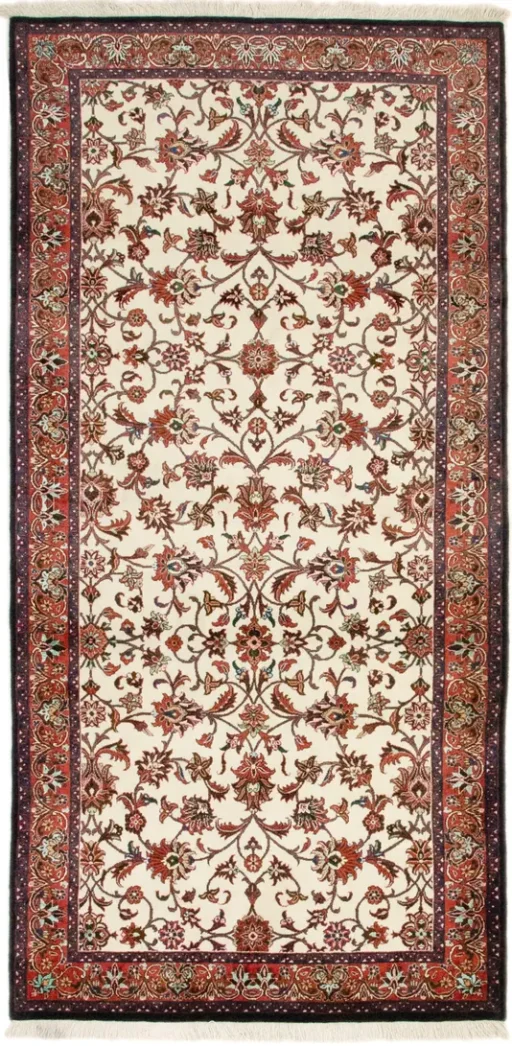
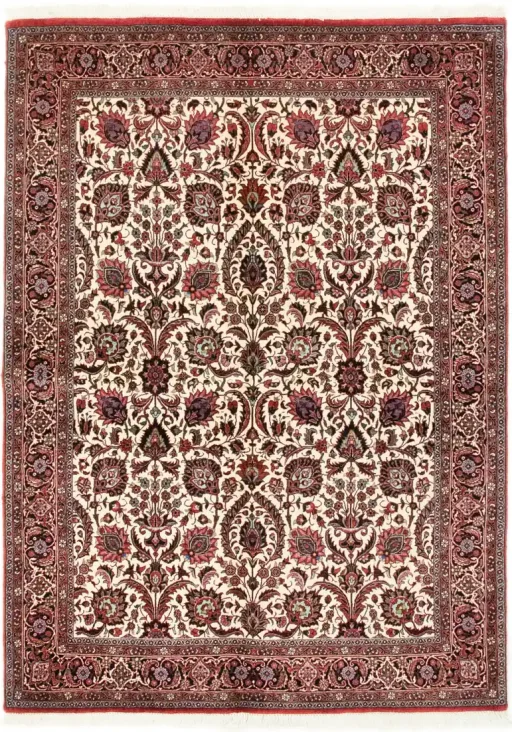
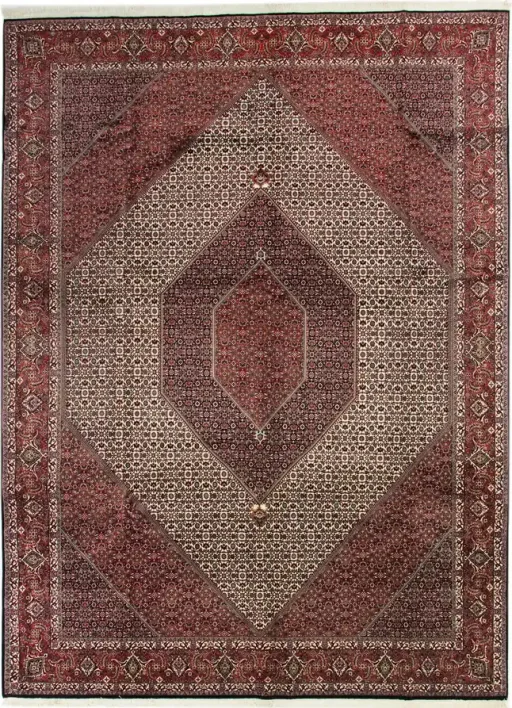
Frequently asked questions
Why are Bijar rugs so heavy?
They are knotted very densely and beaten firmly with especially thick weft threads. This makes them heavy, stiff and exceptionally hard-wearing.
What is an Afshar Bijar?
A rug from Tekab, around 50 kilometres northwest of Bijar, woven by Afshar tribes in the Bijar style, usually with rounder, more floral patterns and a clear red ground.
How do you transport a Bijar?
Ideally rolled, with the pile facing outwards. This protects the firm foundation.
← Back to overview: Persian rugs from Iran
Sources
- Martin Munkholm: Oriental Carpets. Woven with passion. muusmann forlag, S. 107–109.
- Own experience from the Akhavan Farshchi family's rug trade.
Co-Owner of Rugbloom. His family has traded Persian rugs for four generations. He recognises regions, eras and techniques and reads Persian inscriptions.