



Hamadan rugs
One of Iran's largest weaving areas, with hundreds of villages
- Region
- Hamadan province, western Iran
- Knot
- mostly Turkish
- Material
- Wool on cotton
- Knots per m²
- meist 100.000 bis 250.000
- Character
- rustikal, robust, gut bezahlbar
- Notable places
- Malayer, Jozan, Borjalu, Tuyserkan, Nahavand, Serabend
Contents
An area with many faces
Hamadan rugs are among the rustic, sturdy rug types and offer a lot of rug for their money. Almost all are woven with the Turkish knot on cotton. Finely knotted pieces of good material from the city itself are also called Ekbatan or Hamadan Shahr-Baft, “woven in the city”, in the trade. Hamadan is also known for its ceramics, by the way.
Rugs commonly found in the trade come from Khamseh, Zagheh, Asadabad, Maslaghan, Mosul, Tuyserkan, Nahavand, Borujerd, Engelas, Hosseinabad, Mehraban and Serabend.
The best-known places
- Malayer in the east, near Arak: rugs in muted red, blue and indigo, comparable in quality and pattern to Sarouk and Jozan, often with a string-of-pearls border. Around 150,000 to 300,000 knots per m².
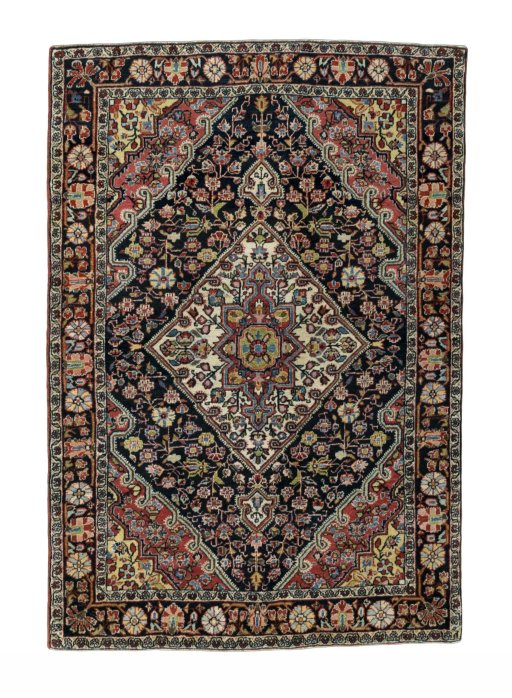
- Jozan: also near Arak, medallions on an indigo ground with the Herati pattern and a clearly visible string-of-pearls border.
- Borjalu east of Hamadan: among the better rugs of the area, with less stylised, floral patterns on a beige ground and muted colours.
- Mehraban in the north: floral rugs in light, almost pastel tones that recall Arak, also among the better rugs of the area.
- Engelas in the southeast: mostly Herati on a red or cream ground with a Serabend border, good quality.
- Rudbar in the northeast: its own patterns with stylised birds and flowers on a light ground, rare today.
- Darjazin: more floral than most Hamadan rugs, on a beige, red or blue ground.
- Tuyserkan and Nahavand in the south: beautiful, charming rugs with stylised medallions, animals and flowers, more floral in Nahavand. Tuyserkan is known for its walnuts, whose shells are also used for dyeing.
- Borujerd in the far south: boteh, Herati or large flowers on an indigo or light ground.
- Nanaj south of Hamadan: allover patterns without a medallion, large flowers on red or indigo, often with natural dyes.
- Hosseinabad: diamond medallions and Herati on red, including some small treasures.
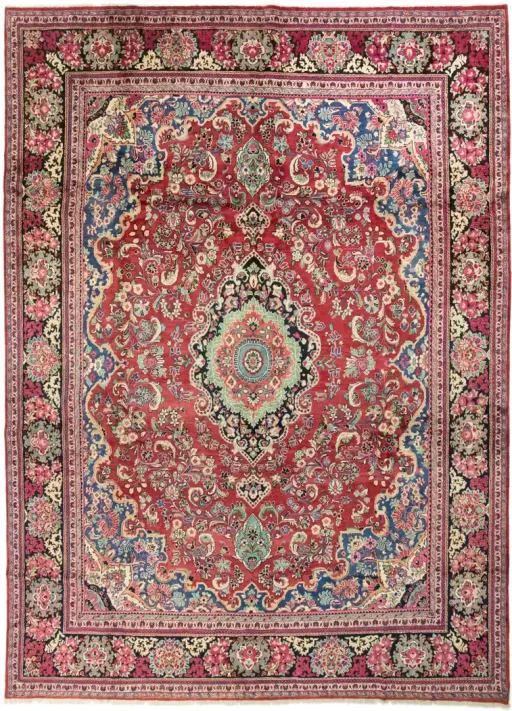
- Zagheh, Asadabad, Maslaghan and Mosul: stylised, elongated medallions, in Maslaghan with a yellow zigzag like a lightning bolt, in Mosul strong red and blue.
Serabend
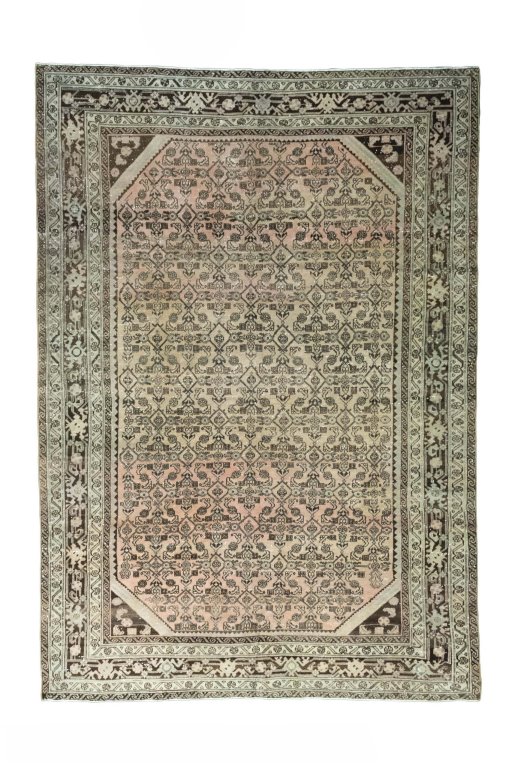
Southwest of Hamadan lies Serabend. One pattern has survived here for centuries: small botehs, the Mir pattern, fill the whole field, framed by the typical Serabend border. The rugs resemble the Sarouk Mir from the neighbouring Arak area and are an affordable alternative to them.
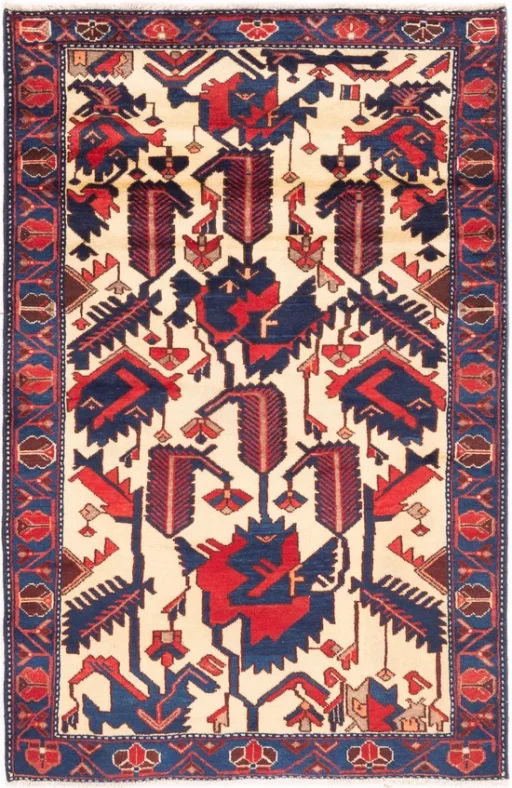
Rugs from the Hamadan region from our shop
Frequently asked questions
Where do Hamadan rugs come from?
From the city of Hamadan and hundreds of surrounding villages. Because the rugs are traded in Hamadan, many bear the city's name even if they were woven in a village.
What is a Serabend?
A rug from Serabend, southwest of Hamadan, whose whole field is filled with small botehs, framed by the typical Serabend border.
← Back to overview: Persian rugs from Iran
Sources
- Martin Munkholm: Oriental Carpets. Woven with passion. muusmann forlag, S. 110–116.
- Own experience from the Akhavan Farshchi family's rug trade.
Co-Owner of Rugbloom. His family has traded Persian rugs for four generations. He recognises regions, eras and techniques and reads Persian inscriptions.