



Isfahan rugs
Art rugs from the city of Shah Abbas, with Joshaghan and Najafabad
- Region
- Isfahan province, central Iran
- Knot
- persisch
- Material
- Wool and silk, mostly on a silk warp
- Knots per m²
- around 600,000 to over 1,000,000
- Pattern
- Medallion with tendrils, garden, vase, mihrab with tree of life, hunting scenes
- Special feature
- many pieces are signed
Contents
The city of Shah Abbas
Isfahan was long an important stop on the caravan route, but its great flowering only began when Shah Abbas the Great (1587 to 1629) made the city his capital in 1598. Magnificent mosques and palaces, parks with fountains and pavilions, the old bridges over the Zayandeh Rud and the covered bazaar with its countless workshops still shape it today.
Shah Abbas founded his own court workshops in Isfahan. Rugs from Isfahan were probably the first that Europeans learned to appreciate, as many were given as gifts to kings, emperors and princes. Among the best-known groups of classical carpets are the red-ground Isfahan carpets of the 17th century. They were made for export, as diplomatic gifts and for the Persian nobility. Typical are sweeping arabesques, whip-like curving cloud bands and large palmettes on a red ground, framed by a deep blue or green border. How sought after these carpets were in Europe is shown by Dutch paintings of the 17th century, such as Jan Vermeer’s “Young Woman with a Water Pitcher” in the Metropolitan Museum in New York. Because they were very expensive, in such pictures they stood for power and wealth. Their design was so popular that it was also taken up in Herat and in the Indian Mughal Empire. Several patterns bear his name, the Shah Abbasi palmettes; find out more on our page Symbols and patterns.
Isfahan rugs today
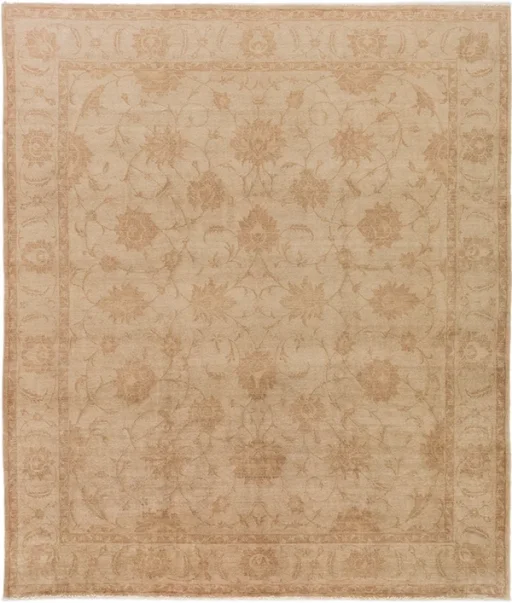
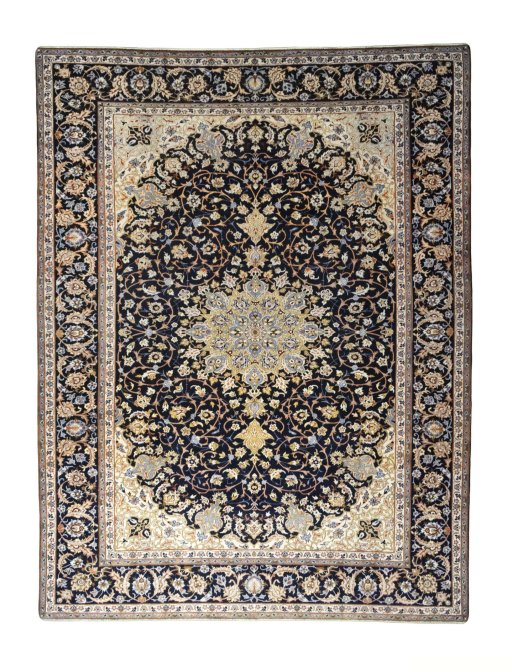
Modern Isfahan rugs are of high quality and show the classic patterns: a medallion with floral tendrils and beautiful corner pieces, garden and vase patterns or a mihrab with a tree of life, birds and animals. Many are woven with the Persian knot on a silk warp, with 600,000 to over 1,000,000 knots per m², often of wool and silk. Well-known workshops sign as Davari, Enteshari, Mahdie, Dardashti or Sadjarji, for example.
The Seirafian family
No name is as closely linked with Isfahan rugs as Seirafian. For generations the family has been known for exceptional craftsmanship: elaborate designs, the finest materials and natural dyes. The last Shah liked to present Seirafian rugs as state gifts, and they adorn palaces all over the world.
The tradition was founded by Mohammad Reza Seirafian (1884 to 1975), a respected banker in Isfahan. The name Seirafian goes back to the Persian word sarraf for money changer. Through the settlement of an estate he took over the management of a workshop in which several unfinished rugs lay. He had the weavers continue so that the work would not be lost, and in doing so found his own way to rug art. He had the Bakhtiari show him their recipes for natural dyes, worked with the best pattern designers in the city and raised the fineness from around 600,000 to more than 1,200,000 knots per m². He introduced the silk warp and had the pile knotted from kork wool with silk.
His seven sons, two daughters and many grandchildren carried on the tradition, and today the fourth generation is at work. Each family member has their own style and signs in the border with the name Seirafian.
Signed pieces. The family keeps records of a large part of its production and can confirm pieces. If you would like to know more about a Seirafian rug, we will be happy to help.
Joshaghan, Meymeh and Murchakar
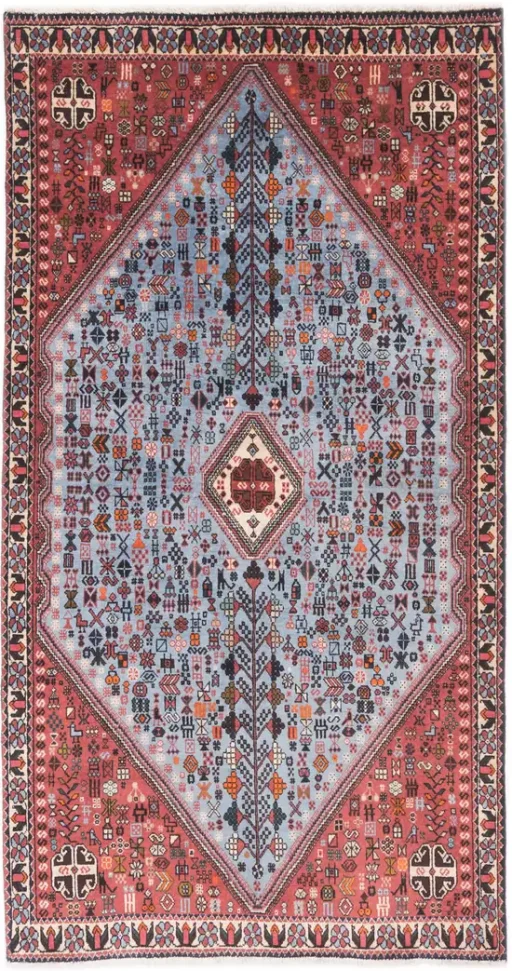
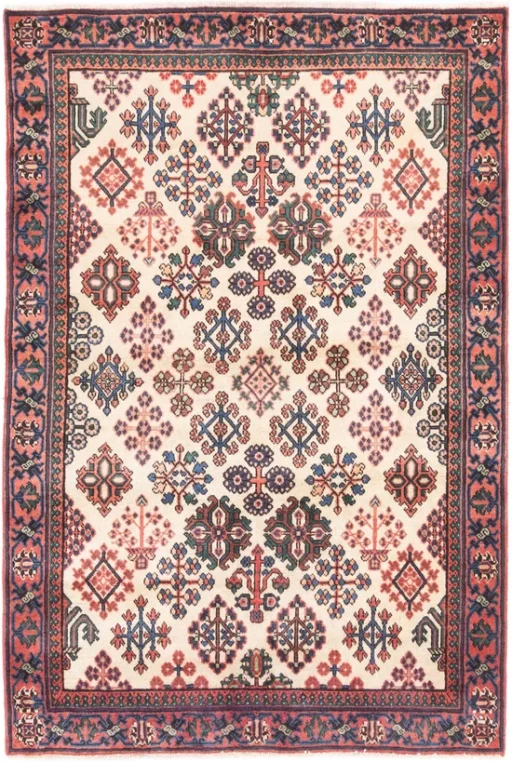
Around 100 kilometres north of Isfahan lies the area of Joshaghan. Very good rugs were already made here under the Safavids, some for the court in Isfahan, and two beautiful pieces from around 1670 are now in the Victoria and Albert Museum. The typical pattern has barely changed over the centuries and is easy to recognise. The rugs from four neighbouring places are roughly distinguished by fineness: Joshaghan around 100,000 to 200,000, Meymeh 200,000 to 350,000, Murchakar and Khosrowabad 400,000 knots per m² and more. All are woven with the Persian knot on cotton and are available only in small numbers.
Najafabad
West of Isfahan lies Najafabad. The rugs from here resemble Isfahan rugs, are knotted on a cotton warp and, with 250,000 to 500,000 knots per m², are a more affordable choice. In the trade they are often called Isfahan Najafabad.
Isfahan and Meymeh rugs from our shop
Frequently asked questions
What is a Seirafian rug?
An Isfahan rug by the Seirafian family, who have been among Iran's best-known makers for generations. The rugs are very fine, often of kork wool and silk on a silk warp, and signed in the border.
How fine is an Isfahan rug?
Usually between 600,000 and over 1,000,000 knots per square metre, often with a silk warp.
How do you recognise a Seirafian?
By the signature in the border and by the very fine knotting, often of kork wool and silk on a silk warp. The family can confirm pieces from its records, and we will also be happy to help you.
← Back to overview: Persian rugs from Iran
Sources
- Martin Munkholm: Oriental Carpets. Woven with passion. muusmann forlag, S. 128, 132–142.
- Christie’s London: auction catalogue “Art of the Islamic and Indian Worlds including Oriental Rugs and Carpets”, 2 April 2020.
- Sotheby’s New York: auction catalogue “Fine Oriental and European Carpets”, 4 April 2001.
- Own experience from the Akhavan Farshchi family's rug trade.
Co-Owner of Rugbloom. His family has traded Persian rugs for four generations. He recognises regions, eras and techniques and reads Persian inscriptions.