



Mashhad rugs
Rugs from Khorasan, with Kashmar, Sabzevar and Quchan
- Region
- Khorasan, northeast Iran
- Knot
- Persian, Turkish for Turkbaft
- Material
- good wool on cotton
- Knots per m²
- etwa 200.000 bis 500.000
- Pattern
- central medallion with tendrils
- Colour
- typical violet red from cochineal
Contents
The holy city
Mashhad is home to the mausoleum of the eighth Imam, Reza, who died in 818. The city is therefore also called the “city of the martyr” and is Iran's most important pilgrimage destination. Under the Safavids, Shah Abbas made the pilgrimage here himself and in 1602 had a magnificent mosque with a golden dome built over the tomb. Today Mashhad has more than 2.5 million inhabitants.
Wool from Mashhad
Mashhad is famous for its wool. Many sheep breeders supply wool so good that it is also sold to other weaving areas. “Pashm-e Mashhad”, “the wool is from Mashhad”, counts as a real selling point in the bazaar.
Patterns and colours
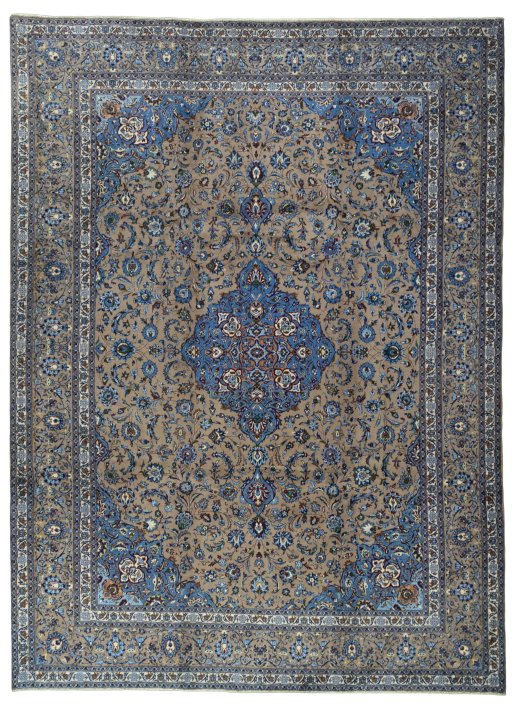
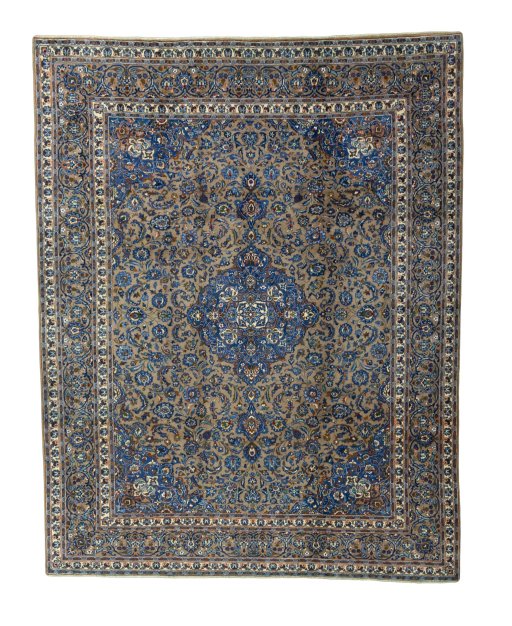
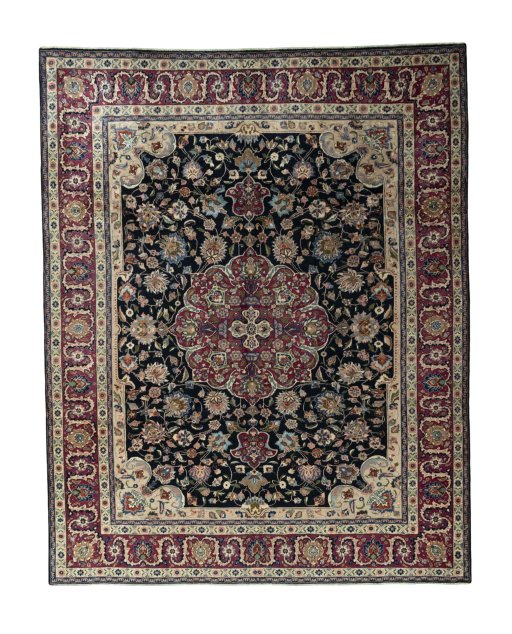
In the city itself, good, long-lasting rugs are made with a refined, tasteful pattern and a central medallion, usually on a red ground. This red is easy to recognise: a violet red from cochineal instead of the usual madder red. They are woven with the Persian knot, with 200,000 to 500,000 knots per m². Rugs with the addition Turkbaft were knotted by the Turkic-speaking families of the area, who brought the Turkish knot with them.
The most famous workshop was that of Soltan Ibrahim Mirza, later joined by Amoghli, Khamenei and Zarbaf. In the 20th century Amoghli was one of the most respected workshops in Persia, and its rugs were among the favourite pieces in the palaces of the Pahlavi era.
Along the Silk Road
West of Mashhad, the old Silk Road leads towards India, with a caravanserai roughly every 30 kilometres, a day's journey. Nishapur is the burial place of Omar Khayyam, whose quatrains have been translated into many languages. 150 kilometres further on lies Sabzevar, where some of the most beautiful rugs of the area are made: medallion and floral tendrils as in Mashhad, from the finest wool and with natural dyes.
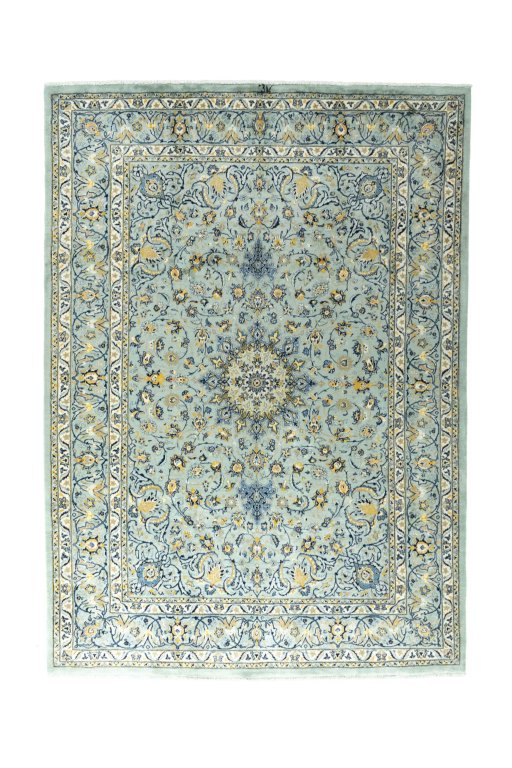
Southwest of Mashhad lies Kashmar. Here you find medallions, flowers and vases, mostly in light pastel tones, with a high pile and the Persian knot, with 100,000 to 250,000 knots per m².
Quchan and Kurdi Khorasan
West-northwest of Mashhad, nomads and farmers weave the rugs of Quchan, also called Kurdi Baluch and Gonbad-e Qabus. The patterns are simple, with ram's horns, scorpions, octagons and large stylised medallions, and recall Azerbaijan. Some motifs are knotted in silk. The colours are warm red, gold, orange and black, with natural dyes, and there are pieces with up to 750,000 knots per m².
Baluch
In eastern Khorasan and along the border with Afghanistan and Pakistan, the Baluch weave. We present their rugs on a page of their own: Baluch rugs. A special group are the Zabol Baluch from the area around Zabol on the Pakistani border, charming rugs of naturally dyed wool in gold, black, beige and brick red, which are only rarely found today.
Mashhad and Kashmar rugs from our shop
Frequently asked questions
How do you recognise a Mashhad rug?
Often by a central medallion with tendrils on a typical violet red obtained from cochineal.
What does Turkbaft mean for Mashhad?
Mashhad Turkbaft rugs were knotted by Turkic-speaking families with the Turkish knot.
← Back to overview: Persian rugs from Iran
Sources
- Martin Munkholm: Oriental Carpets. Woven with passion. muusmann forlag, S. 148–153.
- Own experience from the Akhavan Farshchi family's rug trade.
Co-Owner of Rugbloom. His family has traded Persian rugs for four generations. He recognises regions, eras and techniques and reads Persian inscriptions.