



Rugs from Fars: Qashqai, Abadeh and Gabbeh
Nomadic rugs from southern Iran
- Region
- Fars province, southern Iran
- Weavers
- Qashqai and other nomads
- Knot
- Turkish and Persian
- Material
- lustrous, often hand-spun wool with natural dyes
- Knots per m²
- Gabbeh 60,000 to 120,000, fine Kashkuli over 600,000
- Pattern
- Hexagons, animals, flowers, tree of life
Contents
Shiraz
Shiraz is one of the most beautiful cities in Iran. On the way into the city you drive along avenues of palm trees, and in May the air is scented with blossoming lemon trees. Shiraz is called the city of roses and the city of poets, because Saadi (1210 to 1291) and Hafez (1325 to 1389) were born here. Saadi's “Rose Garden” is still revered in Iran today, and the tomb of Hafez is a popular place for visitors. Around 80 kilometres to the northeast lies Persepolis, the palace of the Achaemenids from the 5th century BC and today a UNESCO World Heritage Site.
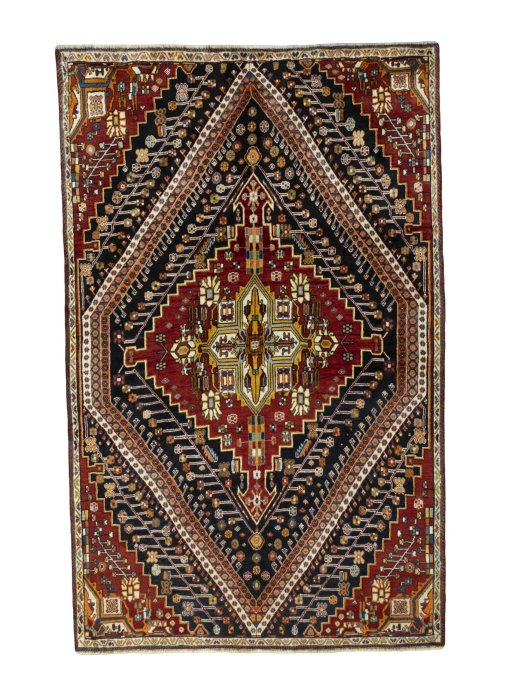
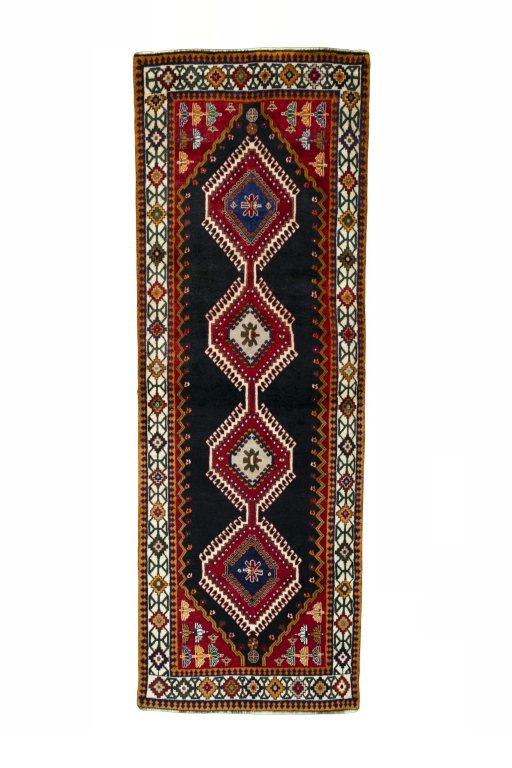
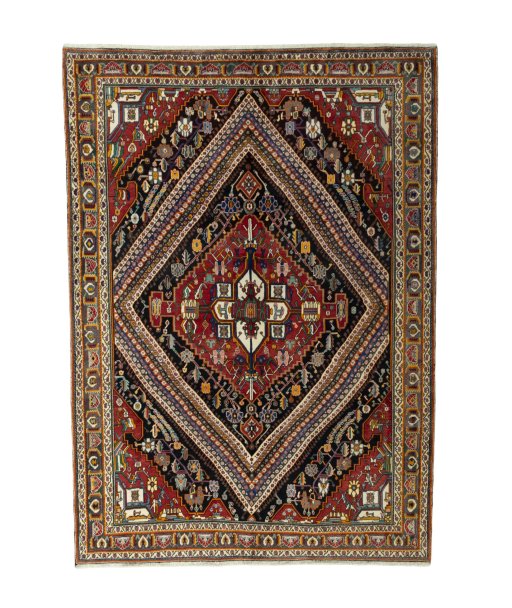
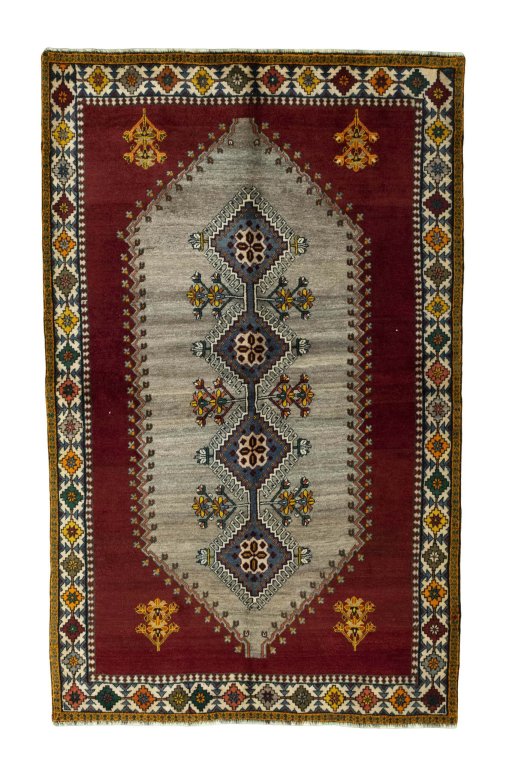
Little weaving is done in Shiraz itself, but the city is the collecting point for the whole area. Rugs called Shiraz in the trade are usually loosely knotted, often of soft, lustrous wool, charming and affordable. Typical are hexagons, stylised animals and flowers and a two-coloured edge wrapping. Some rugs even show motifs from Persepolis, such as the columns with horse or bull heads.
The Qashqai
Behind the name Qashqai stands a large number of tribes, including the Kashkuli, Bulli, Turki, Darashuri, Shishbuluki, Farsimadan, Safi Khani, Gallanzan, Rahimi and Qarachihi. Many speak a Turkic dialect, and their ancestors came to the country in the 13th and 14th centuries. To this day, families migrate with their herds 300 to 350 kilometres north from the Persian Gulf into Bakhtiari territory, up into the mountains in April and May and back in October. The sheep are shorn twice a year, and the women spin the wool by hand.
You might think the Qashqai only knot with the Turkish knot. Yet the very finely knotted pieces in particular are usually made with the Persian knot.
Kashkuli from Firuzabad
The Kashkuli around Firuzabad weave especially fine Qashqai rugs. Many weavers work on horizontal looms with only a small knife, using very finely spun wool and only natural dyes, with more than 500,000 knots per m². Typical are a medallion with many small stylised animals and flowers and a beautiful multicoloured edge wrapping. They often carry the pattern in their heads, as an old family pattern that they interpret freely. The young generation continues to weave this way too, with hand-spun wool from their own sheep.
Abadeh
Abadeh lies in a desert-like landscape between Isfahan and Shiraz. Excellent, sturdy rugs are made here that survive many years of use without showing it, with 160,000 to 360,000 knots per m² and almost always good wool on a cotton warp. The Zil-e Soltan pattern used to be typical, vases and birds on a beige ground. Today Abadeh rugs often show Qashqai motifs: animals, plants and a stylised tree of life, frequently on a red ground with blue corners and five medallions, one in the centre and one in each corner. Abadeh rugs are particularly evenly made.
Gabbeh
Gabbehs are rustic nomadic rugs of the Qashqai in Fars, with a long pile and very simple patterns. Some are almost single-coloured in undyed wool, others striped or with a few primitive figures of people and animals. Thanks to their good raw materials they are very sturdy. You might think gabbehs were invented for modern interiors, but the Qashqai have woven them this way for a long time. Only the many colours are new. Gabbehs are so popular that they are now also made outside Fars, with 60,000 to 120,000 knots per m².
Rizbaft gabbehs are more finely knotted: riz means fine and baft means knotted. Luribaft gabbehs are woven by the Lurs instead of the Qashqai, also in good quality. Both come in many colours and patterns, with 160,000 to 360,000 knots per m².
Qashqai and Shiraz rugs from our shop
Frequently asked questions
What is a gabbeh?
A nomadic rug of the Qashqai from Fars with a long pile and simple patterns, often almost single-coloured or striped. Rizbaft gabbehs are more finely knotted.
What is a Kashkuli?
A particularly finely knotted Qashqai rug of the Kashkuli tribe, often from the Firuzabad area, with natural dyes and many small animals and flowers.
Who are the Qashqai?
A confederation of Turkic-speaking nomadic tribes in Fars who migrate with their herds between the Persian Gulf and the mountains to the north.
← Back to overview: Persian rugs from Iran
Sources
- Martin Munkholm: Oriental Carpets. Woven with passion. muusmann forlag, S. 159–166.
- Own experience from the Akhavan Farshchi family's rug trade.
Co-Owner of Rugbloom. His family has traded Persian rugs for four generations. He recognises regions, eras and techniques and reads Persian inscriptions.