



Qom rugs
Silk rugs from the pilgrimage city south of Tehran
- Region
- Qom province, central Iran
- Material
- pure silk or kork wool with silk, on cotton or silk
- Knots per m²
- often 1,000,000 to 1,400,000 for silk
- Pattern
- Birds and flowers, gardens, Shah Abbasi, mihrab, mosque mosaic
- Special feature
- many pieces are signed
Contents
The city
Qom is the burial place of Fatima Masumeh, the sister of the eighth Imam, Reza. Her shrine, with its golden dome and colourful tile mosaics, is one of the most beautiful buildings in Iran. The dome was gilded on the orders of Fath Ali Shah.
A young, brilliant tradition
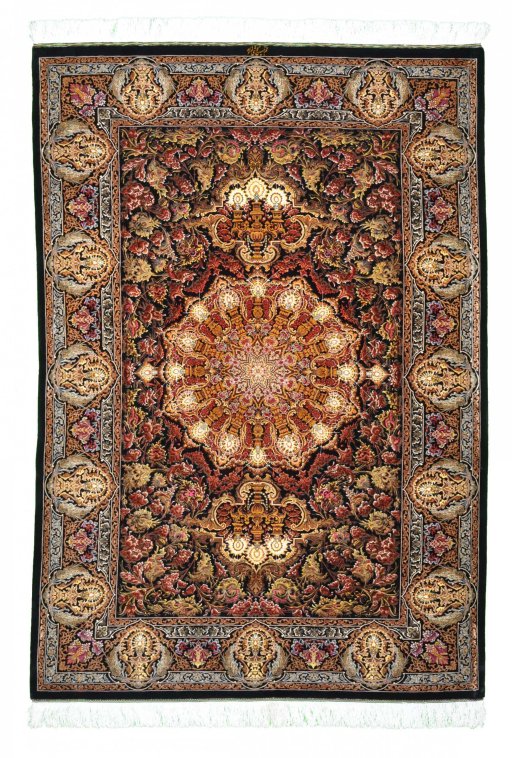
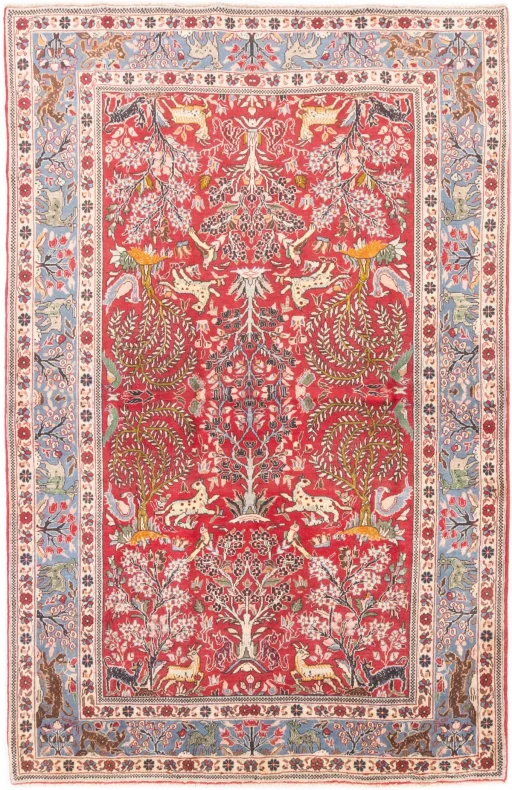
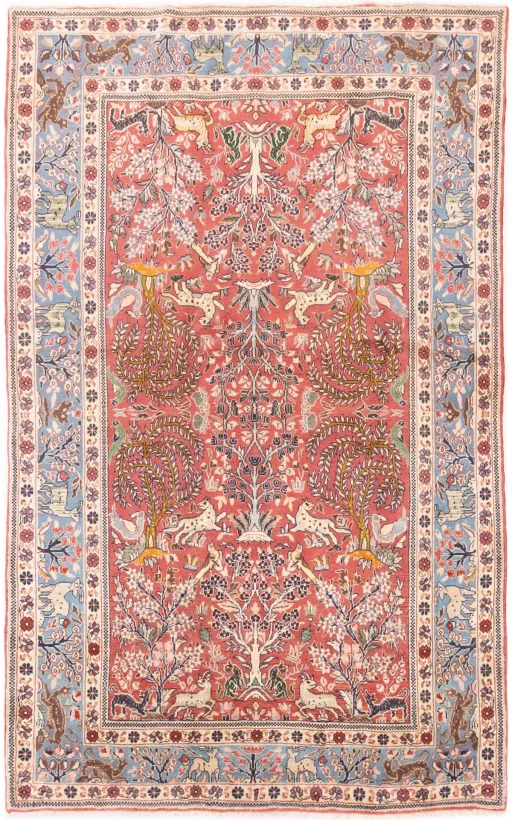
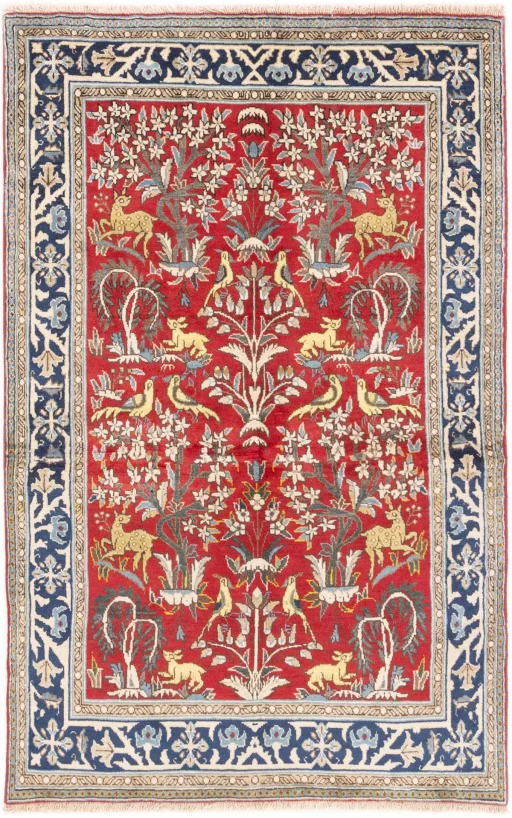
Because Qom had no old tradition of its own, its weavers adopted patterns from other areas. For a long time they stood in the shadow of Kashan, but thanks to their craftsmanship, their materials and their own style they have earned an excellent reputation. Typical are birds and flowers, garden patterns, Shah Abbasi palmettes and mihrab rugs that recreate the tile mosaics of the mosques.
Silk from Qom
For the best silk rugs, the master oversees everything from start to finish: he checks the silk and supervises the dyeing with natural dyes and the precision at the loom. 1,400,000 knots per square metre are not unusual here, and more than 1,000,000 is considered good quality. An octagonal silk rug with 900,000 knots per m² keeps two weavers busy for a good year. Rugs of natural silk are more durable than many people think and can certainly be laid on the floor.
Pure silk rugs in Iran
Silk makes very fine knots possible, and its sheen shows off the craftsmanship particularly well. Most of Iran's pure silk rugs are made today in Qom, Maragheh and Tabriz, and more rarely in Nain and Quchan. There are also magnificent antique silk rugs from Heriz and Kashan.
Wool with silk
Many Qom rugs are made of fine wool on cotton, with silk as a highlight for patterns or motifs such as birds and flowers. They are often called Qom kork, although genuine kork wool is rare; find out more in our guide Weaving technique.
Well-known signatures
Many Qom rugs are signed. Among the best-known signatures is Rashti Zadeh, whose rugs are sought-after collector's pieces. Other recognised workshops sign as Jamshidi, Mirmehdi, Kazemi, Kashizadeh or Djeddi, for example.
Qom rugs from our shop
Frequently asked questions
Why are Qom rugs so fine?
Many are knotted entirely of silk, often with more than a million knots per square metre. Only the finest material allows such dense knotting.
Can you put a Qom silk rug on the floor?
Yes. Natural silk is more durable than many people think. In rooms with little foot traffic, a silk Qom can lie on the floor without any problem.
Since when have rugs been woven in Qom?
Since around 1930, when weavers and dealers from Kashan came to the city.
← Back to overview: Persian rugs from Iran
Sources
- Martin Munkholm: Oriental Carpets. Woven with passion. muusmann forlag, S. 123–125.
- Own experience from the Akhavan Farshchi family's rug trade.
Co-Owner of Rugbloom. His family has traded Persian rugs for four generations. He recognises regions, eras and techniques and reads Persian inscriptions.