



Sarab rugs
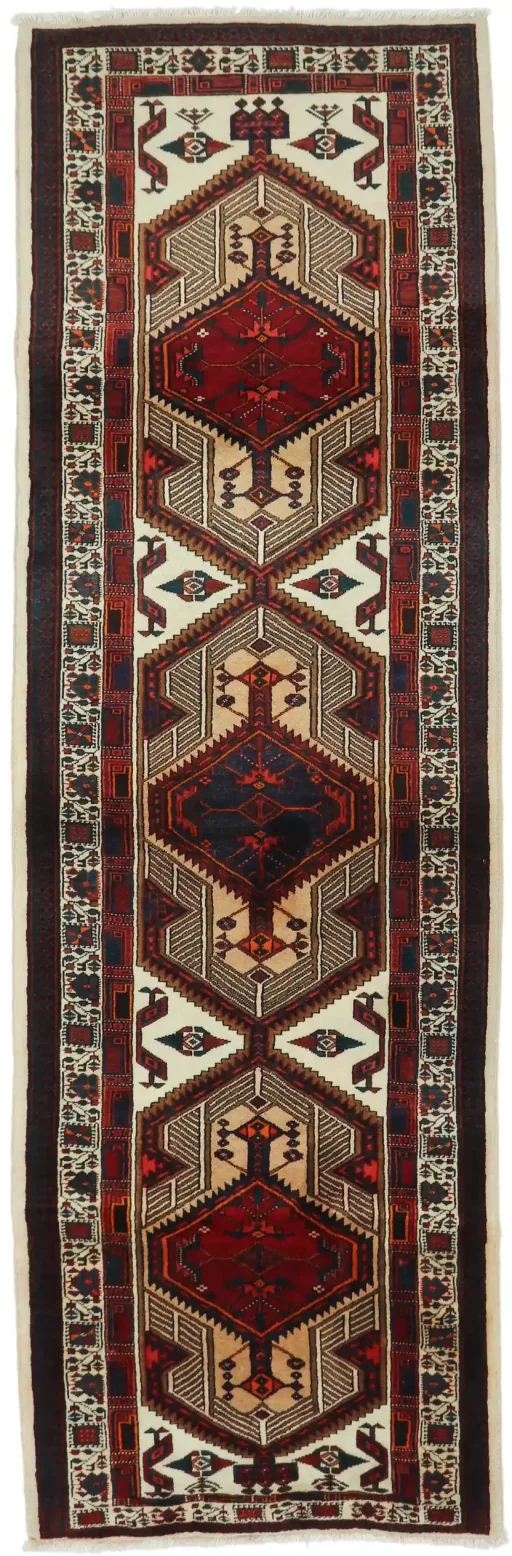
Runners with hexagons on a camel-coloured ground
- Region
- East Azerbaijan, between Tabriz and Ardabil
- Knot
- Turkish
- Format
- mainly runners
- Knots per m²
- 120,000 to 180,000, Mashayekhi 360,000 to 750,000
- Colours
- Camel brown, red, blue
Contents
The classic Sarab
Typical of Sarab is a slightly elongated hexagon, often repeated several times in a long runner. Camel-coloured wool dominates the colour scheme. In quality, Sarab rugs are comparable to those from Lambaran, but the patterns differ clearly.
Sarab Mashayekhi
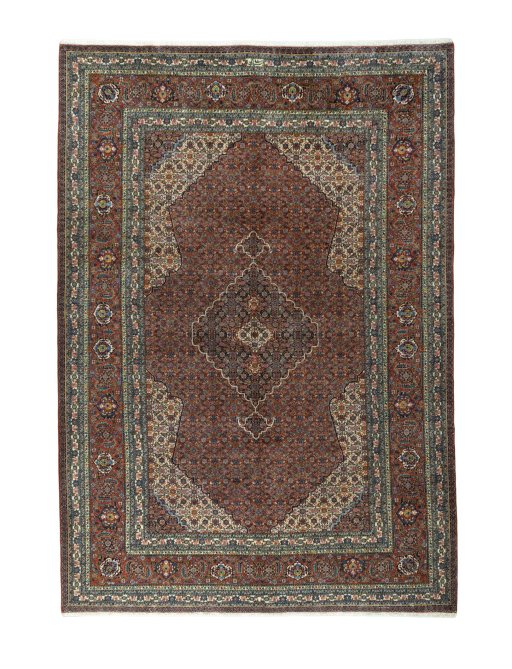
Newer rugs from the region are called Sarab Mashayekhi. They are mostly rust red and recall rugs from Ardabil, Mud or the Mahi pattern of Tabriz. With 360,000 to 750,000 knots per square metre, they are much more finely knotted and often of very good quality.
Sarab and the name Serapi
The rug tradition of Sarab goes back at least to the beginning of the 19th century. In the trade, the early, particularly beautiful Heriz rugs are called Serapi, a name derived from Sarab. Large rugs for export were also made in and around Sarab. They often have light main borders and soft colours. For their own use, people in Sarab mainly wove runners with a field of camel-dyed or natural beige wool. Together with Karaja, Sarab supplied many villages in East Azerbaijan with runners for their living rooms.
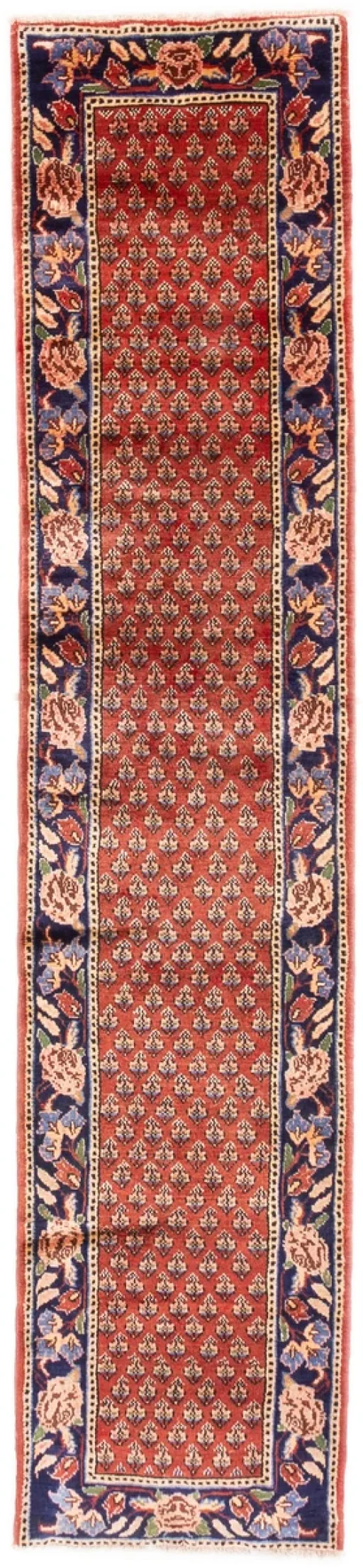
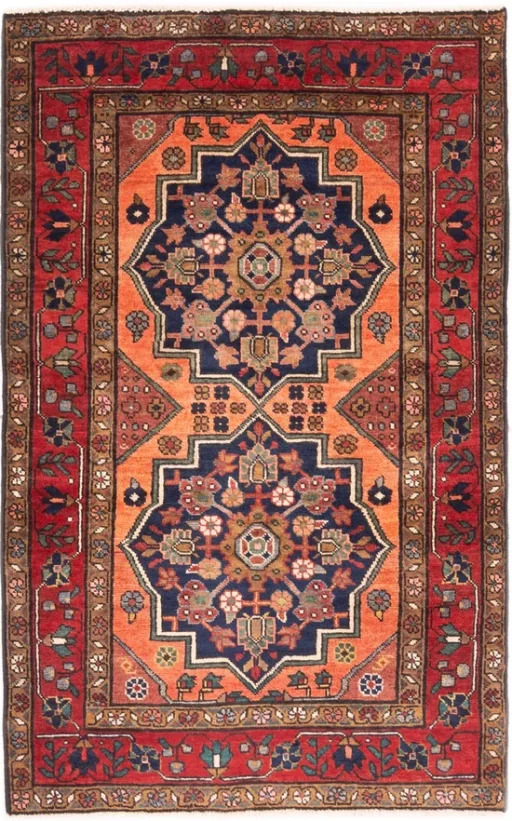
Sarab rugs from our shop
Frequently asked questions
What is typical of Sarab rugs?
Long runners with elongated hexagons on a camel-coloured ground, woven with the Turkish knot.
← Back to overview: Persian rugs from Iran
Sources
- Martin Munkholm: Oriental Carpets. Woven with passion. muusmann forlag, S. 104.
- Raoul E. Tschebull: Heriz. A Historical Perspective. In: HALI 90, January 1997, pp. 64–73.
- Own experience from the Akhavan Farshchi family's rug trade.
Co-Owner of Rugbloom. His family has traded Persian rugs for four generations. He recognises regions, eras and techniques and reads Persian inscriptions.