



Senneh rugs
The finest rugs of Kurdistan, with Songor
- Region
- Kurdistan, western Iran
- Knot
- Persian and Turkish
- Material
- finely spun wool on cotton
- Knots per m²
- etwa 250.000 bis 500.000
- Pattern
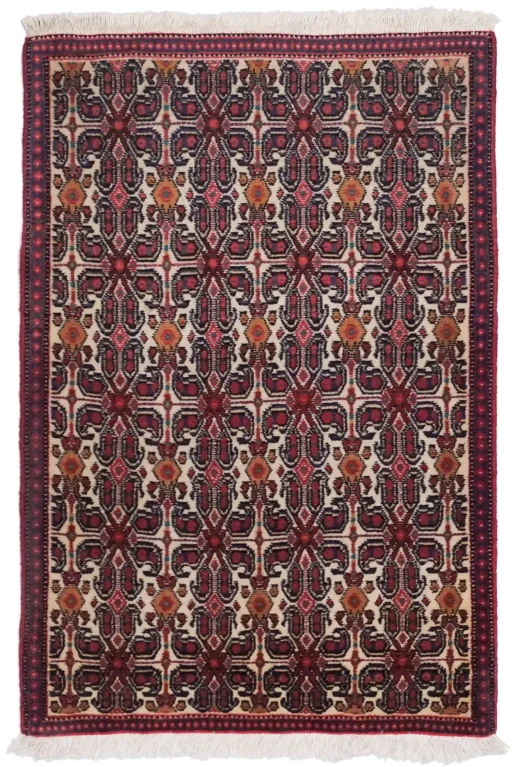
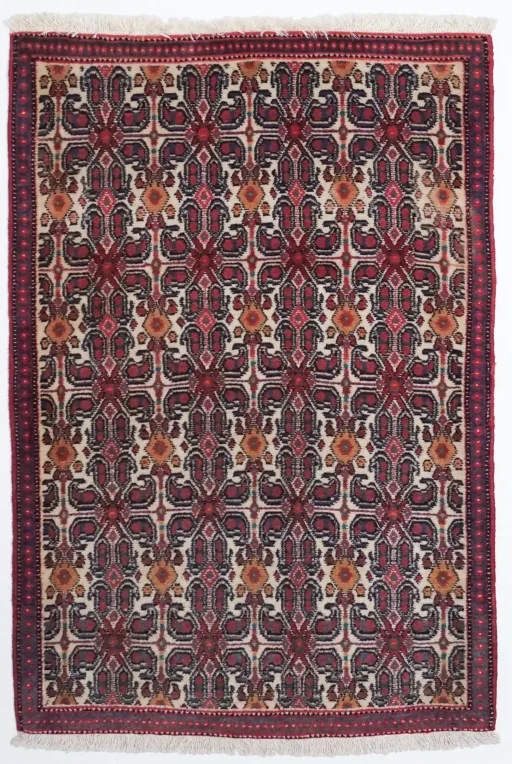
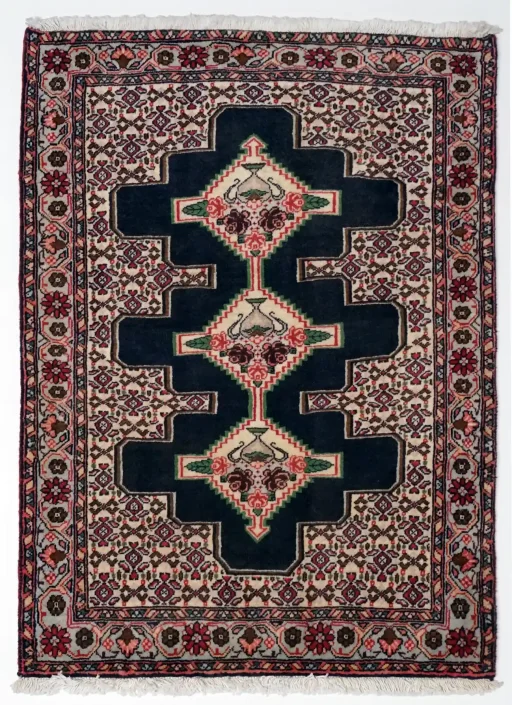
- Herati, serrated diamond medallion, three hexagons
- Ground colours
- Red or blue
Contents
Finely spun, densely knotted
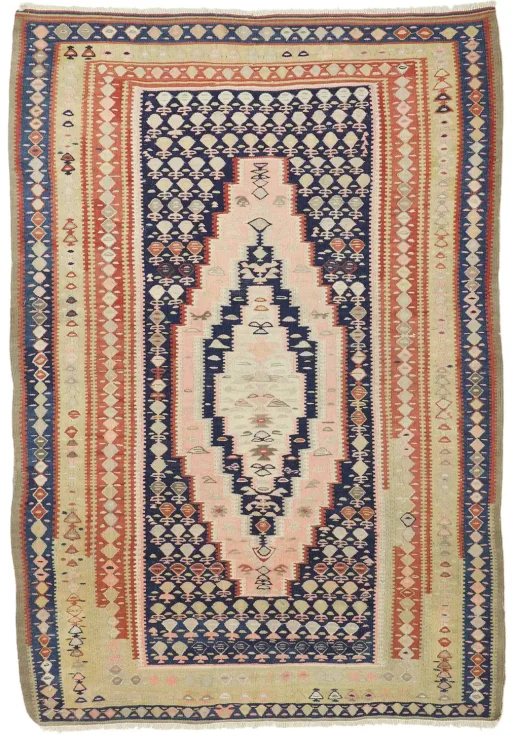
What sets Senneh apart from other Kurdish rugs is the very finely spun yarn. It allows particularly dense knotting and fine drawing. The Herati pattern is typical as a filling, either in a large diamond medallion with a serrated outline or in three hexagons on a plain red or blue ground. There are also fine boteh rugs.
Internationally, the Persian knot is named the Senneh knot after this city. Today both types of knot are used here; find out more in our guide Weaving technique. Warp and weft are cotton.
Telling old from new by the back
Older Senneh rugs are easy to recognise from the back: the knotting is especially fine and even, with the knots sitting close together. So if you buy a Senneh, always look at the back as well. Old pieces in good condition are sought-after collector's rugs.
Songor
The town of Songor lies southeast of Senneh. Its rugs resemble the stylised Kurdish patterns but are more refined and often unusual in their drawing. Many came onto the market in the late 1980s and early 1990s.
Senneh rugs from our shop
Frequently asked questions
What is typical of a Senneh rug?
Very finely spun yarn, dense knotting and the Herati pattern, often in a large, serrated diamond medallion on a red or blue ground.
Where does the Senneh knot get its name?
From the city of Senneh, today Sanandaj. It is the international name for the Persian, i.e. asymmetrical, knot.
← Back to overview: Persian rugs from Iran
Sources
- Martin Munkholm: Oriental Carpets. Woven with passion. muusmann forlag, S. 110.
- Own experience from the Akhavan Farshchi family's rug trade.
Co-Owner of Rugbloom. His family has traded Persian rugs for four generations. He recognises regions, eras and techniques and reads Persian inscriptions.